
How Hiking Boots Should Fit: Perfect Fit Guide
Nothing ruins a hiking adventure faster than poorly fitting boots. Blisters, numb toes, heel slippage, and bruised toenails aren’t just minor annoyances—they can cut your trip short and turn a dream trail into a painful ordeal. While features like waterproofing, ankle support, and sole grip matter, fit is the foundation of comfort and performance. So, how should hiking boots fit? The answer lies in a precise balance: snug enough to prevent movement, but roomy enough to allow natural foot expansion.
Your hiking boots should hold your foot securely without pinching, provide space for toes to wiggle, lock your heel in place, and support your arches. Feet swell during long hikes, especially on descents, so a boot that feels perfect in the store might become unbearable after a few miles. This guide breaks down every dimension of hiking boot fit—length, width, heel stability, arch support, and volume—so you can choose boots that feel great from the first step to the final summit.
Toe Box Clearance: Prevent Toe Bang
Leave Half an Inch for Toes
One of the most common hiking injuries—blackened or bruised toenails—starts with a simple problem: toe bang. This occurs when your foot slides forward on downhills and repeatedly hits the front of the boot. To avoid it, your toe box needs ½ to ¾ inch (1.25–1.9 cm) of space between your longest toe and the boot’s front. That’s about the width of your thumb.
This extra space accounts for foot swelling, gravity-driven slide, and downhill impact. If you’re planning long backpacking trips or hiking at high altitudes where swelling is more intense, opt for the larger end of that range—¾ inch. Remember: your longest toe may not be your big toe, so always check both when sizing.
Test Toe Space the Right Way
Don’t rely on how the boot feels when laced up. For an accurate measurement:
1. Remove the insole.
2. Stand on it in your hiking socks.
3. Align your heel with the back of the insole.
4. Check that your longest toe ends about one finger’s width from the front edge.
If your toe touches the end, the boot is too small. If there’s more than a finger’s width, it may be too long—especially if your heel lifts. This method gives you a reliable, repeatable way to assess length without relying on guesswork.
Avoid the “Perfect Fit” Trap
Many hikers make the mistake of choosing boots that feel snug while standing flat. But once you start hiking downhill, that snug fit turns into painful pressure. Your boots should never feel tight in the toe box. A slight gap is not a flaw—it’s a necessity for trail comfort and foot health.
Heel Lock: Stop Slippage and Blisters

No More Than ¼ Inch Lift
Heel slippage is the top cause of blisters. A well-fitted hiking boot allows less than ¼ inch (6 mm) of heel lift when you walk or climb stairs. While seated, you should be able to fit one finger between your heel and the back of the boot. That small gap disappears when you stand and weight your foot, creating a secure lock.
If the gap is too large, your heel will bounce with every step. If it’s too small, the boot is too short, leading to toe pressure. The goal is a snug but not tight heel hold that stays consistent over miles of uneven terrain.
Use the AMC Heel Test
The Appalachian Mountain Club (AMC) Heel Test is a proven method for checking heel fit:
1. Loosen the laces and slide your foot forward until your toes touch the front.
2. Have someone check the space behind your heel.
3. If less than a finger fits, the boot is too long.
4. If more than one finger fits, it’s too short.
This simulates how your foot settles under load and helps avoid common sizing errors.
Fix Slippage with Lacing Techniques
Even a well-fitted boot can have minor slippage during break-in. Combat it with:
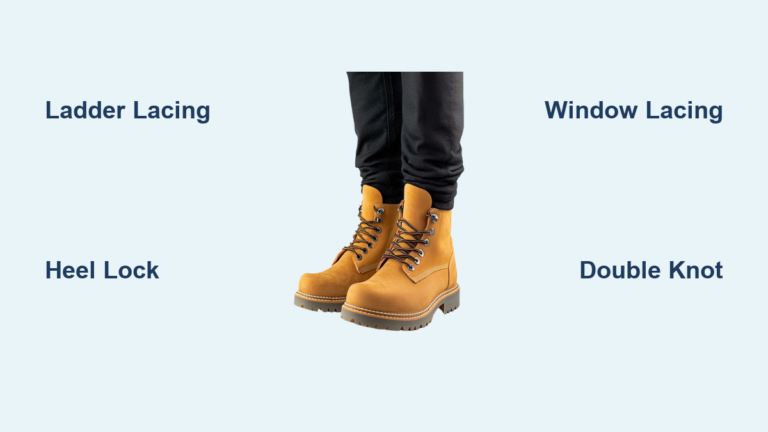
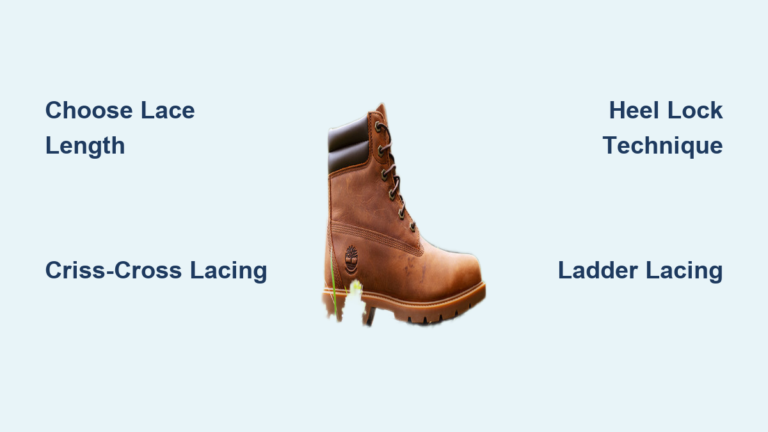
– Heel lock (lace lock): Use the top eyelets to cinch down the ankle and pull the heel back.
– Ankle cinch lacing: Tighten laces over the ankle bones to stabilize the foot.
– Surgeon’s knot: Prevents laces from loosening mid-hike.
For persistent slippage, consider heel grips or aftermarket insoles like Superfeet or CURREX, which feature deep heel cups that lock your foot in place.
Width and Forefoot Fit: Snug but Not Pinched
Match Your Foot’s Natural Shape
The boot should feel snug across the ball of your foot and midfoot without pinching or allowing side-to-side movement. If your toes feel cramped, the boot is too narrow. If your foot shifts laterally, it’s too wide. Pay attention to hot spots—even minor friction can turn into blisters on long hikes.
Know Your Material’s Stretch Potential
Not all boots stretch the same:
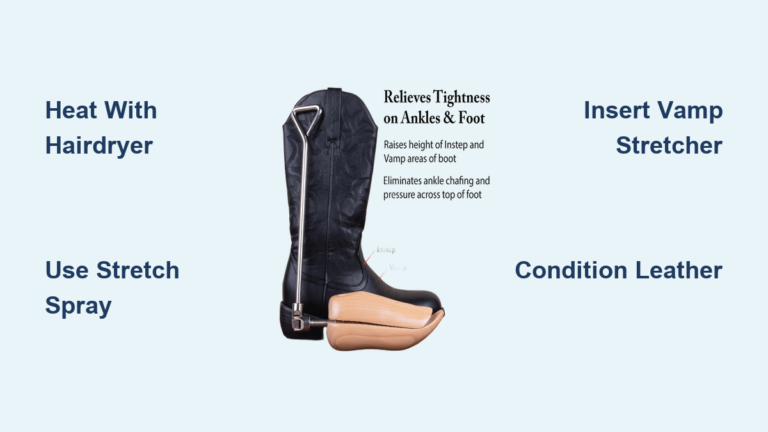
– Full-grain leather: Can stretch up to a full width size over time.
– Nubuck and split-grain leather: Moderate stretch—good for customizing fit.
– Synthetic (mesh, nylon): Minimal stretch—what you feel in the store is what you’ll get on the trail.
– Waterproof liners (e.g., Gore-Tex): Reduce breathability and stretch.
Expert Insight: “Leather-lined boots adapt better to your foot shape.” — Alexander März, HANWAG
If you have wide feet, look for models labeled “wide” or brands like KEEN Targhee and Merrell Moab, known for roomier lasts.
Arch Support: Prevent Fatigue and Overpronation

Replace Flat Factory Insoles
Most hiking boots come with flat, unsupportive insoles that compress quickly and offer little arch contact. This leads to arch fatigue, plantar fasciitis, and overpronation. The fix? Upgrade to a supportive aftermarket insole.
Look for insoles that offer:
– Firm arch support to stabilize your foot
– Deep heel cup to lock the heel
– Shock absorption for joint protection
– Moisture-wicking top layer to reduce friction
Top Insole Recommendations
- CURREX HIKEPRO™: Decoupled heel, three arch heights, non-slip grip.
- Superfeet Green: High-volume support, ideal for heavy backpacking.
- Pace Insoles: Rigid arch and deep cup—perfect for overpronators.
Pro Tip: “A light shoe with firm insoles can outperform a heavy boot with flat footbeds.” — Mark Paigen
If you wear orthotics, bring them when trying on boots to ensure proper fit and volume.
Boot Volume: Fit Over the Top of Your Foot

Choose Based on Instep Height
Boot volume refers to the internal height over the instep. It’s crucial if you have high arches, wear thick socks, or use custom orthotics.
– Low-volume boots: Best for narrow or flat feet. May pinch high arches.
– High-volume boots: Accommodate thick socks, orthotics, or high insteps.
Signs of Poor Volume Fit
- Pressure or pinching over the instep
- Inability to tighten laces without cutting off circulation
- Excess space causing foot movement
Adjust with Socks and Lacing
- Use liner socks + hiking socks to fill space in low-volume boots.
- Replace insoles with higher-profile models.
- Use ladder lacing or skip lacing to relieve pressure over the instep.
When to Buy: Time of Day Matters
Always Shop in the Afternoon
Feet swell throughout the day due to activity, heat, and gravity. A boot that fits perfectly at 9 a.m. may be painfully tight by 5 p.m. Always try on hiking boots in the late afternoon or evening, when your feet are at their largest. This ensures your boots accommodate real trail conditions—not just store-floor comfort.
Socks: The Hidden Fit Factor
Wear Your Hiking Socks to the Store
Socks dramatically affect fit. Always test boots with the same thickness and material you’ll wear on the trail.
– Merino wool or synthetic blends: Wicks moisture, regulates temperature.
– Avoid cotton: Retains sweat and increases blister risk.
Double-Layer Systems for Friction Control
- Liner + outer sock: Reduces friction and manages moisture.
- Adds volume—account for this when sizing.
REI Advice: “Wear the socks you plan to hike in.”
Break-In: Do You Need It?
Leather Boots Need Gradual Wear
Stiff leather backpacking or mountaineering boots require 5–10 miles (8–16 km) of break-in. They’ll soften and conform to your foot over time. Signs of proper break-in:
– Improved flexibility
– Reduced heel slippage
– No new pressure points
Lightweight and Synthetic Boots: Minimal Break-In
Most hiking shoes feel comfortable immediately. If a boot causes pain during break-in, it’s a red flag—never accept pain as “normal.”
Warning: Discomfort is expected, but blisters or sharp pain means poor fit.
Match Fit to Boot Type and Use
Hiking Shoes (Low-Cut)
- Fit: Snug, lightweight, minimal heel lift.
- Best for: Day hikes, light loads, dry trails.
- Sizing: May require full size up due to synthetic materials.
Day Hiking Boots (Mid-Cut)
- Fit: Secure ankle support, moderate toe space.
- Best for: Uneven terrain, moderate loads.
- Sizing: Typically half-size larger than street shoes.
Backpacking Boots (High-Cut, Stiff)
- Fit: Snug midfoot, firm heel lock, roomy toe box.
- Best for: Heavy packs (up to 75L), long distances.
- Features: Shank, rock plate, high-volume fit.
Mountaineering Boots (Rigid, High-Cut)
- Fit: Precision fit, crampon-compatible, minimal stretch.
- Sizing: Often half-size larger to accommodate thick socks.
- Sole: Rigid for step-in crampons.
Crampon Note: Only rigid soles work with step-in crampons. Flexible soles require strap-on systems.
Test Before You Hike
In-Store Walk Test
- Walk for at least 15–30 minutes.
- Use sloped ramps to simulate uphill/downhill terrain.
- Carry a loaded backpack if possible.
- Check for: heel lift, toe contact, pressure points.
REI Tip: “Use the test rock if available.”
Home Trial First
Wear boots around the house for 1–2 hours:
– Walk on tile, carpet, and stairs.
– Identify rubbing or tight spots early.
– Remember: Once worn outside, most stores won’t accept returns.
Real-World Trial Hike
Start with a short, easy trail before committing to long distances. Monitor for:
– Hot spots
– Blisters
– Swelling
– Toe pain
Address issues early—don’t “tough it out.”
Fix Common Fit Problems
| Issue | Cause | Solution |
|---|---|---|
| Heel Slippage | Poor heel cup, flat insole, loose lacing | Heel lock lacing, supportive insole, heel grips |
| Toe Bang | Boots too short, insufficient toe clearance | Size up, ensure ½” space, avoid tight midfoot lacing |
| Blisters | Friction from slippage or moisture | Improve fit, wear merino socks, use blister pads |
| Foot Fatigue | Poor arch support, flat insoles | Replace factory insole with supportive model |
| Numb Toes | Laces too tight, narrow toe box | Loosen midfoot lacing, try wider or higher-volume boot |
| Ankle Rolling | Loose fit, inadequate ankle support | Ensure snug ankle collar, choose higher-cut boot |
Final Fit Checklist
✅ Try on boots in the afternoon or evening
✅ Wear your hiking socks (or orthotics)
✅ Check thumb’s width toe clearance
✅ Ensure no heel slippage (>¼ inch)
✅ Snug but not tight across midfoot and forefoot
✅ Arch fully supported—no gaps
✅ No pinching, pressure, or numbness
✅ Test on incline and decline surfaces
✅ Walk for at least 30 minutes
✅ Replace factory insoles
✅ Use lacing tricks to fine-tune fit
A well-fitted hiking boot is the foundation of every great adventure. Take the time to measure, test, and adjust. Whether you’re hiking local trails or summiting alpine peaks, the right fit means comfort, stability, and confidence with every stride.