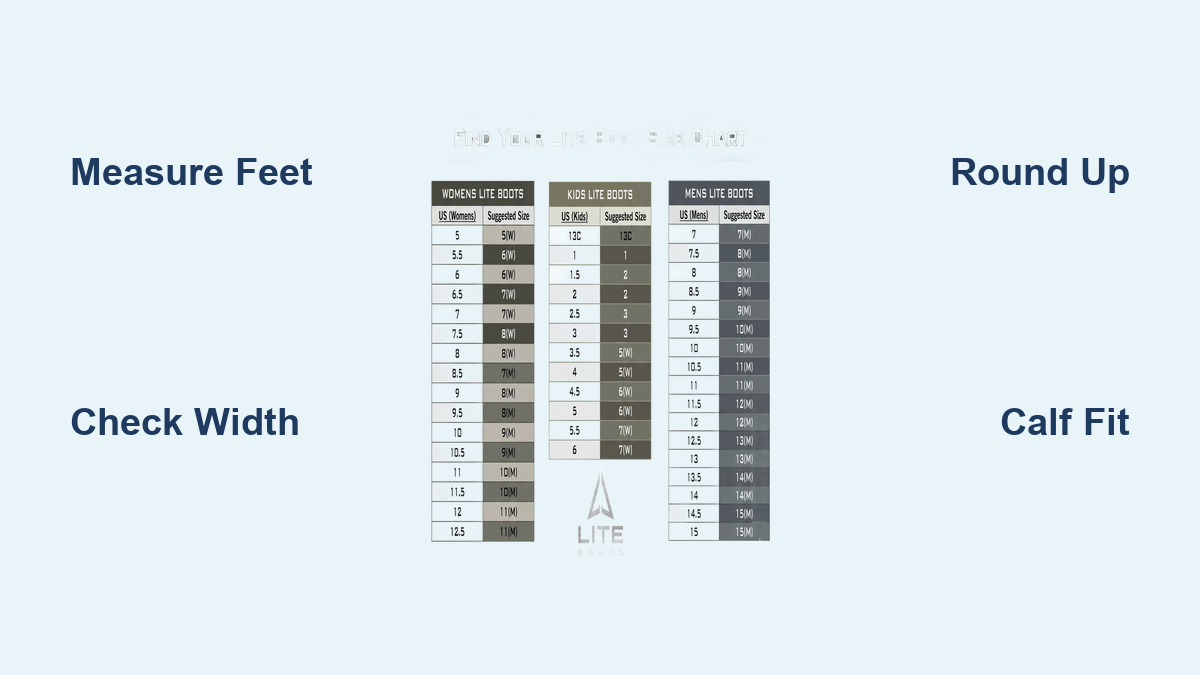
Boot Size Guide: Find Your Perfect Fit
You’ve found the perfect pair of boots, sturdy, stylish, and built to last. But when they arrive, they pinch at the calf, your heel slips, or your toes feel cramped. Sound familiar? You’re not alone. Choosing the right boot size is more complex than just matching a number. Unlike sneakers with laces that adjust, boots rely on precise, static sizing, making accurate measurement critical.
This boot size guide cuts through the confusion with data-driven steps, professional techniques, and model-specific insights. Whether you’re ordering handmade cowboy boots, molded work styles, or insulated winter footwear, you’ll learn how to measure correctly, interpret size charts, and avoid common fit mistakes. By the end, you’ll know exactly how to select a size that fits comfortably from day one, no returns needed.
Measure Your Foot Correctly
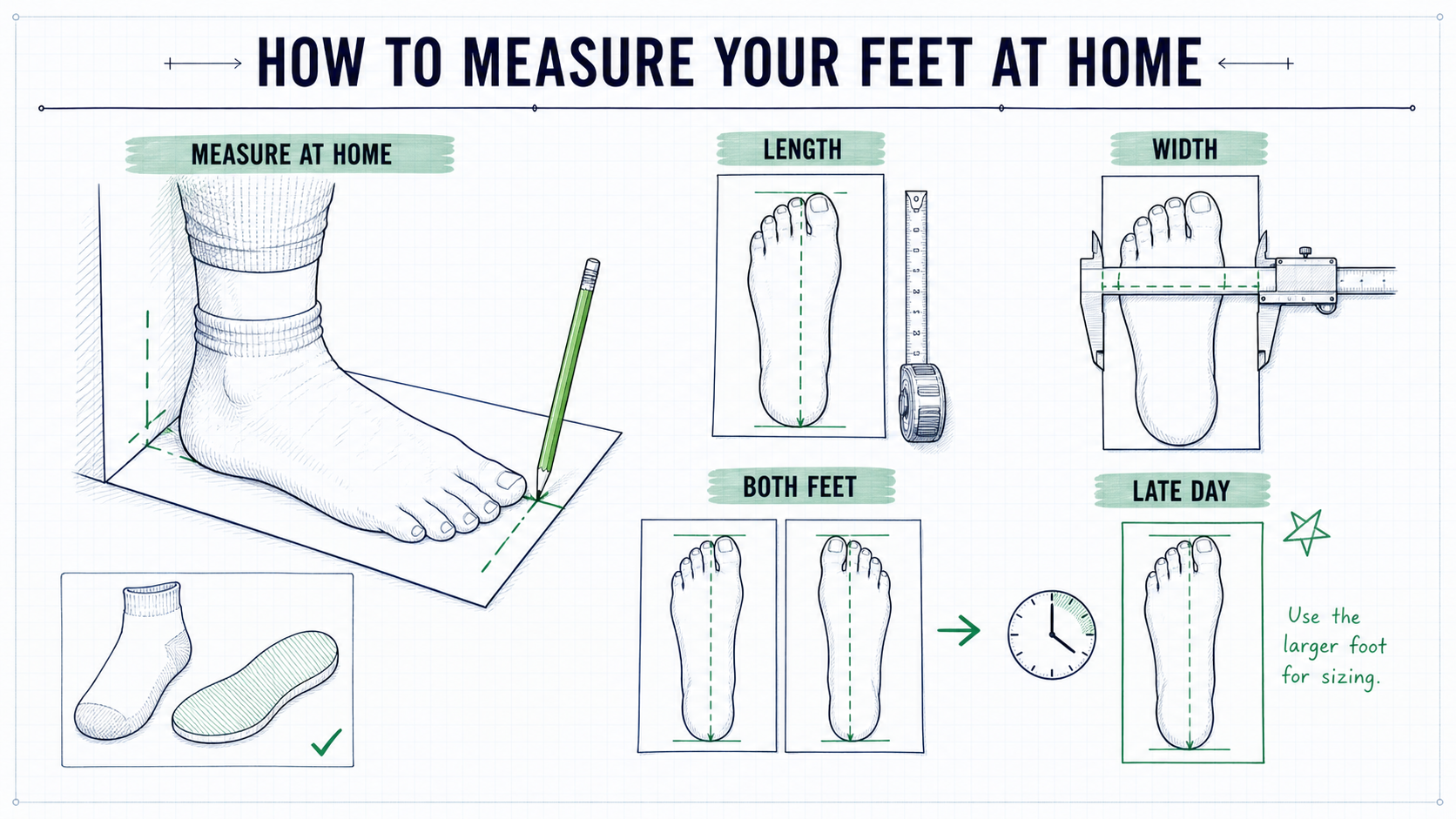
Accurate boot sizing starts with precise foot measurement. Guessing based on old shoe sizes or memory leads to errors. Feet change over time due to age, weight, and activity level. The solution? Measure at home using a reliable method.
Use the Paper Tracing Method
When a Brannock Device isn’t available, the paper tracing method delivers accurate results in under five minutes.
What You Need:
– A rigid sheet of paper (like a file folder)
– A standard wood pencil
– Measuring tape or ruler
– The socks you plan to wear with your boots
Steps to Follow:
1. Tape the paper to a hard floor to prevent slipping.
2. Measure in the evening because feet swell throughout the day.
3. Stand naturally with weight evenly distributed.
4. Trace your foot with the pencil held vertically (90°) against the skin.
5. Measure heel to longest toe for length.
6. Measure across the widest part (usually the ball of the foot) for width.
7. Subtract 0.2 inches from both measurements to correct for pencil thickness.
8. Repeat for the other foot and use the larger measurement.
This corrected data aligns closely with professional Brannock readings and ensures reliable size selection.
Know Your Instep Height
Beyond length and width, instep height affects fit. The instep is the highest point of your foot, just above the arch.
- Medium instep: Most people fall here; standard boots fit well.
- High instep: Causes tightness across the top of the foot; may need wider widths or special lasts.
- Low instep: Can cause heel slippage or a loose fit.
If you’ve had trouble with boots pressing on the top of your foot, you likely have a high instep. Consider models with stretch panels or request a high-instep last when ordering custom boots.
Understand US Boot Sizing
The US sizing system is linear and standardized, but it’s often misunderstood. Knowing how it works helps you decode size charts and make informed choices.
Length Is Measured in 1/3-Inch Increments
Each full size increases foot length by exactly 1/3 of an inch. For example:
– Size 10 = 10 5/8 inches
– Size 11 = 11 inches
– Size 12 = 11 1/4 inches
This consistency allows precise conversion between sizes and measurements.
Widths Range from AAA to EEE
Width designations increase by 3/16 of an inch per step:
– Men’s standard width: D
– Women’s standard width: B
– Wide: EE
– Extra wide: EEE
Crucially, the actual inch measurement for a “D” width increases with shoe size. A Size 12D is wider than a Size 8D because the foot is longer and broader.
Use Size Charts Effectively
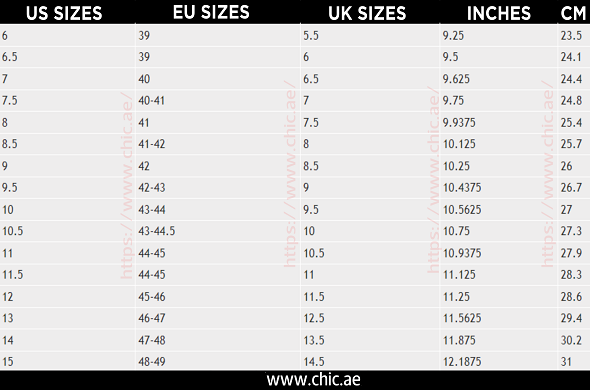
Size charts are essential tools, but only if used correctly. Always refer to the brand’s specific chart, as lasts and construction vary widely.
Men’s Boot Length Chart
| US Size | Length (Inches) | Length (CM) |
|---|---|---|
| 6 | 9 1/4″ | 23.5 |
| 7 | 9 5/8″ | 24.4 |
| 8 | 10″ | 25.4 |
| 9 | 10 1/4″ | 26.0 |
| 10 | 10 5/8″ | 27.0 |
| 11 | 11″ | 27.9 |
| 12 | 11 1/4″ | 28.6 |
| 13 | 11 5/8″ | 29.5 |
| 14 | 12″ | 30.5 |
Use this table to match your measured foot length to the correct size.
Men’s Width Chart (D, EE, EEE)
| Size | D Width | EE Width | EEE Width |
|---|---|---|---|
| 8 | 4 1/8″ | 4 3/8″ | 4 1/2″ |
| 9 | 4 3/8″ | 4 5/8″ | 4 3/4″ |
| 10 | 4 5/8″ | 4 7/8″ | 5″ |
| 11 | 4 7/8″ | 5 1/8″ | 5 1/4″ |
| 12 | 5 1/8″ | 5 3/8″ | 5 1/2″ |
| 13 | 5 3/8″ | 5 5/8″ | 5 3/4″ |
| 14 | 5 5/8″ | 5 7/8″ | 6″ |
If your foot measures 5″ wide at Size 10, you need an EEE (extra wide) fit.
Women’s and Youth Size Conversion
Many boot brands use:
– (W) for Women’s/Youth sizes
– (M) for Men’s sizes
A general rule: Women’s Size 8 ≈ Men’s Size 7
Always check the brand’s conversion chart. For example, a woman with a foot length of 10″ should look at Men’s Size 8 in unisex or men’s-style boots.
Choose the Right Size for Your Boot Type

Not all boots fit the same. Construction, material, and intended use affect sizing strategy.
Molded Boots: Round Up for Half Sizes
Molded one-piece boots (like “Lite Boots”) don’t stretch. They fit true to size, but with one rule:
👉 If you measure a half size, round up.
For example:
– Foot measures 10 3/4″ → Order Size 11
– Foot measures 11 1/8″ → Order Size 12
This prevents toe compression during long wear.
Handmade Leather Boots: Expect Minor Variance
Handcrafted boots may vary slightly due to:
– Last differences between batches
– Leather thickness and humidity during production
– Toe shape (pointed vs. square)
Even within the same size, two pairs may feel slightly different. When in doubt, go by fit over number.
Insulated Boots: Account for Sock Bulk
Boots rated for cold weather (e.g., 10°F to 80°F) are designed for one midweight merino wool sock. Adding thicker socks reduces internal space.
Pro Tip: If you plan to wear heavy socks in extreme cold, round up one half size to maintain comfort.
Check Calf Fit for Tall Boots

For 16″ or taller shafts, calf circumference is just as important as foot size.
Measure Your Calf
- Stand upright.
- Wrap a soft tape around the widest part of your calf.
- Record the measurement in inches.
Fit Guidelines by Calf Size
- 18 inches or less: Fits standard shaft boots
- Over 18 inches: Requires wide-calf model
Wide-calf boots maintain the same weight, waterproofing, and durability but feature an expanded opening. These are typically available in Men’s Sizes 9–13.
Ignoring calf size leads to:
– Difficulty pulling on the boot
– Circulation issues
– Discomfort during wear
Always confirm wide-calf availability before ordering.
Avoid Common Fit Mistakes
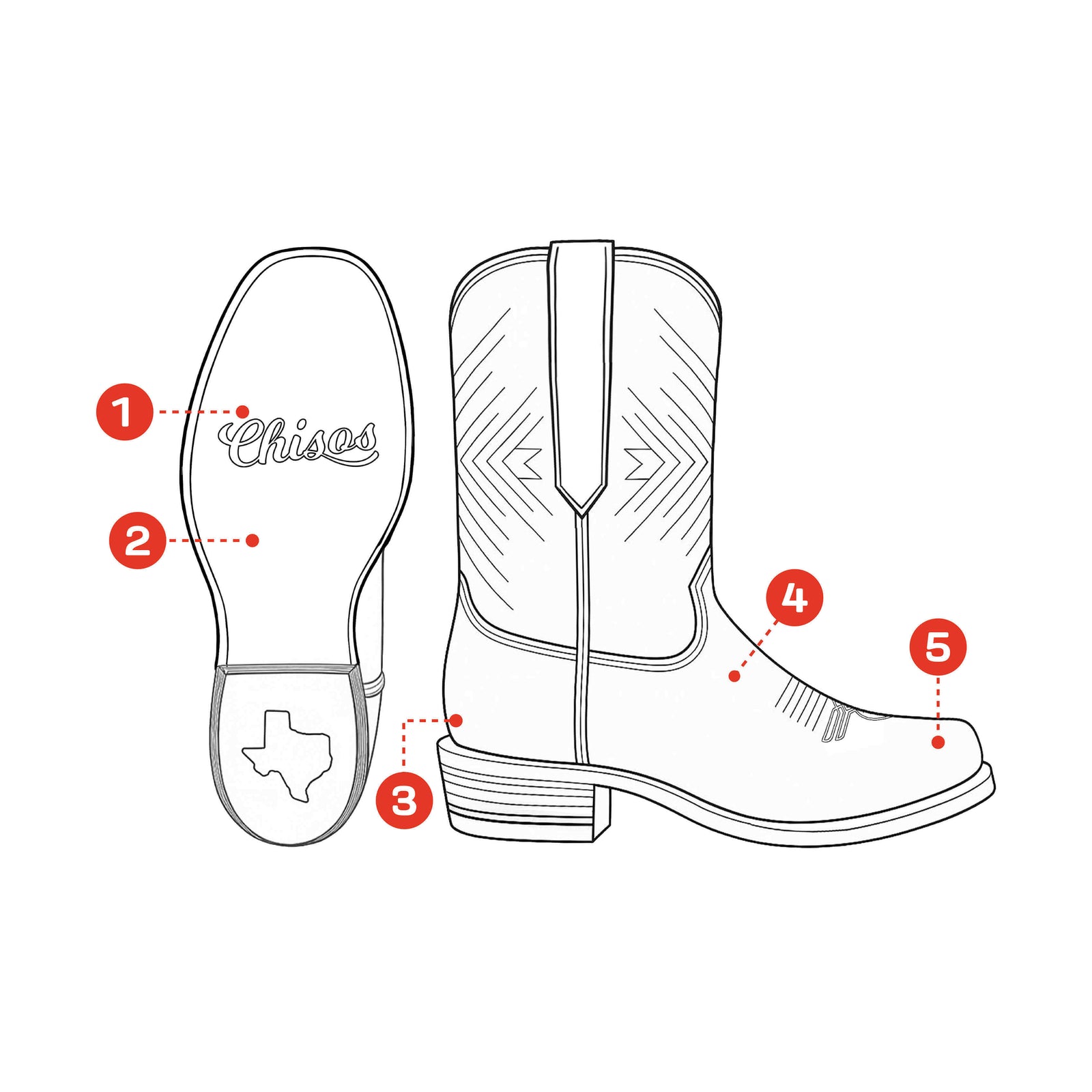
Even with accurate measurements, fit issues arise. Here’s how to spot and fix them.
Heel Slippage
Cause: Boot is too long or too wide.
Fix: Try a narrower width or smaller size. A snug heel lock is normal during break-in, but excessive movement indicates poor fit.
Toe Compression
Cause: Size is too small or toe box shape doesn’t match foot.
Fix: Round up a half or full size. Consider a wider toe or roomier last.
Pinching at the Calf
Cause: Calf measurement exceeds standard shaft capacity.
Fix: Switch to a wide-calf model. Do not size up in length to accommodate girth, as this causes heel slippage.
Top-of-Foot Pressure
Cause: High instep or narrow width.
Fix: Choose a high-instep last or wider width. Some boots offer stretchable uppers for high insteps.
Verify Fit with a Known Boot
When in doubt, send in a well-fitting boot for comparison.
Many manufacturers offer a physical matching service:
1. Ship your best-fitting boot to the company.
2. They compare it to their last.
3. Receive your exact size recommendation.
This method has a 98%+ accuracy rate and is ideal for first-time buyers or those with hard-to-fit feet.
Maintain Fit Over Time
Unlike stitched leather boots, molded boots don’t stretch. Their size remains consistent for years. Leather boots, however, may conform slightly with wear, especially in width.
To preserve fit:
– Store boots properly to maintain shape
– Avoid excessive moisture that can warp materials
– Use boot trees or inserts if storing long-term
For molded styles, what you buy is what you keep, so get the size right upfront.
Frequently Asked Questions About Boot Sizing
How do I measure my foot at home without a Brannock Device?
Use the paper tracing method. Tape a rigid sheet of paper to the floor, stand naturally, and trace your foot with a wood pencil held vertically. Measure heel to longest toe and across the widest part. Subtract 0.2 inches from both measurements to correct for pencil thickness, then use the larger of your two foot measurements.
Should I size up or down if I measure a half size?
For molded boots that fit true-to-size, always round up to the next full size. This ensures adequate room for your longest toe and prevents compression during extended wear. The same rule applies to insulated boots when wearing thick socks in extreme cold.
What is the difference between D, EE, and EEE widths?
D is standard medium width for men, EE is wide, and EEE is extra wide. Each step increases width by 3/16 of an inch. Keep in mind that the actual inch measurement for any width grows with shoe size, so a Size 12D is wider in inches than a Size 8D.
How do I know if I need a wide-calf boot?
Measure the widest part of your calf while standing. If your calf measures over 18 inches, you need a wide-calf model for 16″ or taller shaft boots. Standard shafts fit calves of 18 inches or less. Sizing up in length to fit a larger calf will cause heel slippage and should be avoided.
Can I use my sneaker size to order boots?
No. Boots rely on a static fit without laces or elastic adjustments, so sneaker sizing does not translate reliably. Always measure your foot and consult the specific brand’s size chart. Handmade boots also vary slightly between production runs, so fit should take priority over the number alone.
Will leather boots stretch over time?
Yes, leather boots may conform slightly with wear, especially in width. Molded one-piece boots, however, do not stretch and will maintain their original size profile for years. For molded styles, getting the size right upfront is essential.
Key Takeaways for Choosing Your Perfect Boot Size
Accurate measurement is the foundation of every great boot fit. Use the paper tracing method with a 0.2-inch correction, and always measure both feet at the end of the day. Match your measurements to the brand’s specific size chart rather than relying on memory or sneaker sizing.
Different boot types require different strategies. Round up for molded boots and insulated styles worn with thick socks. For handmade leather boots, prioritize fit over the number on the box. And for tall shafts, measure your calf to determine whether you need a standard or wide-calf model.
Your next step: grab a sheet of paper, a pencil, and your intended socks, and take ten minutes to measure your feet tonight. With your numbers in hand, you’ll be ready to order boots that feel custom-made from the moment you slip them on.