Boot Lace Length Guide: How Long Are They?
If you’ve ever held a pair of unlaced boots and wondered, “How long are boot laces supposed to be?” — you’re not alone. Getting the length right affects comfort, support, and even safety. Too short, and you can’t tie them securely. Too long, and you’re tripping over dangling ends. The answer depends on your boot’s eyelet count, style, width, and how you lace them.
This guide gives you precise, actionable data for choosing the right lace length. You’ll learn how to measure existing laces, use eyelet counts to estimate length, and adjust for wide boots or ankle wraps. No guesswork. Just accurate lace lengths based on real-world boot types, from toddler shoes to firefighter boots.
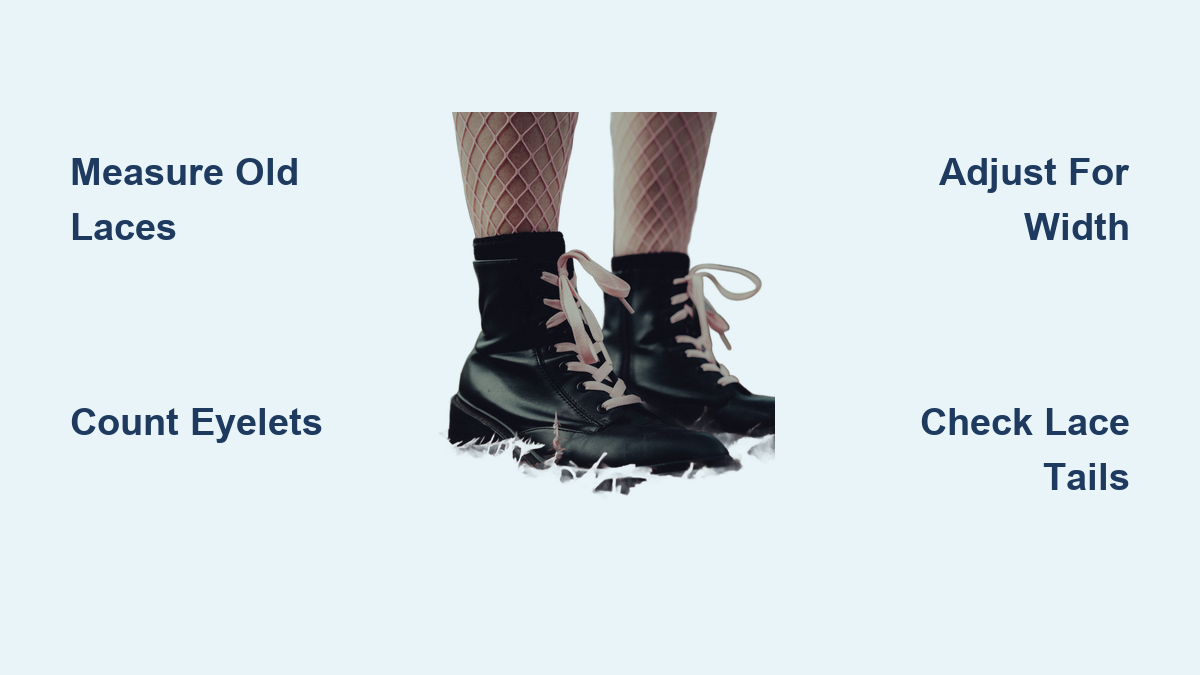
Measure Existing Laces First

When you still have the original laces, this is your fastest and most accurate path to the correct replacement length.
Remove and Measure Tip to Tip
Take out the current lace and lay it flat. Measure from the very end of one aglet (the plastic or metal tip) to the other. This is your exact required length, assuming you were happy with how they tied and laced.
Pro Tip:
Use a soft tape measure or string for curved laces. If using a ruler, straighten gently without stretching.
Adjust for Fit and Style
Even when measuring old laces, consider these tweaks:
– Too long before? Subtract 6–12 inches for a cleaner tie.
– Too short? Add 6–12 inches for easier knotting.
– Changing lacing style? Different patterns use different amounts of lace:
– Standard crisscross: baseline length
– Ladder or loop-back lacing: uses more lace
– Straight-bar lacing: may use less
Don’t forget diameter: Most boots need either 3mm (thin) or 4mm (thick) laces. Match the thickness to your eyelets. Forcing a thick lace into narrow holes damages both.
Count Eyelets for Lace Length Estimate
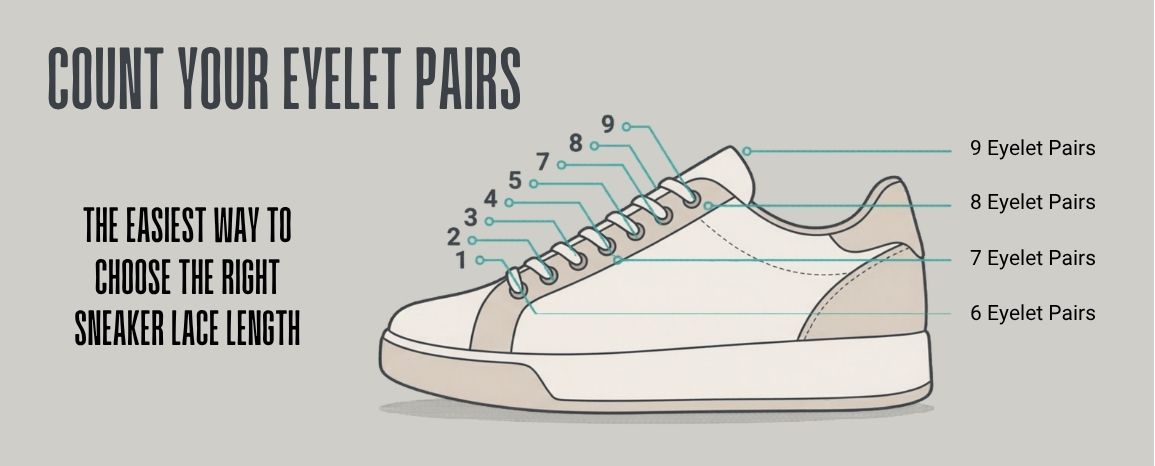
No laces? No problem. Count the eyelets on one side of the boot. That count is your starting point.
Eyelet Pairs to Lace Length Chart
Match your eyelet count to the recommended lace length. These ranges account for typical boot builds.
| Eyelet Pairs | Lace Length (Inches) | Lace Length (cm) | Common Boot Types |
|---|---|---|---|
| 2–3 | 27″ | 70 cm | Toddler shoes |
| 3–4 | 30″ | 80–90 cm | Kids, low-cut |
| 4–5 | 36″ | 90–100 cm | Junior, low-top |
| 5–6 | 40″–45″ | 100–115 cm | Sneakers, runners |
| 5–6 (boots) | 54″ | 137 cm | Ankle boots, trail runners |
| 6–7 | 54″ | 120–137 cm | 6″ boots, women’s hikers |
| 7–8 | 60″–63″ | 130–160 cm | Men’s hiking, work boots |
| 8–9 | 72″ | 140–180 cm | High-top, ironworker |
| 9–10 | 81″–90″ | 180 cm | 8″–10″ work boots |
| 10–11 | 100″–108″ | 210 cm | Firefighter, tall boots |
| 11–12 | 120″ | 210+ cm | 10″ boots, military |
| 12+ | 160″ | 406+ cm | Extra-tall specialty boots |
Key Insight:
A 6-eyelet sneaker might only need 45″, but a 6-eyelet hiking boot needs 54″ due to taller sides and wider construction. Always prioritize boot type, not just eyelet count.
Know Your Boot Type for Accurate Length

Different boots have standard lace lengths. Use this as a shortcut if you know your style.
Ankle Boots & Trail Runners
Lace Length: 54″ (137 cm)
Eyelets: 5–6 pairs
Perfect for short hikes or casual wear. These boots have more height than sneakers, so they need longer laces than typical 45″ runner lengths.
6-Inch Work & Hiking Boots
Lace Length: 63″ (160 cm)
Eyelets: 7–8 pairs
The most common length for men’s hiking and work boots. Brands like Timberland, Red Wing, and Merrell often use this standard.
Women’s Hiking Boots
Lace Length: 54″ (137 cm)
Eyelets: 6 pairs
Slightly shorter shafts mean shorter laces. Even with similar eyelet counts, women’s boots often use 54″ instead of the 63″ common in men’s styles.
Ironworker & Steel-Toe Boots
Lace Length: 72″–81″ (180–205 cm)
Eyelets: 8–10 pairs
Taller shafts and rugged builds require extra length. These boots often have wide profiles, increasing lace needs.
Firefighter & Tactical Boots
Lace Length: 100″–120″ (210–305 cm)
Eyelets: 10–12+ pairs
Maximum ankle support and tall collars demand long laces. Some exceed 120″ for double-wrap or military tucking styles.
Adjust for Boot Width and Eyelet Spacing

Even with the right eyelet count, two boots can need different lace lengths. Here’s why.
Wide Boots Need Longer Laces
Each crisscross spans a greater horizontal distance.
Solution: Pick the longer end of the range.
– Example: 7 eyelets on a wide boot? Go with 63″ instead of 60″.
Wide Vertical Spacing Adds Length
If eyelets are far apart vertically, each diagonal uses more lace.
Check: Compare to a standard boot. If the holes are spaced 1″ apart instead of 0.75″, add 3–6 inches.
Visual Cue:
Laces that look “stretched” or leave little tail after tying? Your boot likely has wide spacing or a broad fit.
Add Length for Ankle Wrapping
Some users wrap laces around the ankle for extra support. This is common in military, tactical, or high-stress environments.
Add 6–7 Inches for Wraps
If you wrap the lace around the boot’s collar once before tying, add 6–7 inches (15–18 cm) to your base length.
Example:
Standard 63″ laces for a 7-eyelet boot → 70″ laces if wrapping.
Warning:
Don’t assume you need wrap-length laces unless you actively use the technique. It’s easy to over-lace and create bulk.
Use the 8-Inch Rule to Test Fit
Once laced, check this simple standard:
After tightening, each lace end should be about 8 inches (20 cm) long.
Why 8 Inches?
- Enough to tie a secure double knot
- Prevents tripping from excess tails
- Allows tucking or wrapping if desired
Too short? Less than 5 inches means you should upgrade to the next length.
Too long? Tails over 12 inches mean you should consider downsizing or tucking.
Pro Tip:
Test with a string first. Use yarn or dental floss to simulate lacing and measure used length before buying.
Choose the Right Lace Diameter
Length isn’t the only factor. Thickness matters too.
| Diameter | Best For | Notes |
|---|---|---|
| 3mm | Low-cut shoes, runners, women’s boots | Fits narrow eyelets; sleek look |
| 4mm | Work boots, hiking boots, wide boots | Durable; fills larger eyelets |
| 5mm+ | Decorative or paracord styles | Not for tight eyelets; limited function |
Mistake to Avoid:
Forcing a 4mm lace into a 3mm eyelet strains the eyelet and frays the lace. Always match width to boot design.
Quick Reference: Lace Length by Use Case

| Boot Style | Eyelets | Length (in/cm) | Notes |
|---|---|---|---|
| Kids’ boots | 4–5 | 36″ / 90 cm | Often labeled “junior” |
| Trail runner | 5–6 | 54″ / 137 cm | Not the same as sneakers |
| 6″ hiking boot | 7 | 63″ / 160 cm | Most common adult boot |
| Women’s hiker | 6 | 54″ / 137 cm | Shorter shaft height |
| 8″ work boot | 9 | 81″ / 180 cm | Add more if wide |
| Firefighter boot | 11–12 | 100″–120″ / 210–305 cm | May need 160″ for wraps |
| Tactical/military | 10+ | 120″ / 210+ cm | Double-wrap styles common |
Frequently Asked Questions About Boot Lace Lengths
How do I measure boot laces without the original pair?
Use string, thin yarn, or narrow ribbon as a temporary substitute. Thread it through the eyelets using your intended lacing pattern, tighten to a comfortable fit, then measure the total length used. That measurement tells you exactly how long your replacement laces should be.
What length laces do I need for 6-inch boots?
Most 6-inch work and hiking boots need 63″ (160 cm) laces. This length corresponds to 7–8 eyelet pairs and is the standard for popular brands like Timberland, Red Wing, and Merrell.
How long should lace tails be after tying?
Each lace end should be about 8 inches (20 cm) after tightening. This gives you enough material to tie a secure double knot without leaving excess that could trip you or require tucking.
Do wide boots need longer laces?
Yes. Wider boots increase the horizontal distance each crisscross must span. If your boot is wide, choose the longer end of the recommended range for your eyelet count. For example, a wide 7-eyelet boot should use 63″ laces instead of 60″.
How much extra lace do I need for ankle wrapping?
Add 6–7 inches (15–18 cm) to your base length if you wrap laces around the boot’s collar before tying. A standard 63″ lace for a 7-eyelet boot becomes 70″ when wrapping.
What’s the difference between 3mm and 4mm laces?
3mm laces work best for low-cut shoes, runners, and women’s boots with narrow eyelets. 4mm laces suit work boots, hiking boots, and wide boots with larger eyelets. Always match the diameter to your boot’s eyelet size to avoid damage.
Final Checklist Before Buying Boot Laces
Use this before purchasing new laces:
- ✅ Count eyelets on one side
- ✅ Check boot type (hiker, work, tactical, etc.)
- ✅ Measure old laces if available
- ✅ Add 6–7 inches if wrapping ankles
- ✅ Go longer if boot is wide or eyelets are spaced far apart
- ✅ Match diameter to eyelet size (3mm or 4mm)
- ✅ Verify 8 inches of lace remains after tying
Key Takeaways for Choosing the Right Boot Lace Length
The right lace length keeps your boots secure, comfortable, and looking sharp. Start by measuring existing laces tip to tip, or count your eyelets and match them to the standard chart. Always adjust upward for wide boots, widely spaced eyelets, or ankle-wrapping styles. Finally, verify your fit using the 8-inch rule after lacing.
With this guide, you’ll never buy the wrong length again. Whether you’re lacing up for work, the trail, or everyday wear, now you know exactly how long boot laces should be.