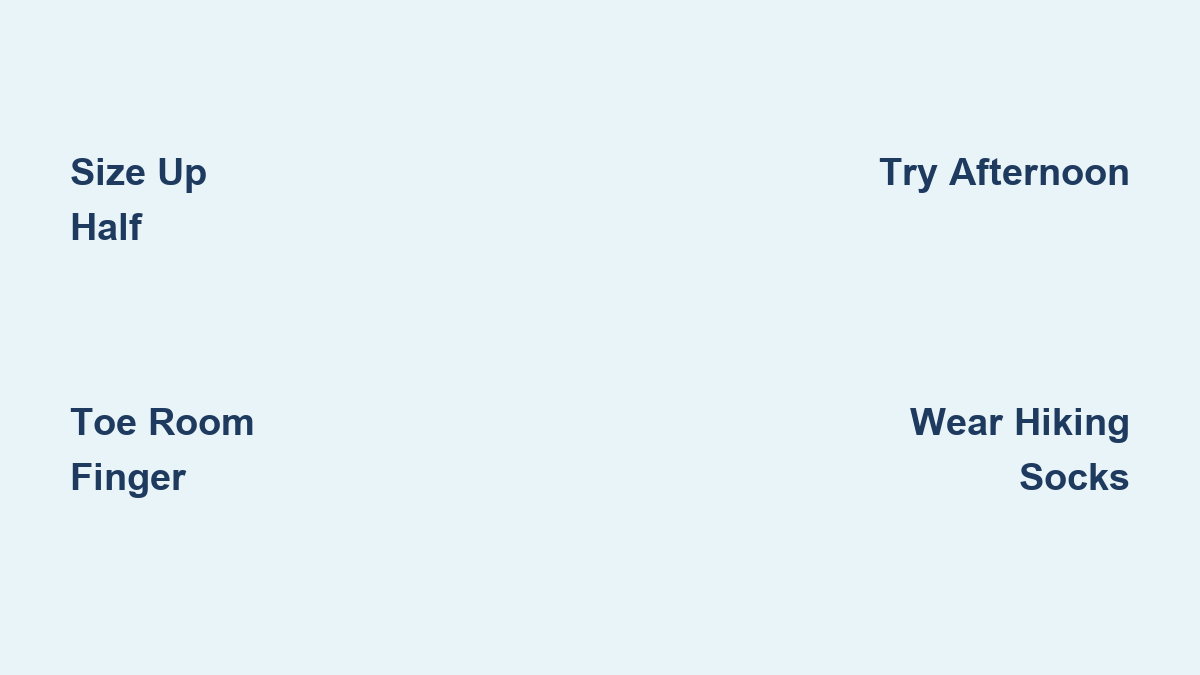
How to Choose Hiking Boot Size: Perfect Fit Guide
Sore feet, blisters, and black toenails—none of these should be the price of enjoying the outdoors. Yet, thousands of hikers cut trips short or endure pain simply because they didn’t know how to choose hiking boot size correctly. Unlike everyday shoes, hiking boots must accommodate swelling, steep terrain, and hours of continuous wear. A fit that feels snug in the store can turn punishing on mile five. The difference between a great hike and a miserable one often comes down to one decision: getting the right size. This guide walks you through the exact steps to ensure your boots fit perfectly—from measuring your feet the right way to testing for heel slippage and toe room. You’ll learn why timing matters, how socks change everything, and why no two brands fit the same.
Size Up from Regular Shoes
Why Hiking Boots Run Small
Most hikers need to size up by half to a full size from their regular footwear. Everyday shoes are built for short walks and level ground, not for downhill descents or foot swelling after eight miles. When you hike, especially downhill, gravity pulls your foot forward, increasing impact on your toes. Without extra space, this causes toe bang—a common culprit behind bruised or lost toenails. Many hikers report switching up a size after painful experiences: one with a US 11 moved to 11.5 or 12; another jumped from size 7 to 7.5 after losing four toenails on the West Coast Trail. These aren’t rare cases—they’re warnings from the trail. That extra half-inch of room isn’t wasted space; it’s protection against injury.
When Not to Size Up Automatically
While upsizing is common, it’s not a one-size-fits-all rule. Modern hiking socks are thinner and more durable than ever, reducing the need for extra internal volume. If you’re using lightweight socks, going up a full size might create too much space, leading to heel slippage and friction. A Reddit user noted, “No real need for that—plenty of normally thin but tough walking socks these days.” Backpackers or thru-hikers carrying heavy loads should prioritize extra room. Day hikers on flat trails may only need a half-size increase. The key is matching size to your specific use—never assume bigger is always better.
Optimal Toe Room: Finger vs. Thumb Width
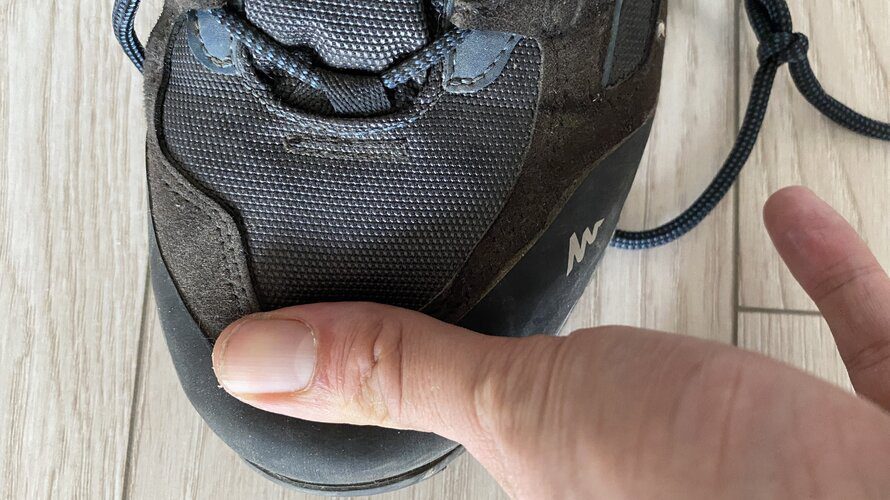
Half-Inch Clearance Rule
The standard recommendation is ½ inch (1.25 cm) of space between your longest toe and the boot’s front—about the width of your finger. This allows room for foot swelling and forward movement on descents. HANWAG Sales Manager Alexander März and the Sierra Club both endorse this minimum. To test, wear your hiking socks, press your heel back into the boot, and slide a finger alongside your foot near the big toe. If it fits snugly, you’re in the sweet spot. Less than this increases the risk of subungual hematoma, a painful condition where blood pools under the nail from repeated impact.
Full Thumb’s Width for Long-Distance Hikes
For backpackers or long-distance hikers, experts recommend ¾ to 1 inch (1.9–2.5 cm) of toe room—roughly a full thumb’s width. CURREX, a leader in performance insoles, advises this extra space to handle significant swelling over 10+ miles, especially in heat or at altitude. One hiker found EU 41.5 too tight despite it being their usual size; stepping up to 42 provided crucial relief. This isn’t about loose fit—it’s strategic room. Your heel should stay locked down while your toes have space to move forward without hitting the front wall.
Proper Fitting Techniques
Measure Feet at Home or In-Store
Start with accurate measurements. Use a Brannock Device at an outdoor store or measure at home: place paper on the floor, stand barefoot with your heel against a wall, trace your feet, and measure from heel to longest toe. Record both length and width—many brands offer wide (2E, 4E) or narrow options. Also assess arch height, as it affects insole compatibility. One hiker with a D-width right foot struggled with Merrell Moab 3s: size 15 fit length but was too narrow; size 16 added width but was too long. Always size for your larger foot.
Try On Boots in the Afternoon
Feet swell throughout the day—up to 8% in volume during prolonged activity. Testing boots in the morning gives a false sense of fit. Always try them on in the afternoon or evening, when your feet are largest. This mimics real trail conditions. If boots feel snug at noon, they’ll feel tight by mile five. Schedule your fitting late in the day and wear your actual hiking socks.
Wear Hiking Socks During Fitting
Never try on boots with dress or gym socks. Wear your hiking sock system:
– A liner sock (thin, moisture-wicking).
– Overlaid with a midweight wool or synthetic outer sock.
Some hikers even test with two pairs of socks to simulate multi-day swelling. Sock thickness directly impacts fit—what feels roomy with thin socks may become cramped with hiking gear.
Test on Inclines and Slopes
Flat floors don’t reveal trail performance. Ask store staff for a ramp or walk up and down stairs. Simulate uphill and downhill motion:
– On inclines, your heel should stay locked.
– On declines, check for toe bang.
Walk on both carpeted and hard surfaces. Spend at least 30 minutes in the boots. Hot spots or pressure points won’t disappear—they’ll worsen. One hiker ignored slight pinkness on the ankle bone; within three miles, it turned into a blister.
Use the Insole Test
Remove the factory insole and stand on it. Your foot should have:
– ¼ inch (6 mm) clearance on the sides and heel.
– ½ to 1 inch (1.25–2.5 cm) at the toe.
This visual check confirms internal fit. If your foot extends beyond the edge, the boot is too small. If there’s excessive space, consider lacing or insoles. This trick is especially helpful for online purchases—compare your foot tracing to the insole outline.
Break In Before the Trail
Gradual Wear Reduces Risk
New boots need a break-in period of 20–30 miles. Wear them around town, on short walks, or with a daypack. Leather boots mold to your foot; synthetics won’t stretch much. One user wore new boots straight on a 12-mile hike—result: two blisters and a ruined trip. Breaking in boots gives time for returns if needed. Keep tags and packaging until fully tested.
Watch for Warning Signs
During break-in, monitor for:
– Persistent pressure points.
– Heel slippage over 3–5 mm.
– Toe impact when walking downhill.
If any occur, adjust lacing, try different insoles, or return the boots. Discomfort won’t fade—it usually gets worse. A well-fitted boot should feel secure from day one.
Material and Construction Impact Fit

Leather Molds to Your Foot
Leather hiking boots stretch and adapt over time. Full-grain or nubuck leather conforms to your foot’s shape, especially with wear and moisture. HANWAG notes leather-lined boots adapt better than textile ones. If you’re between sizes and plan long-term use, a slightly snug leather boot may work. But avoid this with synthetic models—they offer minimal stretch.
“Those are leather, so they’ll break in. Unless you want to wear them with thick socks, I’d get the smaller size.” — xrelaht (Reddit)
Synthetic Boots Require Exact Fit
Textile or synthetic uppers don’t stretch significantly. What fits in the store is what you’ll have on the trail. These boots are often lighter and faster-drying but demand precision. If they feel tight during fitting, they’ll stay tight. Prioritize brands known for consistent sizing if buying online. Always double-check return policies.
Width and Foot Shape Matter
Choose Based on Width, Not Just Length
Size isn’t just about length—width and volume are equally important. Standard widths are D (men) and B (women), but many hikers need wider. Brands like Altra, New Balance, and Danner offer multiple width options. One user faced a dilemma: size 15 fit width but was short; size 16 fit length but felt loose. Without proper width, no size works perfectly.
Accommodate Asymmetrical Feet
Many people have one foot longer or wider than the other. Always size for the larger foot. Use insoles to reduce volume in oversized boots. For leather models, consider professional stretching to widen the toe box or instep.
Fix Heel Slippage

Causes of Heel Lift
Some heel lift (3–5 mm) is normal in new boots. But excessive movement causes blisters. Common causes:
– Boots too large.
– Worn or stretched laces.
– High instep or narrow heel.
– Insoles that don’t grip.
Solutions That Work
- Upgrade Laces: Replace factory laces with non-stretch, flat laces.
- Use Heel Lock Lacing: Apply the runner’s loop or surgeon’s knot to lock the ankle.
- Replace Insoles: Use supportive, non-slip models like CURREX HIKEPRO™ with decoupled heel cups.
- Add Heel Pads: Stick-on pads reduce slippage and cushion pressure.
“CURREX HIKEPRO insoles fix slippage by filling in gaps in fit and locking the heel in place.” — CURREX Guide
Brand Sizing Varies Widely
No Universal Standard Exists
Sizing differs across brands—and even within the same brand. Salomon tends to run narrow; Merrell often fits true to size; Altra offers wide toe boxes. La Sportiva and Scarpa fit snugly. One Reddit user said, “Sizing is absolutely all over the place between, sometimes within, brands!” Never assume your size in one brand translates directly.
Try Multiple Models
Always try on several brands before buying. If you wear a size 10 in Merrell, you might need a 10.5 in Salomon or a 9.5 in La Sportiva. Bring your socks and test each pair thoroughly.
Buy from Stores with Good Returns
Protect Yourself with Flexible Policies
Buying online saves money but risks poor fit. Mitigate risk by purchasing from retailers with generous return windows:
– REI: One-year, no-questions-asked returns.
– Backcountry, Moosejaw: 30–90 days.
– Zappos: 365-day return policy.
Keep tags, boxes, and receipts. Test boots on short hikes before long trips.
Final Fit Checklist
Before buying, confirm:
– [ ] Measured feet in the afternoon.
– [ ] Tried on with hiking socks.
– [ ] Walked on inclines and slopes.
– [ ] Checked for heel slippage and pressure points.
– [ ] Verified ½ to 1 inch of toe room.
– [ ] Considered width and arch support.
– [ ] Confirmed return policy.
Use this checklist every time.
Summary: How to Choose Hiking Boot Size
| Factor | Best Practice |
|---|---|
| Size | Size up ½ to 1 full size from regular shoes |
| Toe Room | ½ inch minimum, 1 inch preferred for long hikes |
| Socks | Wear liner + outer hiking socks during fitting |
| Time of Day | Try on in afternoon/evening |
| Width | Match foot width; choose wide/narrow if needed |
| Material | Leather stretches; synthetics need exact fit |
| Testing | Walk on slopes, test heel lock, pressure points |
| Insoles | Upgrade for better grip and support |
| Returns | Buy from stores with long return windows |
| Break-In | Wear 20–30 miles before long treks |
The perfect hiking boot isn’t the one that looks best—it’s the one that disappears on your feet. Invest time in fitting, and you’ll walk farther, longer, and pain-free.