How to Choose Hiking Boots: A Simple Guide
If your feet ache after a short trail walk or you’ve slipped on a damp incline, the culprit isn’t always the terrain—it’s likely your boots. Choosing hiking boots isn’t about chasing trends or brand names. It’s about matching your foot shape, hiking style, and trail conditions to the right footwear. The wrong pair can mean blisters, rolled ankles, or early trip cancellations. But the right hiking boot transforms rugged climbs into confident strides and long miles into enjoyable adventures.
With endless options—trail runners, mid-cut boots, waterproof models, stiff mountaineering gear—it’s easy to feel lost. The answer lies in three core principles: fit, function, and terrain. This guide cuts through the marketing noise and gives you a clear, step-by-step framework to choose hiking boots that support your specific needs—whether you’re day hiking in Colorado or backpacking through the Andes.
Match Your Boots to Your Hiking Style
Before browsing shelves, ask: What kind of hiking do I actually do? Your answer determines everything.
Choose Based on Hike Type and Load
A 3-mile weekend trail demands less from your boots than a week-long trek with a 40-pound pack. Trail runners work well for light day hikes, especially if you have strong ankles and prioritize speed. But if you’re backpacking with heavy gear, mid- or heavyweight boots provide the ankle support and sole stiffness needed for stability.
Fastpackers and ultralight hikers often prefer low-cut shoes—they’re lighter, require no break-in, and reduce fatigue over long distances. For off-trail bushwhacking or alpine scrambles, high-cut, stiff-soled boots are non-negotiable. They protect your feet from rocks and roots and prevent ankle rolls on uneven ground.
Consider Terrain and Weather Conditions
Rocky ridgelines call for aggressive tread and maximum ankle support. Desert trails? Lightweight, breathable shoes keep your feet cool. If you’re hiking in wet, muddy environments—like Scotland’s peat bogs—waterproof boots with full-grain leather uppers outlast synthetics, which degrade faster in acidic soils.
Cold or snowy hikes need insulated, crampon-compatible boots. But in hot climates, skip waterproof membranes—they trap sweat and increase blister risk. Instead, opt for breathable trail runners and use gaiters to keep out debris.
Account for Foot Shape and Pack Weight
Flat feet, high arches, or past ankle injuries change your footwear needs. Stiff midsoles reduce foot strain under heavy loads and on uneven terrain. If you carry more than 30 pounds, prioritize resoleable construction and ankle support.
And remember: feet swell during hikes. Always test boots with the socks and insoles you plan to wear. A perfect fit at home might turn painful after five miles.
Compare Hiking Footwear Types
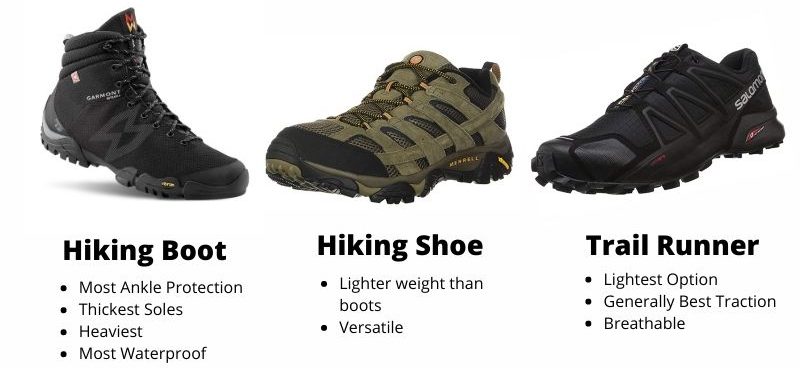
Not all hiking boots are the same. Start by selecting the right category—then refine based on features.
Trail Runners: Lightweight and Fast
- Best for: Day hikes, dry trails, speed-focused treks
- Weight: Under 1.5 lbs
- Pros: No break-in, excellent breathability, natural ground feel
- Cons: Minimal ankle support, poor protection on sharp terrain, shorter lifespan (~500 miles)
- Top picks: Altra Lone Peak (wide toe box), Hoka Speedgoat (plush cushioning)
Ideal for hikers with strong ankles, warm climates, or ultralight goals.
Hiking Shoes: Balanced for Everyday Trails
- Best for: Moderate trails, day hikes, mixed conditions
- Weight: 1.5–2 lbs
- Pros: Durable, flexible, comfortable out of the box
- Cons: Less ankle protection, may let in dirt
- Top picks: Salomon X Ultra 4 (secure fit), Merrell Moab (affordable, reliable)
Great for casual hikers or those transitioning from running shoes.
Lightweight Hiking Boots
- Best for: Fastpacking, alpine routes, warm weather
- Weight: Under 2 lbs, mid-cut
- Pros: Some ankle support, lighter than traditional boots
- Cons: Less durable, weaker in mud
- Note: Many brands exaggerate “lightweight”—always check actual weight.
Mid-Weight Hiking Boots
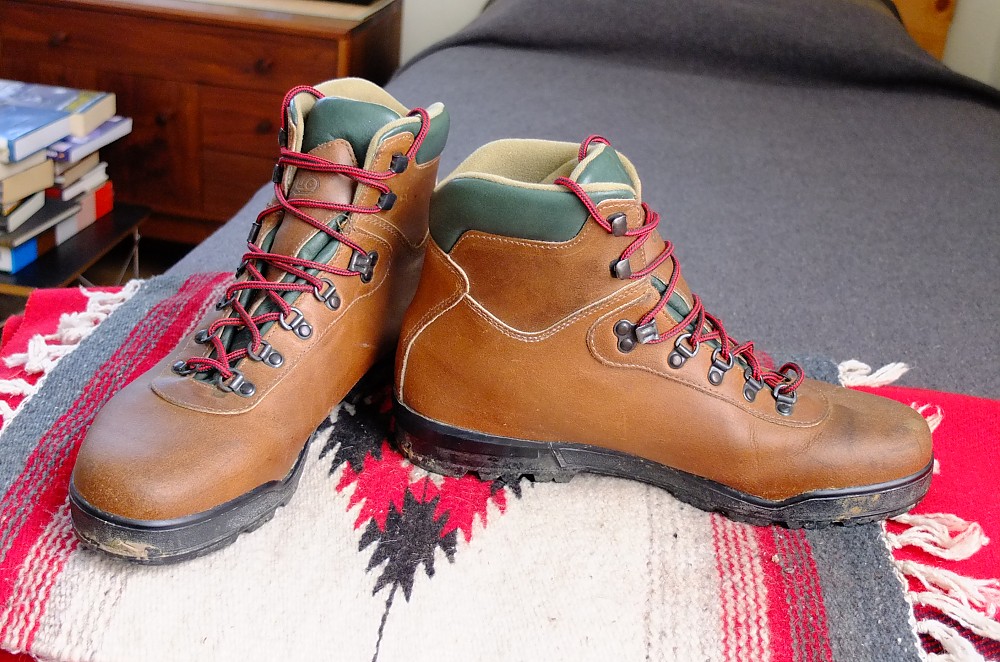
- Best for: Backpacking, rugged trails, variable weather
- Weight: 2–3 lbs
- Pros: Durable (~1,000 miles), resoleable, supports 25–40 lb packs
- Cons: Requires 3–7 day break-in
- Top picks: Asolo 520, Scarpa Terra GTX
The go-to choice for most backpackers tackling the Rockies, Alps, or Appalachian Trail.
Heavyweight Hiking Boots
- Best for: Mountaineering, winter hikes, extreme terrain
- Weight: Over 3 lbs, full-grain leather, rigid soles
- Pros: Maximum protection, long lifespan, crampon-ready
- Cons: Heavy, poor breathability, long break-in
- Top for: Kilimanjaro, Everest Base Camp, off-trail expeditions
Overkill for casual hikers—but essential when safety is on the line.
Prioritize Key Boot Features

Once you’ve picked a category, focus on technical details that affect performance.
Ankle Support: Low, Mid, or High?
- Low-cut: Best for stable ankles and flat trails—offers flexibility and speed
- Mid-cut: Reduces roll risk on uneven ground—ideal for most hikers
- High-cut: Essential for heavy packs or steep descents
If you’ve had ankle injuries, go mid- or high-cut. If you value mobility, low-cut may suffice.
Sole Stiffness: Flexible vs. Rigid
- Flexible soles: Let you feel the trail, reduce fatigue on smooth paths
- Stiff soles: Protect from sharp rocks, improve stability with heavy loads
Choose stiff soles for backpacking or off-trail hiking. Flexible soles suit fast hikers and well-maintained trails.
Traction and Outsole Design
Your outsole is your lifeline on slippery terrain.
- Lug depth: 4–6 mm is standard. Deeper lugs grip mud; shallower ones excel on rock.
- Rubber compound: Vibram® is the gold standard—found on Scarpa, La Sportiva, and Salomon. It offers superior wet/dry traction and durability.
Avoid boots with generic rubber—it wears fast and slips easily.
Waterproofing: Gore-Tex vs. Breathable
Gore-Tex Pros:
- Keeps feet dry in rain, snow, and mud
- Insulates in cold conditions
- Ideal for backpacking in unpredictable weather
Gore-Tex Cons:
- Traps sweat—feet get wet from inside
- Slower drying if water enters over the cuff
- Overkill in hot, dry climates
Better alternatives:
– Non-waterproof shoes + gaiters: Stay dry, stay cool
– DWR spray: Water-repellent coating for uppers
– Own two pairs: Waterproof boots for wet trips, trail runners for dry
“Gore-Tex means your feet sweat more in heat.” – Hiker feedback
Fit Right: Avoid Pain Before It Starts
Fit isn’t just comfort—it’s injury prevention.
Sizing for Hiking Boots
- Toe space: Leave 0.5–1 inch (thumb’s width) at the front—prevents black toenails on descents
- Heel lock: No slippage during climbs or drops—use the “Runner’s Knot” to secure
- Width: Toes should spread naturally—critical for wide feet or bunions
- Volume: High-arched feet need high-volume boots
How to Test Fit
- Shop in the afternoon—feet swell as the day goes on
- Wear hiking socks—test with wool blends or liner + outer sock
- Bring orthotics—insert custom insoles before trying on
- Walk on inclines—simulate uphill/downhill movement
- Check pressure points—watch for rubbing at ankle, heel, or ball
“Walking around the store won’t cut it.” – Experienced hiker
Know Brand Fit Differences
- Scarpa: Runs wide—great for broad feet
- La Sportiva: Narrow toe box—best for slender feet
- Altra: Zero-drop, wide toe box—promotes natural splay
- Merrell, Oboz, Salomon: Offer wide-width options
“My size 8 in one brand doesn’t fit the same in another.” – User
Always try multiple brands—even if you think you know your size.
Evaluate Materials and Build Quality
Materials impact durability, weight, and breathability.
Upper Materials
- Full-grain leather: Durable, water-resistant, molds to foot—ideal for long-term use
- Synthetic mesh: Lightweight, dries fast, breathable—less durable
- Nubuck leather: Sanded finish, more breathable than full-grain—still tough
Midsoles and Shanks
- EVA foam: Lightweight cushioning—breaks down over time
- Polyurethane (PU): Denser, more durable, heavier
- Shanks (plastic, fiberglass, steel): Add rigidity—essential for heavy loads
Outsoles: Vibram and Beyond
- Vibram®: Industry leader—excellent grip and abrasion resistance
- Non-marking rubber: Good for scrambling or climbing
- Lug pattern: Deep for mud, shallow for rock
Avoid generic rubber—it degrades quickly.
Maximize Durability and Value
A $200 boot should last years—not months.
Lifespan by Type
- Trail runners: ~500 miles
- Mid-weight boots: ~1,000 miles
- Leather boots: 1,500+ miles with resoling
Resoleability Matters
- Welted construction (e.g., Asolo, Zamberlan): Can be resoled multiple times
- Bonded soles: Not resoleable—discard when worn
“After fit, resoleability is my top priority.” – Hiker
Resoling costs $50–100—far cheaper than buying new.
Care for Longevity
- Clean after every hike: Brush off dirt and mud
- Dry naturally: Never use heat—destroys glue
- Re-waterproof: Apply DWR spray every few months
- Store properly: Cool, dry, ventilated space
- Prevent odor: Use cedar inserts or Boot Bananas
“Drying boots near heat deconstructs them—often at the worst time.” – Expert advice
Break Them In Properly
- Don’t skip break-in—especially for leather boots
- Method:
1. Wear 1–2 hours at home
2. Progress to short walks, then day hikes
3. Use moisture-wicking socks - Goal: Let materials mold without causing blisters
Make Your Final Choice
Use this checklist to decide:
| Factor | Choose Boots? | Choose Shoes/Runners? |
|---|---|---|
| Heavy pack (>30 lbs) | ✅ Yes | ❌ No |
| Rugged or off-trail | ✅ Yes | ❌ No |
| Wet/muddy conditions | ✅ Yes (waterproof) | ⚠️ Only with gaiters |
| Hot/dry climate | ❌ No | ✅ Yes (breathable) |
| Day hikes on trails | ⚠️ Overkill | ✅ Yes |
| Ankle instability | ✅ Yes | ❌ No |
| Need quick-dry | ❌ No | ✅ Yes |
| Long-term durability | ✅ Yes | ❌ No |
| Natural gait preference | ❌ No | ✅ Yes |
There’s no single “best” hiking boot. The right choice fits your feet, supports your load, and matches your terrain. Try on multiple pairs. Walk in them. Trust how they feel—not just the specs. Because at the end of the day, your boots aren’t just gear—they’re your foundation on the trail.