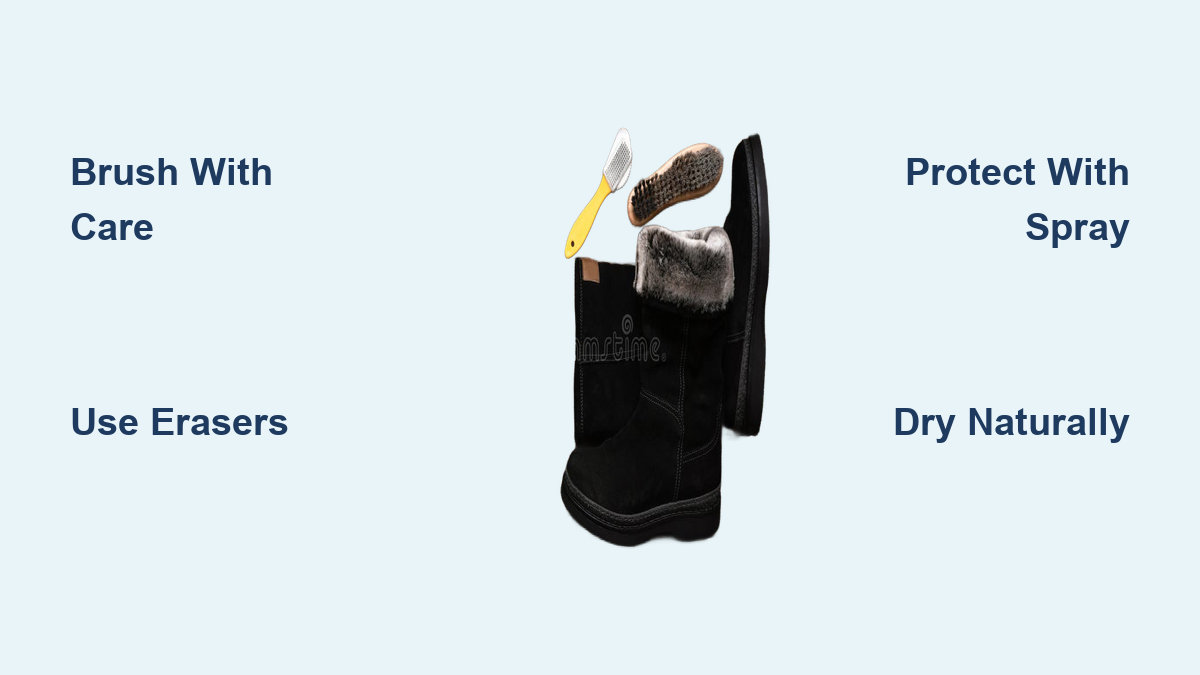
Suede Boot Care Guide: Quick Steps
Suede boots elevate any outfit with their soft, velvety texture—but that signature feel makes them notoriously high-maintenance. One wrong move, like using a regular shoe brush or drying near a heater, can leave permanent damage. Suede boot care requires a different approach than smooth leather because the material’s porous nap traps dirt, absorbs moisture, and flattens with wear.
The good news? A consistent routine using the right tools keeps your boots looking sharp for years. This guide covers everything from daily brushing to deep stain removal and color restoration. You’ll learn professional techniques for tackling scuffs, oil spots, salt stains, and faded patches without ruining the leather.
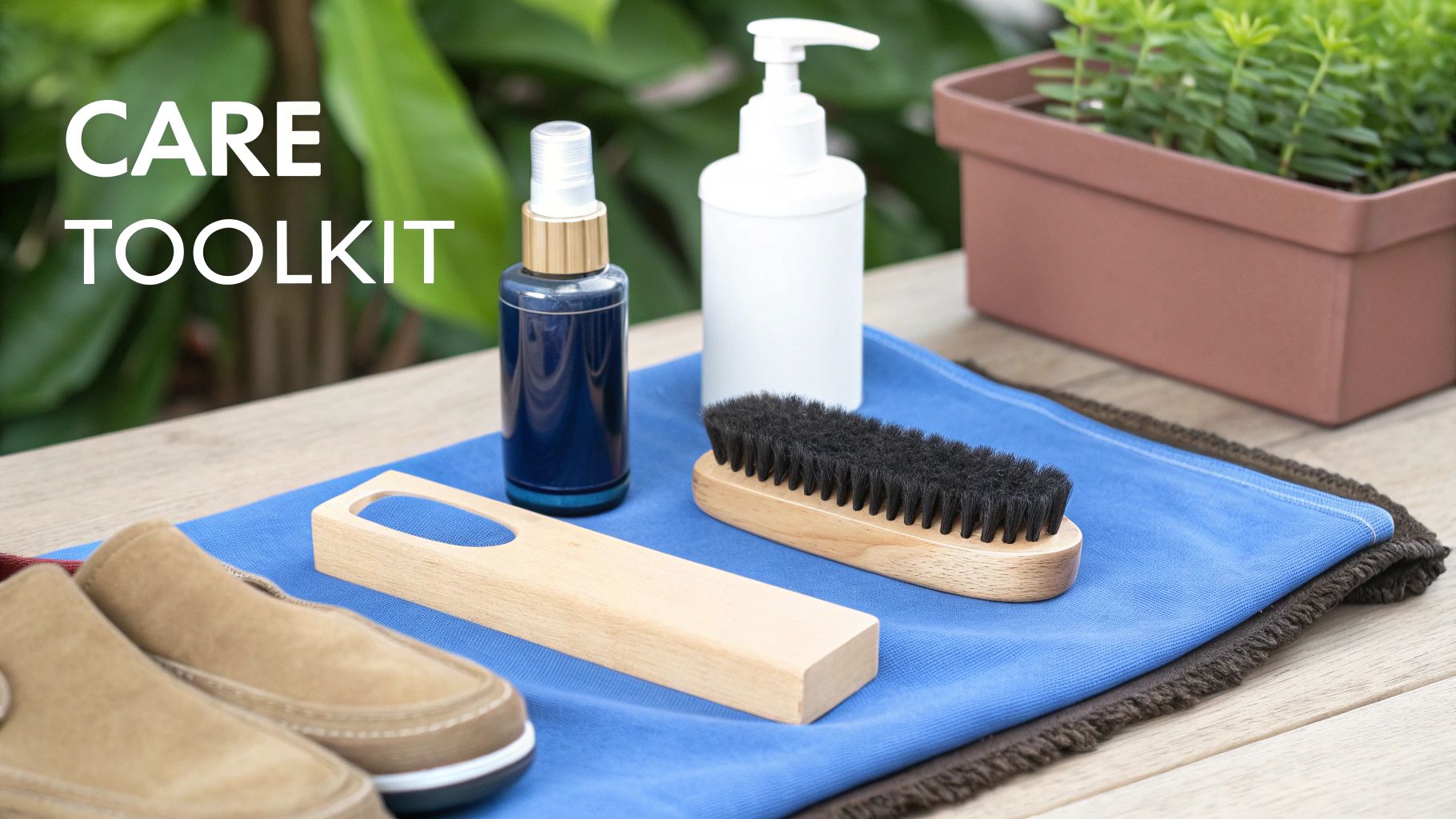
Essential Suede Care Tools

Choose the Right Brush
Brushing forms the backbone of suede boot care, but brush selection matters. Each type serves a distinct purpose:
- Crepe brush: Made of natural rubber, lifts the nap gently after cleaning or steaming. Ideal for restoring texture without abrasion.
- Brass or stainless steel brush: Tackles stubborn dirt and flattened areas. Use firm, short strokes, always finishing with the grain to prevent fiber damage.
- Boar hair brush: Soft enough for daily dusting and nap maintenance between wears.
Never use a brush previously used on smooth leather. Wax residues will stain and stiffen suede fibers.
Use Specialized Erasers and Blocks
When brushing falls short, erasers target specific marks:
- Suede eraser (rubber block): Works like a pencil eraser on scuffs, water rings, and light oil spots.
- Gommadin sandstone block: More aggressive option for grease, deep stains, and salt marks. Gently abrades the surface to expose clean leather underneath.
Always brush the area after erasing to remove residue and lift the nap.
Stock Key Cleaning Supplies
Keep these essentials within reach:
- Microfiber cloths: Lint-free for blotting liquids and wiping solutions.
- White vinegar: Mix 2 parts water with 1 part vinegar for salt stains.
- Cornstarch or talcum powder: Draws oil and grease from pores.
- Cedar shoe trees: Absorb moisture, prevent odors, and maintain boot shape.
Without these items, minor issues quickly become permanent damage.
Prevent Damage Before It Starts
Dry Wet Boots the Right Way
Water poses the biggest threat to suede, but drying technique makes all the difference.
If your boots get wet:
1. Remove insoles if possible.
2. Stuff tightly with newspaper or paper towels. Replace as paper absorbs moisture.
3. Dry at room temperature, away from radiators, sunlight, or heated floors.
Never use direct heat. Fast drying causes fibers to tighten, crack, and lose suppleness. Full drying takes 12–24 hours, and patience preserves the leather.
Apply Protector Spray Early and Often
Protect new boots before first wear.
Steps:
1. Clean and dry the suede thoroughly.
2. Brush to open the nap.
3. In a ventilated area, spray 6–10 inches from the surface.
4. Apply 1–2 light coats of fluorinated resin or water-based protector.
5. Let dry 10–30 minutes, then brush lightly.
Reapply every 1–2 months or when water stops beading on the surface. Avoid silicone-based sprays, which dry out leather over time.
Rotate and Store Properly
Wearing the same pair two days in a row shortens their lifespan.
Suede needs 24+ hours to release absorbed moisture. Rotate between at least two pairs.
For storage:
– Use breathable cotton shoe bags, never plastic.
– Keep in a cool, dark place since UV light fades dyes.
– Always insert cedar shoe trees to prevent creasing and odors.
Proper storage prevents 80% of long-term damage.
Remove Stains Like a Pro
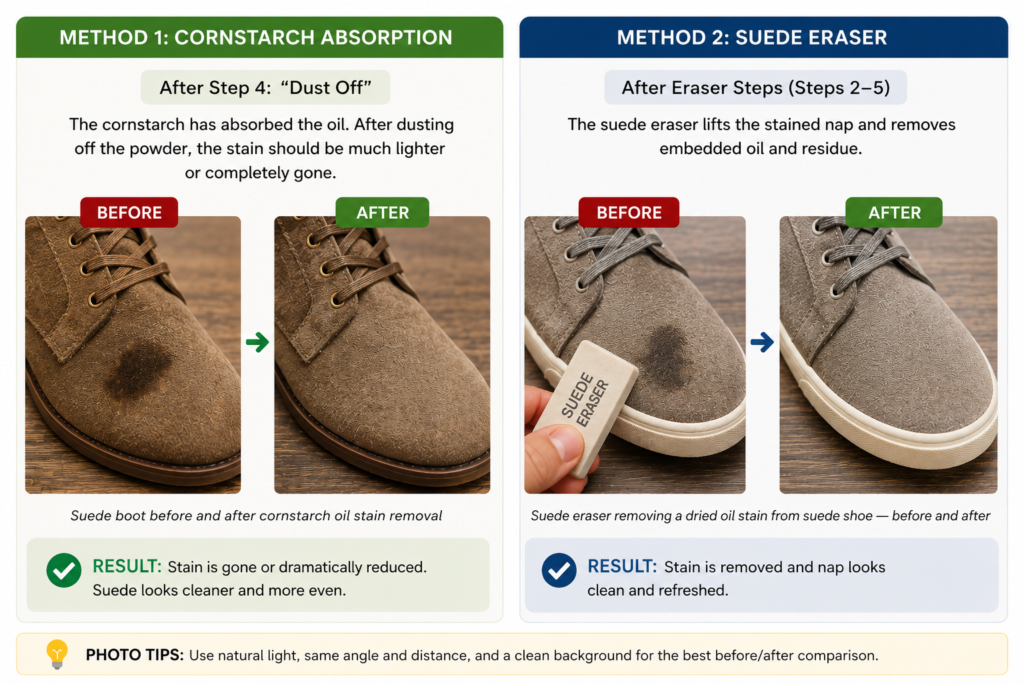
Fix Scuff Marks Fast
Scuffs flatten the nap but are usually easy to correct.
Steps:
1. Rub a suede eraser over the mark with short, firm strokes.
2. For deep scuffs, lightly dab with a vinegar-dampened cloth first.
3. Brush with a crepe or brass brush to restore texture.
The result is an invisible scuff and restored nap.
Eliminate Oil and Grease Stains
Oil soaks deep, so speed matters.
Do not rub or apply water immediately.
Instead:
1. Blot excess oil with a dry cloth.
2. Cover the stain with cornstarch or talcum powder.
3. Let sit overnight so the powder pulls oil to the surface.
4. Brush away powder with a suede brush.
Repeat if needed. For stubborn stains, use a suede-specific cleaner like Omninettoyant.
Treat Salt and Water Stains
Salt stains appear as white streaks in winter. Water rings create uneven tones.
For salt stains:
1. Mix 2 parts water with 1 part white vinegar.
2. Dab solution on the stain with a clean cloth.
3. Blot with plain water to remove vinegar.
4. Dry naturally, then brush.
For water rings:
1. Dampen a cloth with water.
2. Moisten the entire stained area to blend tones.
3. Blot and air dry without rushing.
Both methods prevent permanent discoloration.
Deep Clean When Needed
Wash Suede Safely
Brushing and spot cleaning aren’t always enough. Heavily soiled boots require a full wash.
You’ll need:
– Suede shampoo (such as Omninettoyant)
– Soft brush or applicator
– Clean water
– Paper towels or shoe trees
Steps:
1. Remove loose dirt with a brush.
2. Mix 2 caps of shampoo into 200–300ml of water.
3. Gently work solution into suede with a soft brush.
4. Rinse with clean water until no soap remains.
5. Stuff with paper and dry naturally.
6. Once dry, use a crepe or brass brush to lift the matted nap.
Never machine wash or soak suede. This weakens fibers and causes shrinkage.
Restore Nap After Washing
Washed suede often dries stiff and flat.
Fix it with steam:
1. Hold boots several inches above a boiling kettle or steam iron.
2. Warm the surface without wetting it.
3. Immediately brush with a crepe brush to lift fibers.
Alternative: For overly “furry” nap, pass a lighter flame quickly and continuously over the surface to singe excess fibers. Keep the flame moving and never stop in one spot.
Revive Faded Color and Texture

Restore Black Suede’s Depth
Black suede fades to grey, especially at high-contact points.
Use a pigmented renovator spray:
1. Test on a hidden area like the inside tongue.
2. Choose black (not neutral) for true color match.
3. Spray evenly from 6–8 inches away.
4. Let dry, then brush lightly.
The spray conditions and recolors in one step, making it ideal for worn toes and heels.
Fix Flattened or Matted Nap
Daily wear flattens the nap and dulls appearance.
Step-by-step revival:
1. Steam the area lightly.
2. Brush with a brass brush using firm, short strokes.
3. Finish with a crepe brush to smooth and align fibers.
For severe matting, repeat after a second steaming.
Prevent “Furry” Texture
Over-brushing or moisture can leave long, uneven fibers.
Solution: Flame treatment (advanced):
– Use a butane lighter.
– Move the flame continuously across the surface.
– Singe only the tips without charring or blackening.
Use sparingly. Overuse thins the nap permanently.
Maintain Long-Term Boot Health
Follow a Weekly Care Routine
Consistency prevents major issues.
After every 2–3 wears:
– Brush with a boar hair or crepe brush.
– Check for stains or moisture.
– Insert cedar shoe trees.
This takes 2 minutes but extends boot life by years.
Re-Wax Sole Edges
Raw leather welts and soles absorb water.
Use a wax crayon:
1. Match color to the sole edge.
2. Rub crayon over worn areas.
3. Buff lightly.
This creates a water-resistant seal at vulnerable points.
Know When to Go Pro
Some problems need expert hands.
Seek professional care for:
– Deep oil stains that resist powder treatment.
– Structural damage or sole separation.
– Severe discoloration requiring re-dyeing.
– Full cleanings every 2–3 years for heavily used boots.
DIY works for 90% of care, but pros handle the rest safely.
Troubleshoot Common Issues Fast
Fix Stiff or Cracked Suede
Caused by improper drying or lack of conditioning.
Solution:
1. Steam lightly to relax fibers.
2. Brush with a crepe or brass brush.
3. Apply a suede-specific conditioner spray after testing.
Avoid oils or creams, which darken suede.
Handle Water Soak Immediately
Boots submerged in puddles? Act now.
- Remove insoles.
- Stuff with paper and replace as it wets.
- Dry at room temperature without heat.
- Once dry, brush and re-protect.
No shortcuts exist. Rushing causes permanent stiffness.
Test Products First
Never apply anything without testing.
Try cleaners, sprays, or crayons on:
– Inside tongue
– Heel counter (inside)
– Under the welt
Wait 10 minutes. If no discoloration or texture change appears, proceed.
Frequently Asked Questions About Suede Boot Care
Can water be used on suede?
Yes, but sparingly. Water helps treat water stains by blending tones and removes salt stains when mixed with vinegar. However, soaking should be avoided unless performing a full wash with specialized shampoo. Always allow natural drying afterward.
Is soap or detergent safe for suede?
No. Standard soaps and household cleaners damage the nap, leave shiny patches, and alter texture. Use only cleaners specifically formulated for suede or mild white vinegar solutions.
Can regular shoe polish be used on suede?
No. Wax polishes and conditioners designed for smooth leather seal the nap, darken suede unevenly, and ruin the texture. Stick to suede-specific sprays and conditioners.
How do you restore color to black suede?
Black suede fades to grey or dusty tones. Use a black-pigmented suede renovator spray rather than a neutral one. This simultaneously conditions the leather and restores the deep black hue.
What is the difference in care for nubuck versus suede?
The care protocols are nearly identical. Both require brushing, erasing, and protecting. However, nubuck is slightly tougher and may withstand somewhat more vigorous brushing. The same products work for both materials.
How often should protector spray be reapplied?
Reapplication is recommended every 1–2 months for regular wearers, or immediately after heavy exposure to rain, snow, or staining agents. A simple water bead test indicates protection status. If water soaks in rather than beading, re-spray is needed.
Key Takeaways for Suede Boot Care
Suede boot care comes down to precision and consistency. The nap’s delicate structure demands the right tools, proper timing, and correct technique. Brush regularly, protect proactively, and treat stains early to keep your boots looking sharp through seasons of wear.
Remember these critical rules:
– Never use heat to dry suede
– Never use smooth leather products on suede
– Always act fast on spills
With this guide, you’re equipped to handle every scenario from salt stains to color fade. Your suede boots are an investment worth protecting. Treat them right, and they’ll reward you with years of timeless style.