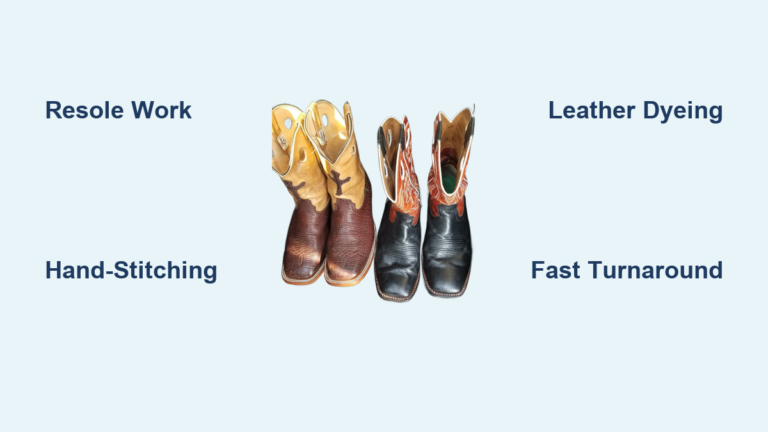
How to Repair Timberland Boots: Quick Steps
Your Timberlands have logged countless miles on worksites, trails, and city sidewalks. Now the soles are peeling, leather is cracking, or tread has worn smooth. Before tossing them, consider this: timberland boot repair is often cheaper, smarter, and more sustainable than replacement. This guide walks you through every option, from quick DIY fixes to premium restoration services, plus cost breakdowns and maintenance habits that keep your boots going strong.
You’ll learn how to assess damage accurately, choose the right repair method for your boot type, and avoid costly mistakes. Whether you handle scuffs at home or ship boots to specialists, the right approach saves money and extends your footwear’s life for years.
Choose the Right Professional Repair Service

Three main categories of repair providers serve Timberland owners: official programs, specialized mail-in artisans, and local cobblers. Each fits different needs, budgets, and timelines.
Use Timberland’s Official Recrafting Program
Timberland’s Recrafting Program focuses on sustainability and circular fashion. The brand partners with The Boot Repair Company (BRC) to restore boots regardless of age using approved materials and traditional craftsmanship.
- Locations: Leeds (UK), Wormerveer (Netherlands), and Germany
- Services: Sole replacement, upper repairs, deep cleaning, and conditioning
- Models accepted: 6-Inch Boots, Hiking Boots, Work (TiTAN), Boat Shoes, Chukkas, Chelsea Boots, Trainers, and Sandals
- Logistics: Mail boots to BRC; return shipping charged at checkout
- Pricing: Itemized per repair type on product pages
This program suits owners who want authentic restoration and heritage-quality results. Turnaround time isn’t listed, so expect 3–6 weeks based on standard mail-in service windows.
Try NuShoe for Premium U.S. Mail-In Service
NuShoe in San Diego has rebuilt over 4 million pairs since 1994. Their NuCraft process uses factory-grade materials and brand-specific techniques for Timberland, Red Wing, and Wolverine boots.
- Turnaround: 3–4 weeks including round-trip shipping
- Fixed pricing: $95 for both Outdoorsman and Traveler packages
- Outdoorsman NuCraft: Designed for hiking, hunting, or work boots
- Traveler NuCraft: Ideal for casual rubber-soled styles
- Payment: No charge until repair work begins
- Guarantee: Satisfaction guaranteed
NuShoe also sells cedar boot trees ($30) and recommends Balm Proofer™ for post-repair protection. This is the top choice for U.S.-based owners wanting reliable, brand-specific resoling.
Choose The Cobblers for Luxury Restoration
The Cobblers connects customers with vetted artisans nationwide who specialize in high-end footwear. They handle complex jobs requiring craftsmanship beyond basic resoling.
- Turnaround: 30–60 days (longer if custom parts are needed)
- Services: Sole repair, crack filling, leather replacement, refinishing, stitching, hardware swaps, and metal replating
- Materials: Exact color and grain leather matching
- Drop-off: Miami and Boca Raton, Florida
- Payment: Small deposit upfront; balance due upon completion
This service fits boots with sentimental value or extensive damage requiring white-glove treatment.
Find Quality in Local Cobbler Networks
Local shops offer immediate, community-based service. New York City market data shows significant variance in capability:
- Premium Cobbler (Upper East Side): 4.8/5 rating, noted for restoring 5-year-old Timberlands
- Astoria Shoe Repair: 4.7/5 rating, results “as good as new”
- Giovanni’s Shoe Repair: 4.7/5 rating, aesthetic restoration comparable to high-end brands
- Express Shoe Repair (Civic Center): 4.5/5 rating, offers rapid turnaround under 24 hours
Warning signs to watch: One documented case involved a shop attaching non-Timberland heels to Frye boots. Another Red Wing Store reviewer noted, “Timberland is a waste as a work boot,” suggesting possible brand bias. Always confirm Timberland-specific experience before committing.
Assess Your Boot Damage Before Deciding

The type and severity of damage determines whether DIY works or professional help is needed. Diagnose first to avoid wasted time and money.
Fix Light Scuffs at Home
Surface scuffs don’t require expert help. With basic tools, you can restore appearance in minutes.
Remove scuffs in 4 steps:
1. Heat the area with a hair dryer on low setting to soften the leather
2. Buff in circles with a clean cloth to spread dye and smooth edges
3. Apply petroleum jelly or color-matched leather balm if the scuff remains
4. Seal with conditioner followed by Balm Proofer™ for water resistance
For suede or nubuck, use Renewbuck™ Foaming Cleanser instead of saddle soap.
Decide DIY vs. Pro for Separated Soles
Sole detachment is common after heavy use. The fix depends on separation depth and boot purpose.
Reattach a loose sole (DIY method):
1. Clean thoroughly using a toothbrush to remove dirt from crevices
2. Sand the surface with fine-grit paper to improve adhesion
3. Apply leather glue (like Barge Cement) to both sole and upper
4. Let dry 5 minutes until tacky
5. Press firmly together and clamp with rubber bands overnight
6. Optional: Add hobnails for extra reinforcement
This works for minor separations on casual boots. For work boots or deep structural gaps, professional resoling is essential. DIY glue won’t survive heavy stress.
Match Crack Repair to Severity
Cracks range from cosmetic to structural. Early treatment prevents worsening.
Fix shallow cracks at home:
1. Clean with mild soap and soft cloth
2. Test conditioner on a hidden spot first
3. Apply leather conditioner into cracks using the back of a spoon
4. Let soak overnight and repeat if needed
Use mink oil or lanolin-based conditioners for deep moisturizing.
Repair deep or wide cracks professionally:
Deep cracks compromise boot integrity. The professional protocol involves cleaning with saddle soap, stretching with newspaper, sanding with 600-grit paper, filling with leather filler (multiple layers if shrinking), sanding flat, dyeing to match, and sealing. Only attempt this at home with proper supplies and experience.
Compare Repair Costs: DIY vs. Professional
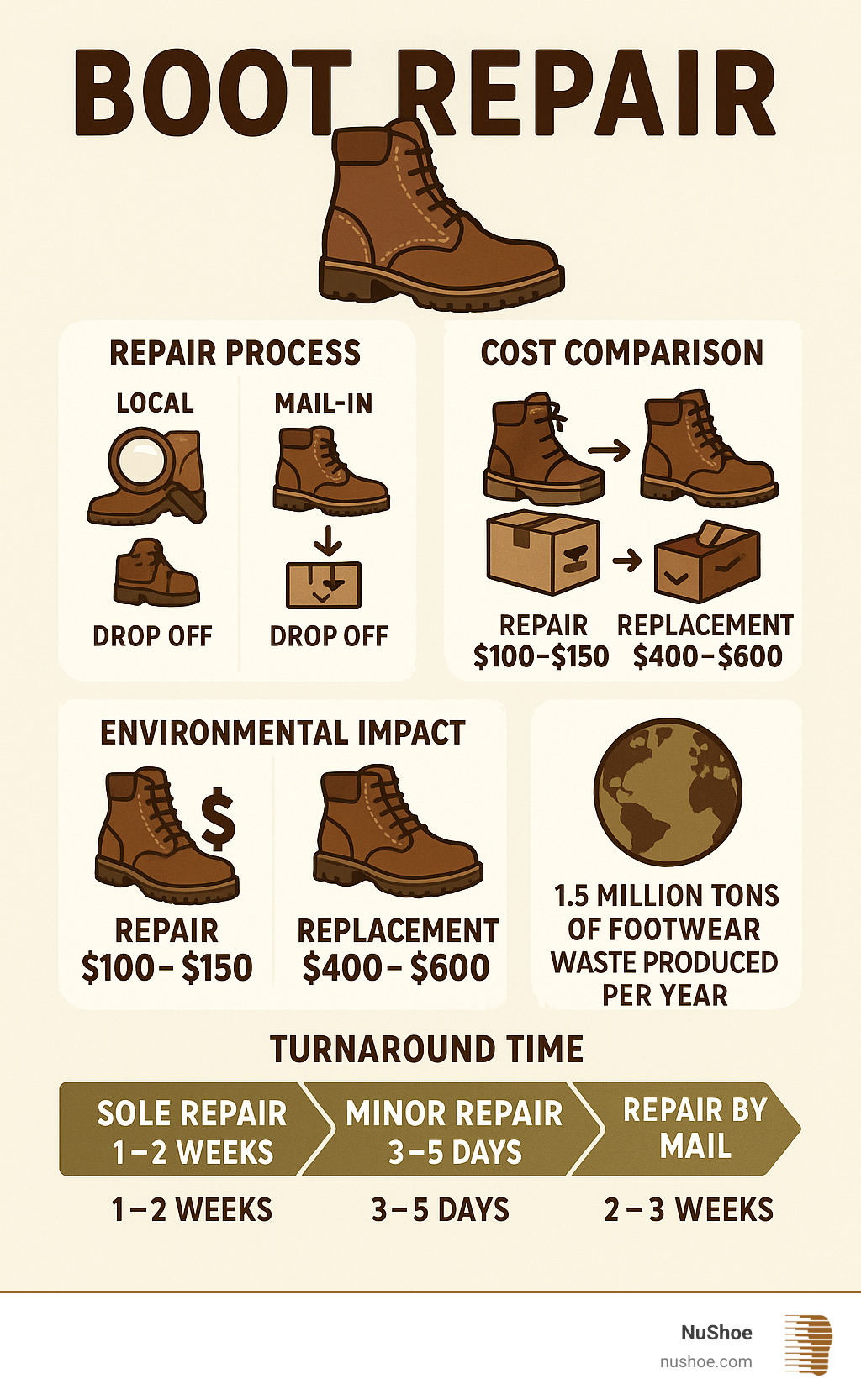
Repairing boots saves money, often over 50% compared to buying new. But costs vary by method and provider.
Professional Service Pricing
| Service | Average Cost |
|---|---|
| Local cobbler resole | $80 – $150 |
| NuShoe NuCraft | $95 (fixed) |
| The Cobblers | Variable (quote-based) |
| Timberland Recrafting | Varies by repair (plus shipping) |
The Cobblers and Timberland’s official program charge more for complex jobs but deliver premium results with brand-matched materials.
DIY Supplies and Savings
You can address scuffs or minor sole issues for under $30 if you have basic tools at home.
| Supply | Estimated Cost |
|---|---|
| Leather glue | $10 |
| Sandpaper (600-grit) | $5 |
| Leather conditioner | $15 |
| Filler, dye, sealer | $20–$40 (for deep cracks) |
| Hobnails (optional) | $8 |
DIY saves $80+ cobbler fees for minor issues. For structural damage, professional work pays off in safety and longevity.
Match the Repair to Your Boot Type

Not all Timberlands need the same treatment. Match the fix to your model and use case.
Hiking and Work Boots (TiTAN Series)
These endure heavy stress and require industrial-grade repairs. Never rely on DIY glue-only fixes for safety footwear.
- Best choice: NuShoe Outdoorsman NuCraft or local expert
- Why: Industrial adhesives and proper sole matching ensure grip and safety
- Turnaround priority: Daily users should choose local cobblers for under-24-hour service when possible
Original 6-Inch and Chukka Boots
Classic styles often carry sentimental value and deserve full restoration.
- Best choice: The Cobblers or Timberland Recrafting
- Why: Color matching, leather replacement, and refinishing preserve aesthetics
- Pro tip: Use cedar shoe trees to maintain shape and absorb moisture
Boat Shoes and Casual Styles
Lighter wear means simpler fixes work well.
- DIY is viable for scuffs and minor glue touch-ups
- NuShoe Traveler NuCraft ($95) is ideal for full resole
- Maintenance: Clean monthly, condition every 2–3 months
Prevent Future Damage with Smart Habits
Repairing boots is smart, but preventing damage is smarter. Follow these habits to avoid repeat fixes.
Clean After Every Use
Dirt and grime accelerate wear. Wipe boots with a damp cloth after exposure to mud, salt, or water.
- For deep grime: Mix 1 tablespoon white vinegar per cup water, rub into creases, then clean with saddle soap
- Let dry naturally, never near direct heat
Condition Monthly
Dry leather cracks. Prevent this with regular conditioning using mink oil or lanolin-based balms for full-grain leather. Apply every 4–8 weeks depending on use, and always follow with Balm Proofer™ for water resistance.
Store Properly
Poor storage warps shape and traps moisture. Use cedar boot trees to absorb humidity and maintain form. Store in a cool, dry place away from sunlight, and avoid plastic bags in favor of breathable fabric.
Protect from Sun and Water
UV rays dry out leather. Rain soaks in if unsealed. Apply UV leather treatment spray monthly if worn outdoors, and reapply waterproofing spray every 3–6 months. Never leave boots in a hot car or near radiators.
Avoid Common Repair Risks
Not all repairs last. Some shops cut corners. Know what to watch for before committing.
Inauthentic Parts
Generic soles alter fit, reduce durability, and compromise traction. Choose providers like NuShoe or The Cobblers that use brand-matched materials.
Brand Bias
Some stores favor certain brands over others. Always confirm the cobbler has Timberland-specific experience by asking: “Have you repaired 6-inch or TiTAN models before?”
DIY Failures
Common mistakes doom home repairs. Not cleaning grit before gluing causes immediate bond failure. Over-sanding weakens leather structure. Using super glue creates brittle, short-lived fixes. Always use leather-specific adhesive like Barge All-Purpose Cement.
Choose Your Repair Path in Minutes
Use this quick decision guide:
Is the sole detached or worn through?
– Work or hiking boot → NuShoe or local expert
– Casual boot → DIY glue and clamp (if minor) or NuShoe Traveler
Are there cracks in the leather?
– Shallow → Leather conditioner at home
– Deep or wide → Professional filler, dye, and seal
Are you in the UK or EU?
– Yes → Use Timberland’s Recrafting Program (Leeds or Wormerveer)
Need boots back fast (under 1 week)?
– Yes → Local cobbler only (mail-in takes 3+ weeks)
Is it a sentimental or legacy pair?
– Yes → The Cobblers for white-glove restoration
Frequently Asked Questions About Timberland Boot Repair
How much does it cost to repair Timberland boots?
Professional resole costs $80–$150 at local cobblers, while NuShoe charges $95 fixed for their NuCraft packages. Timberland’s official Recrafting Program prices vary by repair type. DIY repairs for scuffs or minor sole issues can cost under $30 in supplies.
Can you resole Timberland boots?
Yes, Timberland boots can be resoled by professionals using factory-grade materials. NuShoe specializes in Timberland resoling with their Outdoorsman and Traveler NuCraft packages. Local cobblers also handle resoles, though quality varies.
Does Timberland have a repair program?
Timberland operates an official Recrafting Program through The Boot Repair Company in Leeds (UK), Wormerveer (Netherlands), and Germany. The service handles sole replacement, upper repairs, cleaning, and conditioning for multiple Timberland models.
How long does Timberland boot repair take?
Turnaround times vary by provider: NuShoe takes 3–4 weeks including shipping, The Cobblers require 30–60 days, and local cobblers often complete work in under 24 hours to one week. Timberland’s official program doesn’t list specific timeframes.
Is it worth repairing Timberland boots?
Repairing Timberland boots typically saves over 50% compared to buying new pairs. Professional repairs can restore boots to like-new condition, making repair worthwhile for quality boots with structural damage or sentimental value.
What glue works best for Timberland sole repair?
Barge All-Purpose Cement is recommended for DIY Timberland sole repairs. Avoid super glue, which becomes brittle and fails quickly. Professionals use industrial-strength adhesives compatible with factory bonding.
Key Takeaways for Timberland Boot Repair
Timberland boot repair is about respecting craftsmanship, reducing waste, and keeping trusted gear in action. Assess damage honestly before choosing DIY or professional service. Match the repair method to your boot type: work boots need industrial-grade fixes, while casual styles tolerate simpler approaches. Invest in prevention through monthly conditioning, proper storage with cedar trees, and regular cleaning.
Your next step: Examine your boots today and identify the most pressing issue. For scuffs or minor separations, grab leather glue and conditioner and start a DIY fix this weekend. For structural damage or valuable boots, request quotes from NuShoe or The Cobblers to compare turnaround times and costs. With the right care, your Timbs can last decades.