How to Repair Work Boots: Quick Steps
If your trusted work boots are showing signs of wear—sagging soles, cracked leather, or slipping on slick surfaces—you are not alone. Thousands of tradespeople face the same decision every year: buy new or repair what you already have. The answer, backed by cost data and real user experiences, is clear. Work boot repair is not just a quick fix. It is a smart financial and practical move that can save you hundreds of dollars, maintain comfort, and keep you safe on the job.
High-quality leather work boots are an investment. Replacing them annually can cost $400 to $600 or more, but professional resoling and restoration typically run $95 to $150. That is a savings of over 50% per service. Beyond the economics, repaired boots retain their broken-in fit, avoiding the painful break-in period of new footwear. Plus, you reduce landfill waste and support skilled cobblers who keep this essential trade alive.
This guide walks you through everything you need to know about work boot repair: when to repair, what services are available, which boots qualify, and how to choose the right provider. You will also learn about specialized upgrades like Tuff Toe protection, turnaround times, and real customer results.
Signs Your Work Boots Need Repair

Ignoring early wear signs can lead to discomfort, injury, or irreversible damage. Recognizing these red flags helps you act before it is too late.
Loss of Traction and Uneven Tread
If your boots feel unstable or slide more than usual, the outsole is likely compromised. Loss of traction is a serious safety hazard, especially on wet concrete, oily floors, or ladders. Uneven wear often indicates poor gait alignment or prolonged use on abrasive surfaces. A flat or smooth sole no longer provides shock absorption, transferring impact directly to your feet and joints.
Check the heel and ball of the foot. If one side is worn down significantly more than the other, it is time for resoling.
Separating Soles or Frayed Welting
Stitched boots, especially those with Goodyear welt construction, are designed to be resoled. But when the welting begins to fray or pull away from the upper, water and debris can enter, accelerating internal damage. This separation is a clear signal that structural integrity is weakening.
Run your finger along the seam where the sole meets the upper. Any gap, looseness, or visible stitching thread means repair is urgent.
Damaged Toe Box and Side Scuffing
Heavy toe drag or frequent ladder contact causes toe and side wear. Once the leather is deeply scuffed or punctured, moisture seeps in, leading to mold, odor, and compromised insulation. While minor scratches can be buffed out, deep abrasions threaten the boot’s protective function.
If the steel or composite toe cap is exposed due to missing rubber or leather, stop wearing the boots immediately. They no longer meet safety standards.
Can Your Work Boots Be Repaired?
Not all boots are repairable. The key factors are construction method and upper condition.
Stitched Boots Are Ideal Candidates
Boots with Goodyear welt, storm welt, or Blake stitch construction are built to be resoled. These methods use stitching that allows the sole to be removed and replaced without damaging the upper. Professional cobblers can restore these boots to near-original condition.
Experts report they can fix 99.9% of damage if the upper leather and insole remain intact.
Glued Soles Often Cannot Be Resoled
Many modern work boots use direct-attach or cemented soles, where the sole is glued to the upper. These are rarely repairable because the adhesive bond degrades with heat and moisture, making reattachment unreliable. Once the sole detaches, replacement usually means buying new boots.
Look for a visible stitch line around the sole edge. If it is absent, your boot is likely glued and not resoleable.
Upper Integrity Is Non-Negotiable
Even if the sole is intact, cracked leather, rotting insoles, or water damage can make repair impossible. The upper must be dry, firm, and free of holes or delamination. A cobbler will inspect this during assessment.
If you can pinch and lift the leather at the seam, it is too far gone.
Professional Work Boot Repair Services
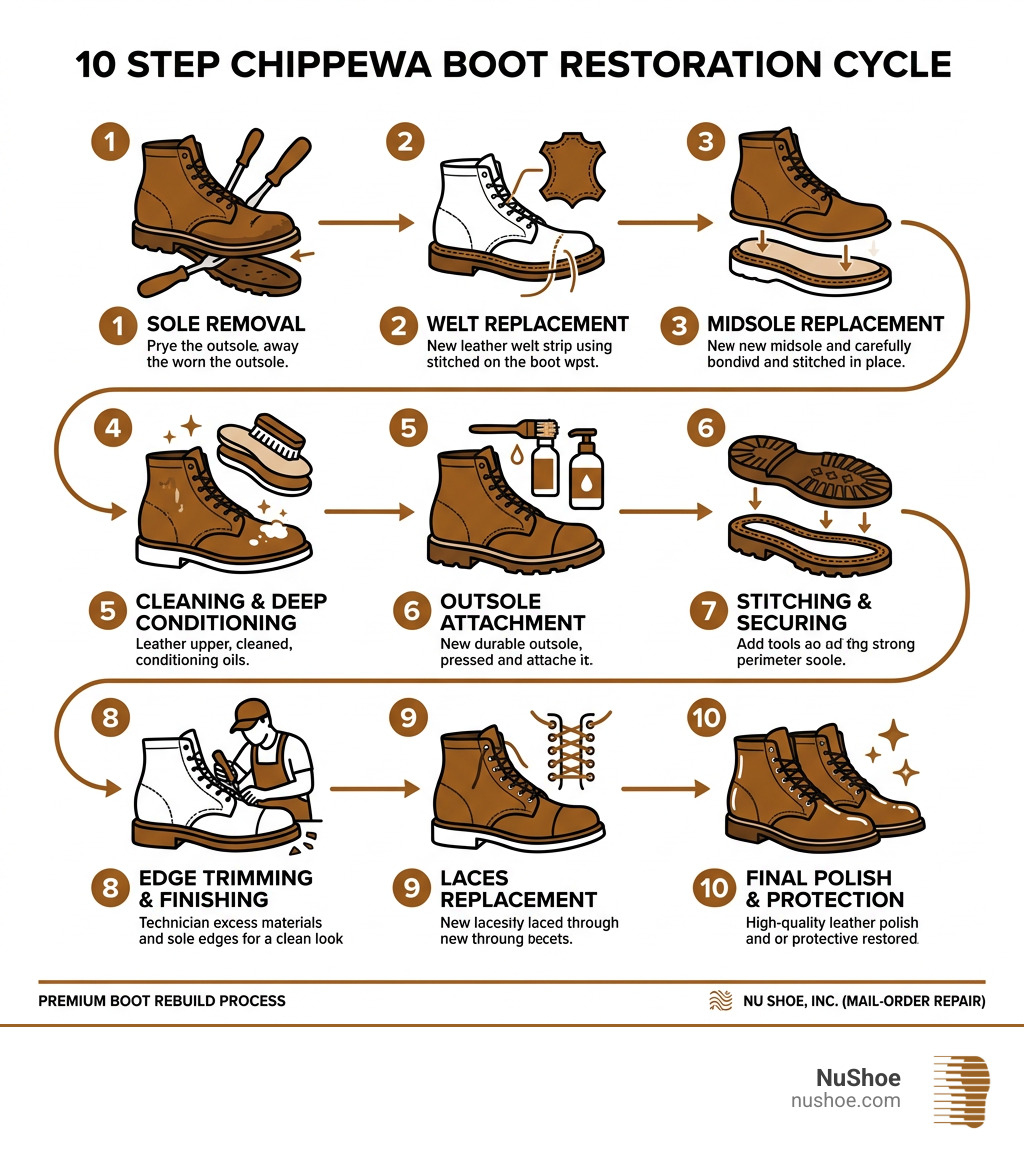
A full restoration goes beyond just replacing the sole. Top services offer comprehensive packages that return boots to like-new condition.
Core Resole Package: $95 to $150
Most providers offer a base resole that includes:
- Rubber outsole replacement
- Heel replacement
- Re-stitching (Goodyear or custom)
- Deep cleaning and deodorizing
NuShoe starts at $95, Evan’s Shoe Repair at $100, and Cobblers Direct offers similar pricing with military and safety boot specialization. Materials used include Vibram®, Walkbase, Rancher, and Goodyear Tulsa rubber soles, each offering durability, oil resistance, and slip protection.
Midsole and Insole Replacement
Worn cushioning affects comfort and posture. During resoling, many services offer:
- Replacement midsoles for shock absorption
- New insoles to restore arch support
- Odor-killing treatment for interior lining
This upgrade is crucial if your boots feel flat or cause foot fatigue.
Upper Restoration and Cosmetic Fixes
Your boots do not just need function. They should look good too. Full restoration includes:
- Leather refinishing to restore color and luster
- Paint and grime removal from job site contaminants
- Lace replacement (often included)
- Stitch repair on upper seams
Boots return looking nearly new, with all traces of paint, mud, and wear removed.
Tuff Toe Protection: A Specialized Upgrade
The toe box takes the most abuse. Tuff Toe is a specialized polyurethane coating that reinforces this high-wear area.
What Tuff Toe Does
- Material: Durable polyurethane adhesive
- Function: Seals and protects the toe from abrasion, chemicals, and water
- Appearance: Clear or black finish, depending on boot color
Cost and Long-Term Value
- $25 when added to a repair package
- $40 if applied to new boots
Tuff Toe prevents cracking and delamination in the toe cap area, extending boot life by months or even years. This is especially valuable for ladder climbers or those working on rough surfaces. Customers report zero wear after 6+ months of daily use with Tuff Toe, compared to frequent scuffing before.
Where to Get Your Boots Repaired
You have options: local cobblers, mail-in specialists, or brand-approved partners.
Mail-In Repair Services
Perfect if you lack a local expert. Top providers include:
NuShoe (San Diego, CA)
– Price: $95 base resole
– Volume: Over 4 million pairs restored since 1994
– Guarantee: Satisfaction guaranteed
– Turnaround: Approximately 3 weeks
Cobblers Direct
– Specialty: Hiking, military, safety, and construction boots
– Capability: Restores to original factory specs
– Service model: Online ordering with prepaid shipping labels
The process is simple: order online, receive a shipping kit, send boots, track progress, and get them back fully restored.
Local Cobblers and Authorized Partners
Evan’s Shoe Repair (Eagan, MN)
– Price: Starts at $100
– Sole options: Vibram, Rancher, Goodyear Tulsa
– Colors: Black or natural finish
Thorogood® Authorized Cobblers
– Network: Independent shops vetted for quality
– Limitation: Third-party repairs void Thorogood’s warranty
– Liability: Manufacturer not responsible for repair outcomes
Always ask if the cobbler has experience with work or safety boots. Not all shoe repair shops can handle heavy-duty materials.
Repair vs. Replace: The Real Cost Comparison
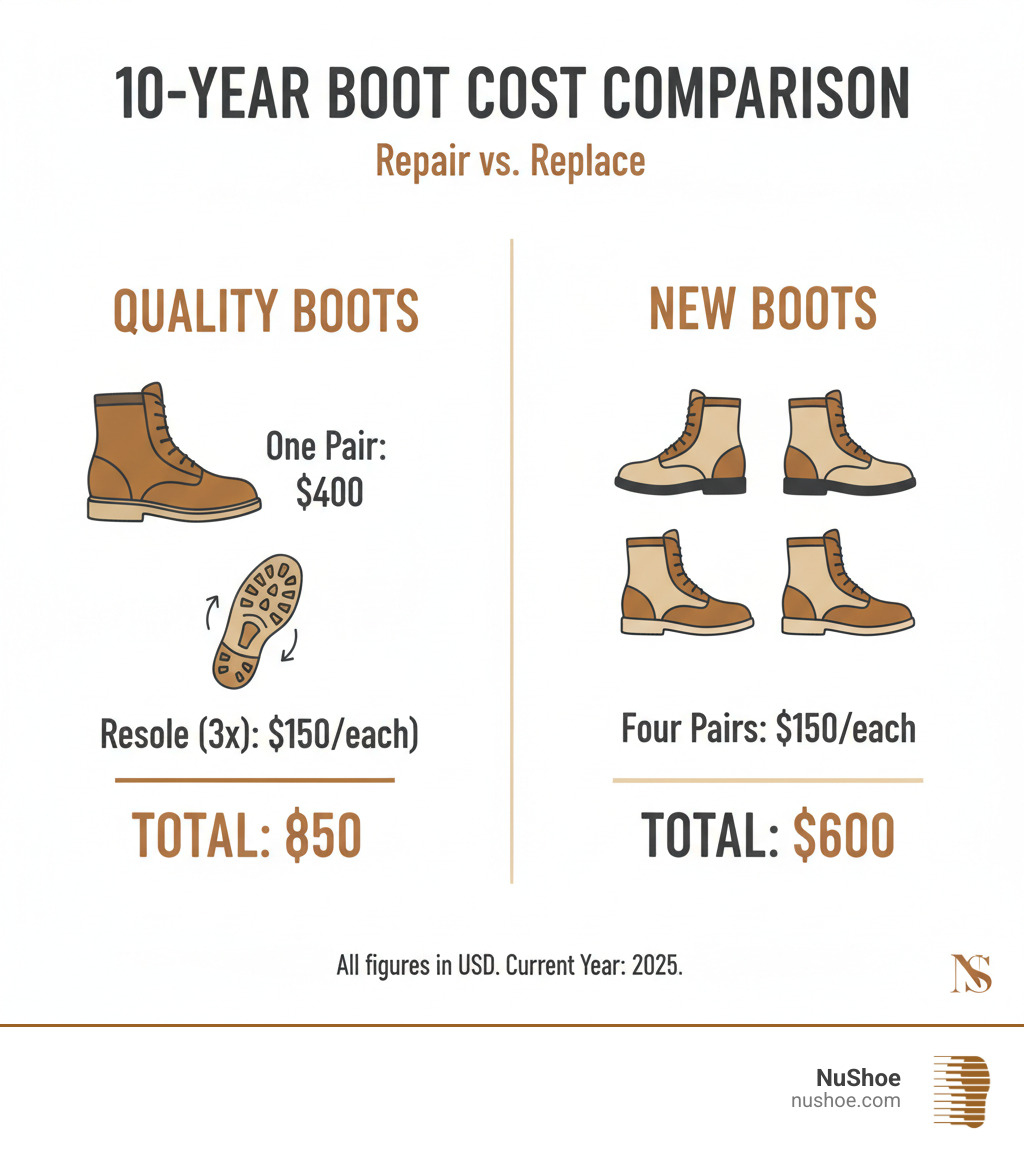
| Option | Cost | Break-In Time | Waste Generated |
|---|---|---|---|
| Buy New Boots | $400–$600 | 2–4 weeks | Full pair in landfill |
| Professional Repair | $95–$150 | None (keeps fit) | Only sole and heel |
Over 5 years, repairing 2–3 times saves $600 to $1,200 compared to buying new pairs. There are no blisters or stiffness because your boots stay molded to your feet. Environmentally, one repair keeps 5+ pounds of leather and rubber out of landfills.
How Boots Are Restored Step by Step
Understanding the process builds confidence in the service.
1. Initial Assessment
The cobbler inspects the upper leather for cracks or soft spots, the insole for warping or moisture damage, and the construction type (stitched vs. glued). If the boot passes, it moves to disassembly.
2. Disassembly and Cleaning
Old soles and heels are removed. Damaged stitching is cut away. The interior is deep-cleaned and deodorized. Paint, grease, and grime are stripped from the upper. Boots arrive dirty and leave spotless.
3. Leather Conditioning and Refinishing
Leather is conditioned to restore moisture. Color is matched and reapplied. The surface is buffed to revive luster. This step brings old, dull leather back to life.
4. Reconstruction
A new midsole and insole are installed if needed. The outsole and heel are attached (stitched or cemented, depending on boot). Re-stitching is done with durable thread. Tuff Toe is applied if requested. New laces are added. Every stitch and bond is inspected.
5. Final Quality Control
Traction is tested. Fit and flexibility are evaluated. Aesthetics are reviewed. Only after passing all checks are boots shipped back.
Why Repairing Beats Buying New
You Keep the Broken-In Fit
New boots hurt. It takes 20 to 30 hours of wear to mold them to your feet. Repeated repairs let you keep that customized, comfortable fit indefinitely.
One construction worker shared: “I got my favorite boots back—no break-in, no blisters. Worth every penny.”
Safety Is Restored
Slip-resistant soles are critical. New Vibram or rubber soles restore full traction, reducing fall risk. Tuff Toe adds extra protection where you need it most.
It Is Environmentally Responsible
Every repaired pair means one less boot in the landfill. With millions discarded annually, repair is a small act with big collective impact.
Caring for Boots After Repair
Maximize the life of your restored boots with proper care.
Use Cedar Boot Trees
- Cost: Approximately $30
- Benefits: Absorbs moisture, prevents odor, maintains shape
- Tip: Insert them nightly, especially after wet or long shifts
Apply Leather Conditioner Monthly
Use products like Lexol or Bick 4. This prevents drying and cracking while keeping leather supple and water-resistant.
Rotate Boots When Possible
Alternate between two pairs. This extends the lifespan of both and allows time for drying and recovery.
Store in a Cool, Dry Place
Avoid direct sunlight or damp basements. Heat and humidity degrade leather and adhesives over time.
Frequently Asked Questions About Work Boot Repair
How much does work boot repair cost?
Professional work boot repair typically costs between $95 and $150 for a full resole package. This includes rubber outsole replacement, heel replacement, re-stitching, and deep cleaning. Specialized upgrades like Tuff Toe add $25 when bundled with a repair.
Can all work boots be resoled?
No. Only boots with stitched construction (Goodyear welt, storm welt, or Blake stitch) can be reliably resoled. Glued or cemented soles are rarely repairable because the adhesive bond degrades over time. The upper leather must also be intact and free of major damage.
How long does work boot repair take?
Most mail-in services require approximately 3 weeks from receipt to return. Local cobblers may offer faster turnaround depending on workload. The time investment is worthwhile for most customers, who report the quality justifies the wait.
Does repairing boots void the manufacturer’s warranty?
Yes. Third-party repairs typically void the manufacturer’s warranty. For example, Thorogood® specifically notes that any restoration or modification by a third party voids their warranty, and the manufacturer assumes no liability for repair outcomes.
What is Tuff Toe and is it worth it?
Tuff Toe is a polyurethane adhesive coating applied to the toe box to protect against abrasion, chemicals, and water. It costs $25 with a repair or $40 on new boots. Customers report zero wear after 6+ months of daily use, making it a worthwhile investment for those who experience heavy toe wear.
Is it better to repair or replace work boots?
If your boots are stitched (not glued) and the upper is intact, repair is almost always the better choice. You save 50% or more compared to buying new, avoid the 2–4 week break-in period, and keep the customized fit your feet have already adapted to.
Final Verdict on Work Boot Repair
If your boots are stitched, not glued, and the upper is intact, professional repair is a no-brainer. For under $150, you restore safety, comfort, and performance while saving hundreds over time.
Work boot repair is not just maintenance. It is a smart, sustainable, and cost-effective strategy for anyone who relies on durable footwear. Whether you mail them in or visit a local cobbler, the result is the same: boots that look, feel, and perform like new without the break-in pain or the high price tag.
Do not toss them. Restore them. Your feet and your wallet will thank you.