
How Long Do Salomon Hiking Boots Last?
If you’re wondering how long your Salomon hiking boots will hold up on the trail, you’re not alone. These boots are celebrated for their snug fit, Contagrip outsoles, and lightweight comfort—but when it comes to longevity, the answer depends heavily on how and where you use them. On average, Salomon hiking boots last between 500 and 800 miles with regular trail use. Some users get over 2,000 miles from models like the Prime GTX under light conditions, while others report boot failure in under 300 miles on demanding thru-hikes.
The truth is, Salomons are built for performance, not indestructibility. Their strength lies in grip, agility, and immediate comfort—especially for hikers with narrow feet—but they aren’t always the best choice if you’re looking for a decade-long workhorse. In this guide, you’ll discover the real-world lifespan of Salomon boots across different models and terrains, the key signs that your boots are wearing out, and proven strategies to extend their life. Whether you’re a weekend warrior or a long-distance trekker, this breakdown gives you the facts to make the most of your investment.
Salomon Boot Lifespan by Hiking Style
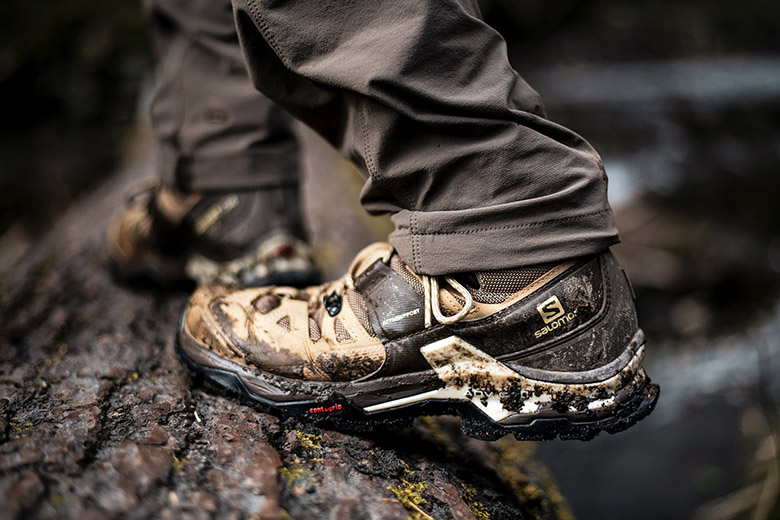
Your hiking habits are one of the biggest factors in how long your Salomons will last. The same model can last years for one person and fail in months for another—depending on use.
Weekend Hikers: 800–1,000+ Miles
If you’re hitting trails occasionally—say, once a week or on weekends—your Salomon boots can easily last 800 to 1,000 miles or more. Models like the Salomon Conquest GTX and Prime GTX shine here, handling wet conditions and mixed terrain with minimal wear.
- Conditions: Packed dirt, light elevation, occasional rain
- Real-world example: David Ure wore his Conquest GTX boots daily through three winters, logging over 800 miles with zero structural issues. He used them for winter walks, dog walks, and short hikes—proof that moderate use leads to long life.
These boots maintain waterproofing, cushioning, and tread integrity when not pushed to their limits.
Regular Trail Users: 500–800 Miles
Hikers who hit the trails weekly, especially on rocky or muddy paths, will typically see wear begin around 500 miles. This is when midsole compression, tread flattening, and upper fraying become noticeable.
- Watch for: Loss of bounce in the heel, worn heel strike zone, thinning at the toe box
- Pro tip: Rotate between two pairs. This reduces moisture buildup and gives materials time to recover, potentially adding hundreds of miles to each pair’s life.
Frequent use accelerates fatigue, especially if boots aren’t dried properly or exposed to constant moisture.
Thru-Hikers and Backpackers: 300–600 Miles
For long-distance hikers tackling trails like the John Muir Trail (JMT) or Pacific Crest Trail (PCT), Salomons—especially trail runners like the XA Ultra or Speedcross—often fall short.
- Common failures: Sole separation, front seam rips, holes behind the toes
- User report: Jennifer Mitol’s XA 3D Ultra 2 boots were “literally shot” after 18 days on the JMT—around 100 miles—with soles detaching and cushioning destroyed.
These models prioritize lightweight speed and grip, not rugged durability. While they excel on technical trails, they struggle under constant load, friction, and moisture over weeks or months.
Urban and Daily Walkers: 1,500–2,000+ Miles
Surprisingly, Salomons often last longest in city environments. One verified user logged over 2,000 miles in Prime GTX shoes used for daily walking, pram-pushing, and light trail use.
- Why they last: Less impact stress than backpacking, though pavement wears outsoles faster
- Trade-off: Heel abrasion increases on concrete, but the Gore-Tex lining and upper structure often remain intact
For commuters and urban hikers, Salomons offer exceptional value—especially if rotated and maintained.
Why Some Salomon Boots Fail Early (And Others Last Years)

Not all Salomons are created equal. The brand’s design philosophy leans toward performance over longevity, meaning some models sacrifice durability for speed and comfort.
Most Durable Salomon Models
-
Salomon Quest 4D GTX
A mid-weight hiking boot with reinforced construction. Users report years of use across the Grand Canyon, Smoky Mountains, and UK trails. Still waterproof and supportive after heavy use. -
Salomon Conquest GTX (mid-cut)
Praised for lasting over 800 miles with no issues. Ideal for hikers wanting more ankle support without the weight of a backpacking boot. -
Salomon Prime GTX
A hybrid hiking/walking shoe. One user reached 2,000+ miles with only minor tread wear and intact Gore-Tex. Perfect for urban and light trail use.
Less Durable (For High-Mileage Use)
-
XA 3D Ultra 2 / XA Ultra
Multiple reports of sole separation, crushed midsoles, and upper tears after 100–200 miles on thru-hikes. -
XR Mission
Known for front seam failure around 200 miles—twice in one user’s case, even with a replacement pair. -
Speedcross 3
Aggressive tread lasts, but insoles slip when wet, and materials retain odor. Not ideal for multi-week treks.
“We’d rather have a boot that lasts 3 years but grips well for those 3 years than one that lasts 10 years but doesn’t grip.”
— Salomon representative (reflecting performance-first design)
Critical Signs Your Salomon Boots Need Replacing
Don’t wait for total breakdown. Watch for these early warning signs:
Sole Separation
Common in XA Ultras and XR Missions, this happens when the outsole detaches from the midsole—usually at the toe or heel.
- Fix? Yes—use Freesole or Shoe Goo to reattach
- But: Repeated separation suggests a design flaw, not just wear
Midsole Compression
When cushioning flattens, you’ll feel more impact. This increases risk of foot fatigue, knee pain, and injury.
- Test: Press your thumb into the heel. If it doesn’t spring back, it’s time to replace
- Fix: Replace insoles early—Ortholite models wear out fast
Tread Wear
Smooth lugs reduce grip, especially on wet rocks or steep descents.
- Check: Heel and forefoot lugs
- Rule of thumb: Replace when tread depth is under 1mm
Upper Damage
Holes or thinning fabric—especially behind the toes—compromise protection.
- Patchable? Small tears can be sealed with seam grip
- But: Large rips or mesh failure mean end-of-life
Waterproofing Failure
If your boots stay wet inside without over-the-top flooding, the DWR coating likely failed—not the Gore-Tex.
- Fix: Reapply waterproofing spray
- Test: Water should bead up, not soak in
Loose Eyelets or Unraveling Stitching
Compromised lacing or stitching at the toe box, heel collar, or tongue means structural failure is near.
One user reported both heels falling apart on 4-year-old Quest 4D GTX after moderate use—suggesting potential material degradation over time.
How to Make Your Salomon Boots Last Longer
Choose the Right Model for Your Needs
- For thru-hiking: Avoid XA Ultras, Speedcross, XR Missions
→ Opt for Quest 4D GTX or Conquest GTX - For day hikes and urban use: Prime GTX, Wings series are ideal
- For wide feet: Consider other brands—Salomons run narrow
Get Professionally Fitted
Salomons are notoriously narrow. Ill-fitting boots cause internal rubbing, leading to heel wear, blisters, and material fatigue.
- One user switched from size 10 to 11 after a proper fitting and saw major comfort gains
- Once you know your size, online buying is reliable
Maintain Aggressively
- Clean with soft brush and mild soap after every hike
- Remove laces and insoles when drying
- Dry with crumpled newspaper—never use direct heat
- Reapply DWR every 4–6 weeks
- Inspect weekly for early wear
Repair Early
- Sole lifting? Use Freesole or Shoe Goo
- Small tear? Seal with seam grip
- Flattened insoles? Replace immediately—Superfeet or Sidas are great upgrades
Rotate and Protect
- Use two pairs to reduce daily wear
- Wear gaiters to block debris and reduce upper abrasion
How Salomons Compare to Other Brands

| Brand | Durability vs. Salomon | Notes |
|---|---|---|
| Scarpa | More durable | Manta series lasted 10+ years; superior for long-term use |
| Asolo | Much more durable | Powermatic called “bombproof” with one-piece leather |
| Inov-8 | Lasts twice as long (per one user) | Better for high-mileage hikers |
| La Sportiva | Comparable | Wildcats lasted ~500 miles with heavy use |
| Meindl | More durable | Built for resoling and decades of use |
Bottom line: Salomons win on comfort and grip, but Scarpa and Asolo lead in longevity and repairability.
Final Verdict: Are Salomon Hiking Boots Worth It?
Yes—if you use them right.
Salomons are built to perform, not just endure. They excel for:
- Narrow-footed hikers
- Fast, technical trails
- Wet and muddy conditions
- Day hikers and urban walkers
But if you’re planning a 500+ mile thru-hike with heavy loads, consider Scarpa, Asolo, or Meindl for better durability.
Quick Summary
- Average lifespan: 500–800 miles (trail use)
- Max lifespan: 2,000+ miles (urban/light use)
- Best models: Quest 4D GTX, Conquest GTX, Prime GTX
- Weakest parts: Front seams, Ortholite insoles, upper thinning
- Key strengths: Fit, grip, waterproofing, consistent sizing
“Salomon walking shoes are built to last—if you have narrow feet and use them appropriately.”
For most hikers, Salomons deliver outstanding value with the right care. Just don’t expect them to outlast a decade of abuse—they’re built to perform, not just endure.