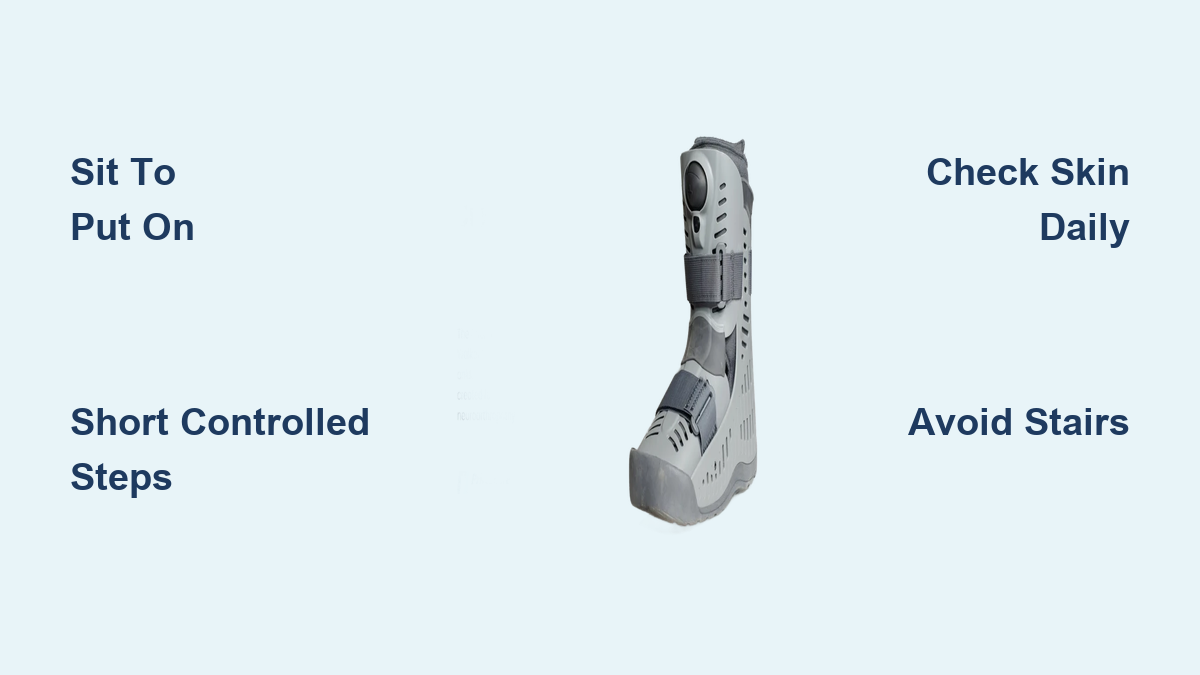
How to Walk in Crow Boots
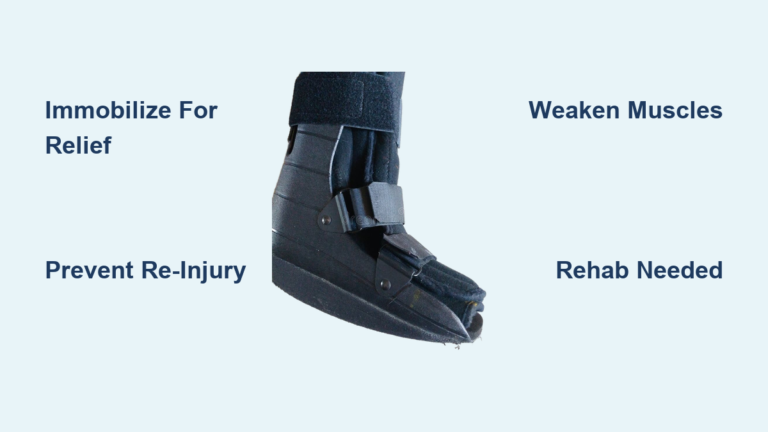
If you’ve been diagnosed with Charcot foot, your doctor may have prescribed a CROW boot to stabilize and protect your foot during healing. The Charcot Restraint Orthotic Walker is a custom-molded device that immobilizes the foot while allowing controlled weight-bearing once acute inflammation has passed. Learning how to walk in a crow boot safely is essential to prevent skin breakdown, ulcers, and worsening deformity.
Many patients feel unsteady when first using the device. That’s completely normal. The boot is rigid, weighs between 3.3 and 6.6 lbs, and changes your natural gait. With proper technique and consistent practice, you can walk safely while protecting your healing foot. This guide covers donning the boot, adjusting your stride, avoiding common mistakes, and recognizing warning signs.
Prepare Your CROW Boot Before Taking a Single Step
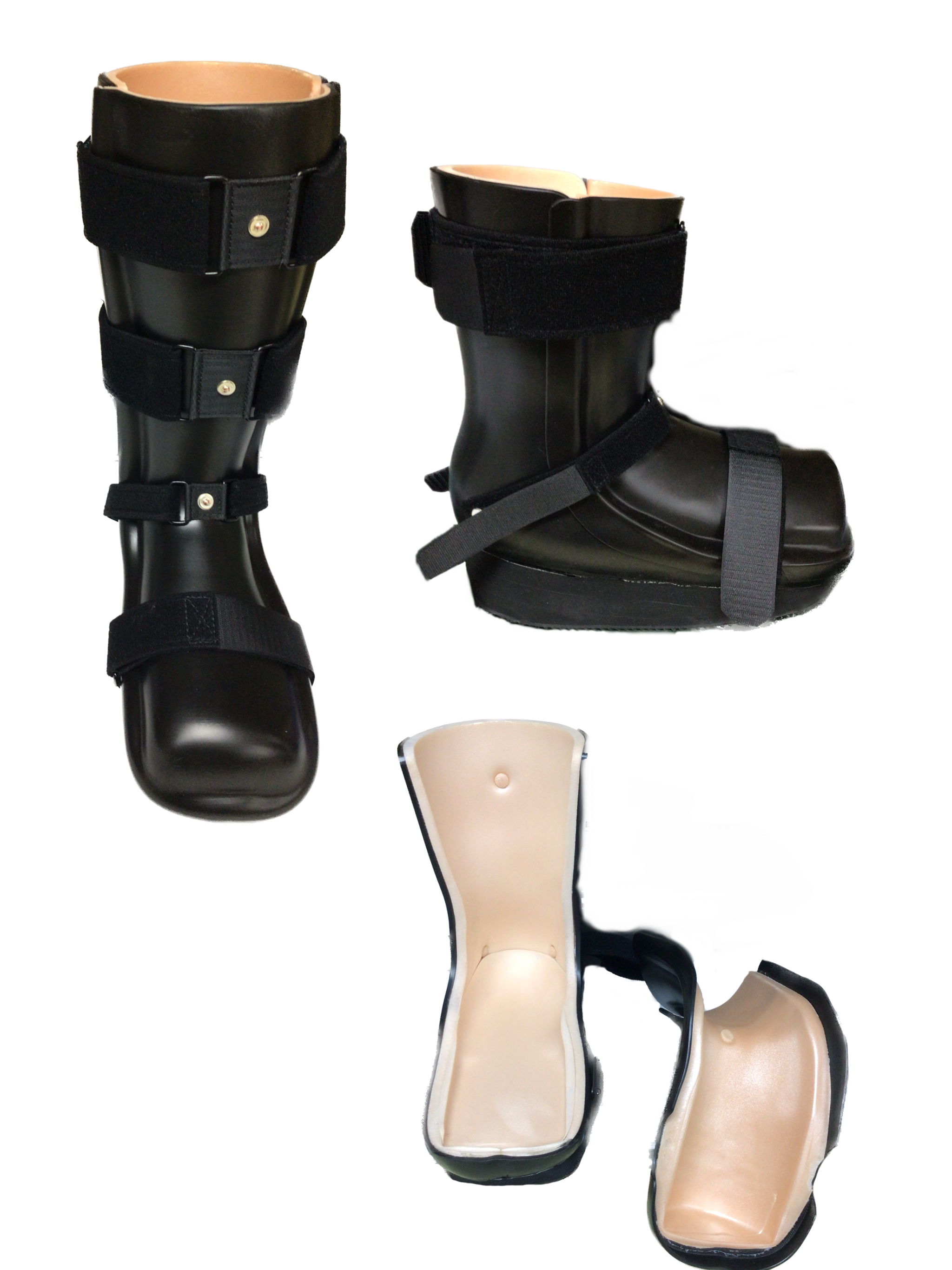
Proper setup is the foundation of safe walking. An incorrectly fitted boot increases pressure on vulnerable areas and raises ulcer risk, especially if you have neuropathy and cannot feel pain.
Sit Down to Put On the Boot
Never attempt to don the CROW boot while standing. Use a sturdy chair with good back support and sit with your feet flat and legs uncrossed.
- Wear the liner first. Pull on the custom foam or nylon liner and smooth out every wrinkle. Even a small fold can cause a blister.
- Insert your foot. Slide your foot into the posterior shell and press your heel firmly into the back.
- Secure the shells. Position the anterior shell over your shin and fasten the adjustable straps from bottom to top.
- Check tightness. Straps should hold your foot securely without restricting circulation. You should not feel numbness or tingling.
🔍 Pro Tip: Wiggle your toes and check skin color after fastening. If toes turn blue or feel cold, loosen the straps slightly.
Master the Walking Technique in Your CROW Boot
The rocker-bottom sole is engineered to mimic a natural stride by rolling your foot forward. Because the boot is rigid and heavy, your gait must adapt.
Start with Small, Controlled Steps
Take shorter steps than usual and let the curved sole do the work. Push off gently from the heel and allow the rocker base to carry you through to the toe.
- Avoid dragging your foot. Lift it slightly with each step.
- Keep your stride slow and deliberate. Speed increases instability.
- Look ahead, not down at your feet, to maintain balance.
⚠️ Common Mistake: Walking too fast or trying to mimic your pre-boot stride leads to tripping and excessive joint stress.
Use Assistive Devices for Added Stability
Until you feel confident, rely on support tools:
- A cane held in the opposite hand
- A walker
- Forearm crutches
These reduce load on the healing foot and improve stability on uneven surfaces.
🚫 Stair Safety: Avoid stairs and curbs when possible. Use elevators or ramps instead. If you must climb, lead with your strong leg going up and your CROW boot leg going down.
Distribute Your Weight Evenly
The boot is designed to offload pressure from fragile midfoot areas. To maximize protection:
- Keep your weight centered over the foot.
- Avoid leaning too far forward or to the side.
- Do not toe-walk or walk on your heel excessively.
✅ Visual Cue: Watch your gait in a mirror or ask someone to observe. Your foot should roll smoothly from heel to toe without wobbling.
Follow Daily Wear Rules to Protect Your Foot
Proper wear timing matters as much as walking technique. The boot protects only when worn consistently and correctly.
Wear It During All Weight-Bearing Activities
Put the boot on first thing in the morning, before you stand. Keep it on whenever you are:
- Standing
- Walking
- Cooking, cleaning, or moving around the house
❌ Critical Rule: Never walk barefoot or in slippers, even for a few steps. One misstep can cause microfractures.
Remove the Boot Only for Specific Activities
Take off the boot only when:
- Sleeping
- Showering (unless using a waterproof cover)
- Inspecting your foot (at least once daily)
🛁 Hygiene Tip: Wipe the exterior with a damp cloth daily and clean the interior liner weekly according to manufacturer instructions.
Inspect Your Skin Daily to Catch Problems Early
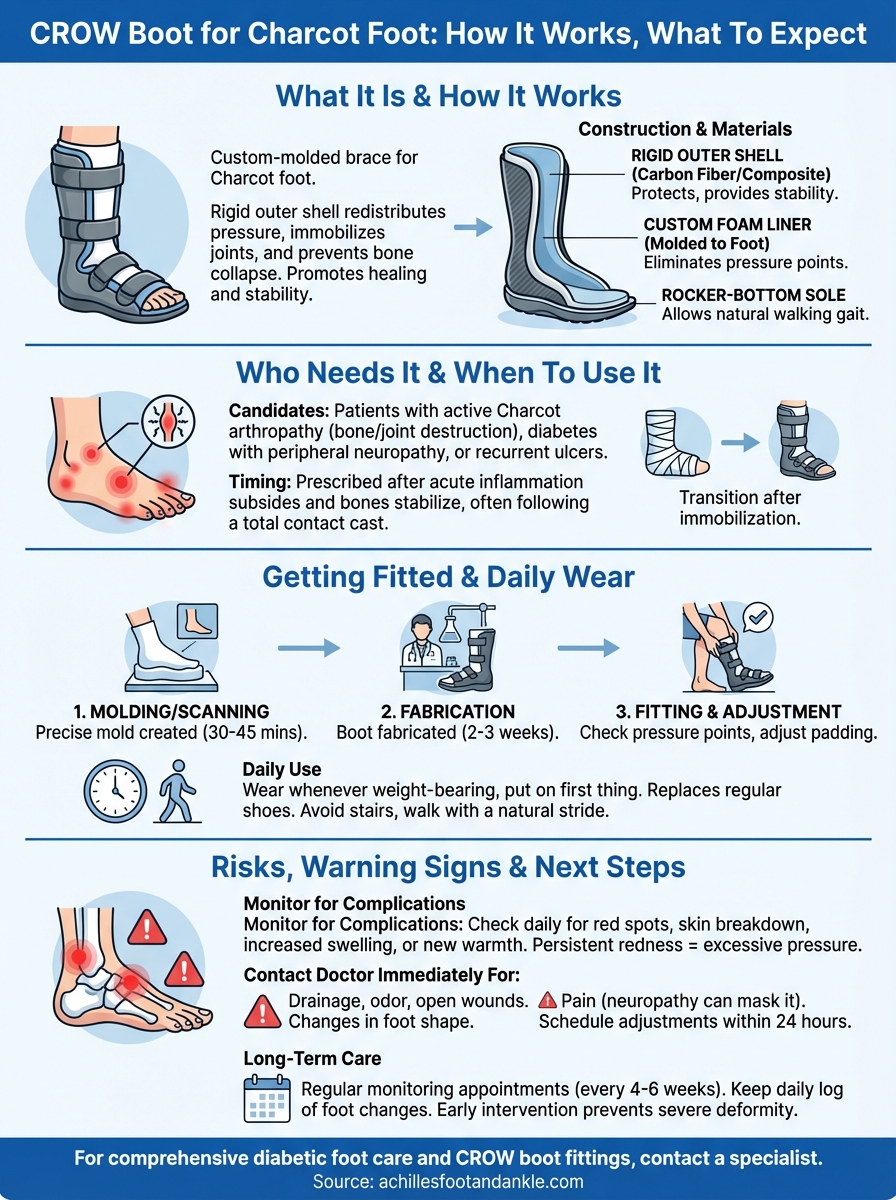
Many CROW boot users have diabetic neuropathy and cannot feel pain from developing sores. Daily inspection is non-negotiable.
Check Your Skin Every Time You Remove the Boot
Use a mirror to examine the bottom and sides of your foot. Look for:
- Red spots that do not fade within 30 minutes
- Blisters, cuts, or open wounds
- Drainage or odor
- Swelling or warmth
🚨 Warning: Any sign of skin breakdown means stop using the boot immediately and contact your orthotist or podiatrist within 24 hours.
Inspect the Boot Interior Too
Also check the liner for wear, tears, or moisture. Examine straps for fraying and the interior shell for rough edges or pressure points.
✅ Maintenance Tip: Replace worn padding promptly. Many CROW boots include replaceable liners for high-pressure zones.
Steer Clear of These Common Walking Mistakes
Even small errors can compromise your recovery. Here are frequent missteps and how to avoid them.
Mistake 1: Skipping the Liner
Some patients remove the liner for comfort. Never do this. The liner distributes pressure and prevents friction. Going without it drastically increases ulcer risk.
Mistake 2: Over-Tightening the Straps
Too much pressure cuts off circulation and creates pressure points. Tighten just enough to prevent your foot from shifting inside the boot.
Mistake 3: Ignoring Swelling Changes
As your foot heals, swelling may decrease. This creates gaps inside the boot, leading to instability and rubbing. Return to your orthotist for adjustments if the fit feels loose.
Mistake 4: Walking Too Much Too Soon
The boot allows weight-bearing, but start slow. Begin with short walks of 5 to 10 minutes, then gradually increase as tolerated.
⏱️ Time Tip: Most patients build up to 30 to 60 minutes of walking per day over several weeks.
Recognize Red Flags That Require Immediate Attention
Your CROW boot should feel secure, not painful. Any discomfort is a warning sign.
Stop Using the Boot and Contact Your Provider If You Notice:
- Persistent redness after removal
- New pain or aching in the foot, ankle, or leg
- Increased warmth compared to the other foot
- Foul odor or discharge
- A loose fit or slipping inside the boot
📞 Urgency Level: Skin issues require attention within 24 hours. Delaying increases amputation risk.
Plan for Long-Term Use and Possible Transition
The CROW boot is not always permanent, but it is often worn for months to years depending on how well your foot stabilizes.
Typical Wear Duration
- Stage 3 (Stable Charcot): 3 to 12 months of continuous use during weight-bearing
- Some patients wear it indefinitely for high-risk protection
Transitioning to Regular Shoes
Eventually, if your foot remains stable, your care team may recommend:
- An ergonomic moon boot (less rigid and lighter)
- Custom diabetic footwear with pressure-relieving insoles
🔄 Follow-Up Rule: Attend all orthotic appointments every 4 to 6 weeks. Your boot may need adjustments as healing progresses.
Frequently Asked Questions About Walking in a CROW Boot
How long does it take to get used to walking in a CROW boot?
Most patients need several weeks to feel comfortable. Start with short walks of 5 to 10 minutes and gradually increase duration as your confidence and strength improve.
Can I climb stairs while wearing a CROW boot?
Avoid stairs whenever possible. When unavoidable, lead with your strong leg going up and your CROW boot leg going down. Use a handrail for extra support.
What should I do if my boot feels loose?
Stop using it and contact your orthotist. As swelling decreases during healing, gaps can form inside the boot, causing instability and rubbing. A professional adjustment is required.
Is it safe to walk outside in a CROW boot?
Yes, but stick to even surfaces and avoid uneven terrain, curbs, and steep slopes. Wear supportive shoes on your unaffected foot to keep your hips level.
How do I clean my CROW boot?
Wipe the exterior with a damp cloth daily. Remove and wash the liner weekly according to manufacturer instructions. Allow all parts to dry completely before reassembling.
Key Takeaways for Walking Safely in a CROW Boot
Walking in a CROW boot is a skill that improves with time and practice. Focus on proper setup, controlled strides, and consistent wear to protect your healing foot. Inspect your skin daily, avoid common mistakes like skipping the liner or over-tightening straps, and contact your care team immediately if you notice any warning signs.
Your next step is simple: schedule a gait practice session at home with support nearby, such as a counter or walker. Wear the boot during all weight-bearing activities, follow your orthotist’s guidance, and attend every follow-up appointment. With patience and precision, you can stay mobile while giving your foot the best chance to heal.