How Long to Wear a Walking Boot for Plantar Fasciitis
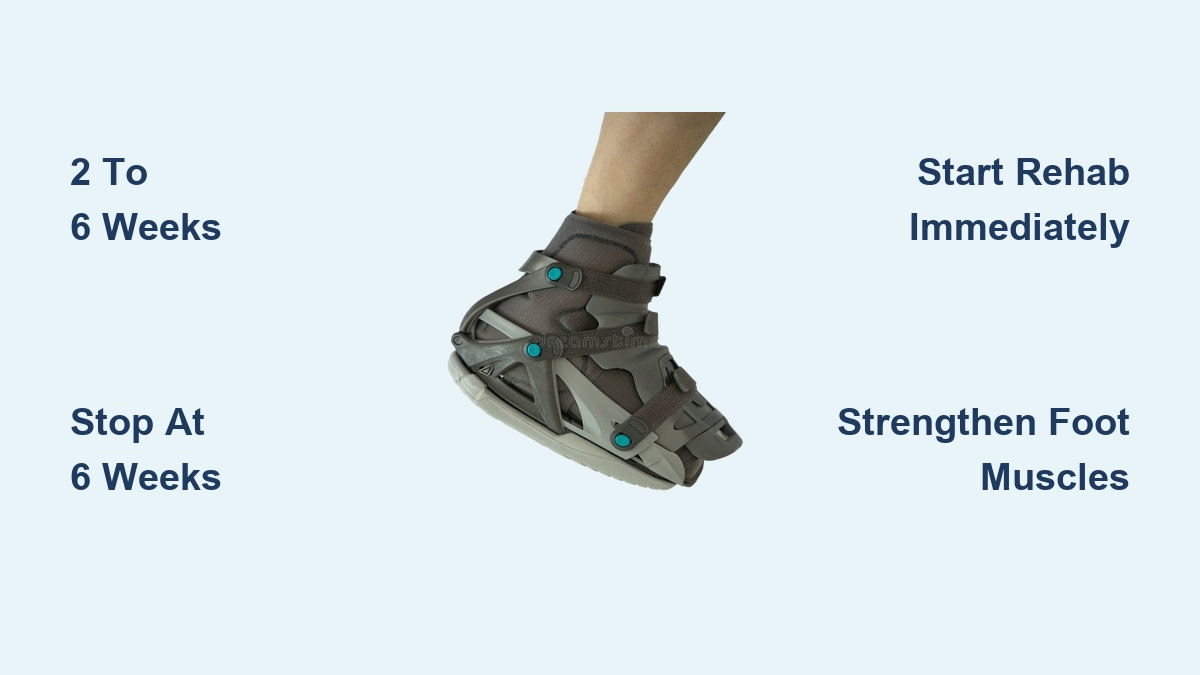
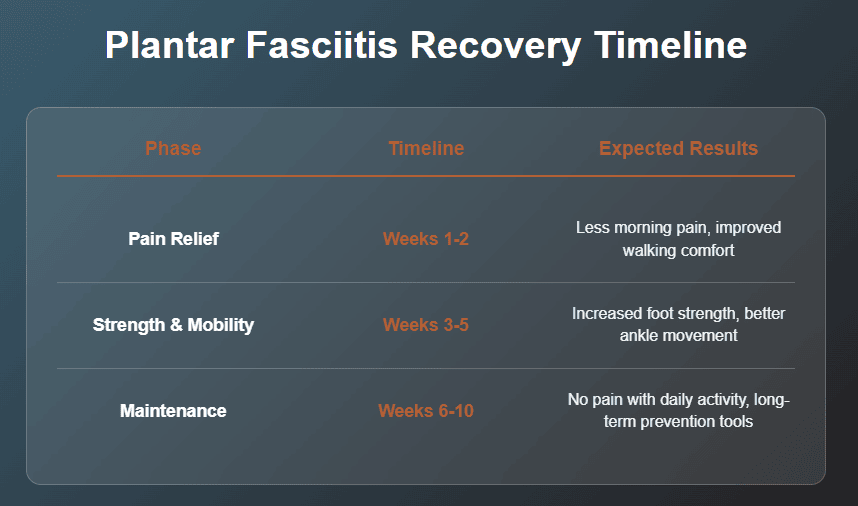
If you’re dealing with sharp, stabbing heel pain that makes every step feel like walking on glass, your doctor may have suggested a walking boot. The most pressing question on your mind is probably: how long do I actually need to wear it? Most clinicians recommend wearing a walking boot for 2 to 6 weeks during the acute phase of plantar fasciitis, when pain is severe and unrelenting. This short-term immobilization reduces strain on the inflamed plantar fascia and gives your foot a chance to calm down. However, here’s what many patients don’t realize: the boot only treats the symptom, not the cause. Wearing it too long can actually weaken your foot and delay true recovery.
This guide explains exactly when a walking boot makes sense, how long to use it safely, and what to do the moment you take it off to keep your pain from coming back.
When Doctors Prescribe a Walking Boot for Plantar Fasciitis
For Severe Acute Flare-Ups
A walking boot is generally reserved for severe, debilitating plantar fasciitis where basic treatments like stretching, ice, and supportive shoes haven’t provided relief. If you experience intense “first-step pain” every morning or sharp discomfort after standing for just a few minutes, your provider may recommend a boot. The goal isn’t lifelong use; it’s a short-term reset to break the pain cycle. Think of it as a bridge that buys you time while you prepare for active rehabilitation.
After Injections or Procedures
Some patients wear a boot briefly after receiving cortisone injections or undergoing dry needling. While these treatments reduce inflammation or stimulate healing, the tissue remains vulnerable for a short window. Wearing the boot for 3 to 7 days post-procedure minimizes stress and maximizes repair. Your provider will give you specific instructions, which may range from strict 24 to 48 hours of boot use to a more gradual weaning schedule.
Typical Duration: 2 to 6 Weeks
Why You Shouldn’t Wear It Longer
Unlike fractures that require 6 to 12 weeks of immobilization, plantar fasciitis is a mechanical overload issue, not a broken bone. Wearing the boot beyond 6 weeks increases your risk of calf atrophy, foot weakness, and joint stiffness, all of which can actually worsen your condition. Research shows that muscle strength in the lower leg begins to decline significantly after just two weeks of disuse. Since weak stabilizers often contribute to plantar fasciitis in the first place, prolonged immobilization works against your long-term recovery. The boot should be a temporary tool, not a long-term solution.
Signs You’re Ready to Stop Wearing It
Rather than counting days on a calendar, watch for these clinical signs of improvement:
- Morning pain is reduced or completely gone
- Walking short distances causes minimal discomfort
- Swelling in the heel area has decreased
- You’ve begun mobility and strengthening exercises
If you’re still in severe pain after 6 weeks, the issue may not be inflammation at all. It could be chronic tissue degeneration or unresolved biomechanics. At this point, continuing the boot is unlikely to help. Schedule a follow-up with your provider to explore imaging, custom orthotics, or advanced therapies.
Risks of Wearing a Walking Boot Too Long
Muscle Weakness and Atrophy
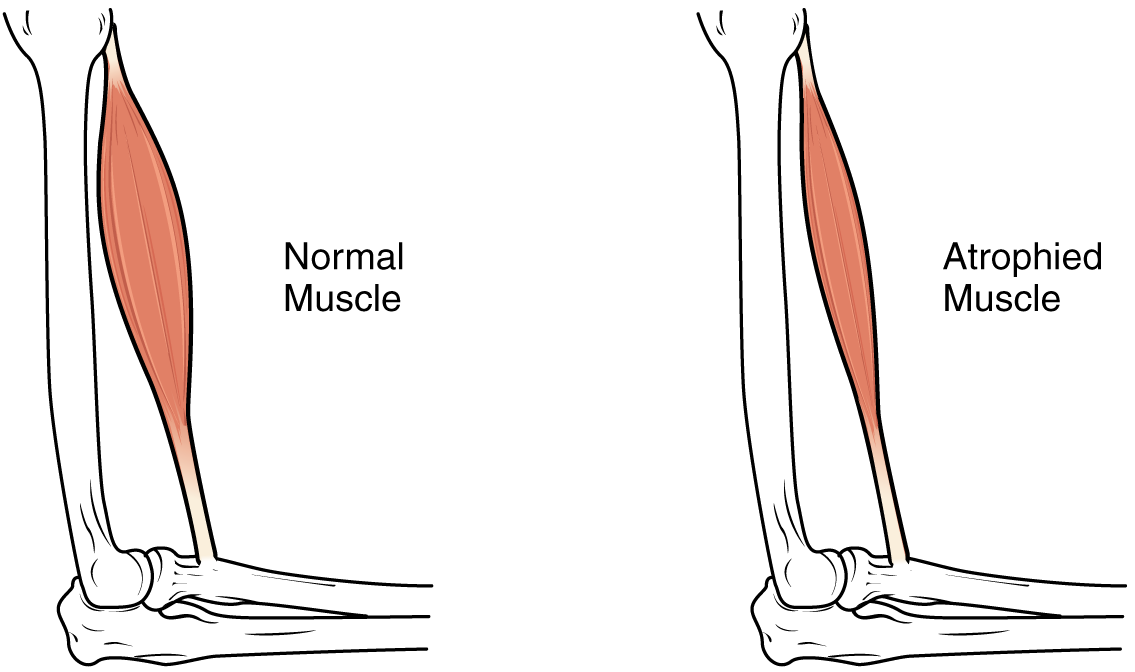
The longer you wear a walking boot, the more your calf muscles and intrinsic foot muscles weaken. These muscles, including the tibialis posterior, flexor digitorum longus, and quadratus plantae, are critical for supporting your arch and absorbing impact. When immobilized, they begin to atrophy within days. This creates a frustrating cycle: you rely on the boot for support because your muscles are weak, but the boot makes them even weaker. Once removed, your foot is less equipped to handle normal loads, increasing the risk of re-injury or chronic pain.
Joint Stiffness and Gait Changes
Immobilization leads to ankle and midfoot stiffness, reducing your natural range of motion. This stiffness alters how you walk, even after the boot comes off. Many patients develop a compensatory gait, shifting weight to the outer edge of the foot or limping, which can trigger secondary issues in the knees, hips, or lower back. The rigid structure and added height of the boot also create a limb length discrepancy, forcing your pelvis to tilt and your spine to compensate. These changes may linger long after you stop wearing the boot if not addressed with targeted rehab.
How to Transition Out of the Boot Safely

Step 1: Switch to Supportive Footwear Right Away
Never go directly from a walking boot to flat shoes or sandals. Immediately transition to structured, supportive footwear such as high-quality running shoes with:
- A firm heel counter
- Moderate arch support
- A rocker-bottom sole if possible
These features mimic some of the boot’s protective benefits while allowing natural foot movement. Brands like Hoka, Brooks, and Asics often offer models ideal for post-boot transition. If you’ve been diagnosed with overpronation or flat feet, your provider may recommend custom orthotics to maintain alignment and reduce fascial strain.
Step 2: Start Rehab the Same Day
The moment you stop wearing the boot, begin rehabilitation exercises. Delaying rehab increases your risk of long-term weakness. Focus on two key areas:
Restore Ankle Dorsiflexion
Limited ankle mobility forces your foot to overpronate and stretches the plantar fascia with every step. Try this simple test: kneel in front of a wall, place one foot forward, and try to touch your knee to the wall without lifting your heel. If you can’t, you lack dorsiflexion.
Exercise: Wall ankle mobilizations, 3 sets of 15 reps per leg, daily.
Strengthen Intrinsic Foot Muscles
These small muscles under your foot act as dynamic arch supports.
Exercise: Towel scrunches. Place a towel on the floor and use your toes to pull it toward you. Do 3 sets of 15 reps daily.
Combine Boot Use With Active Treatment
Dry Needling for Lasting Relief
While the boot quiets pain, dry needling targets the root cause. It’s used to release trigger points in overloaded muscles like the flexor digitorum brevis, quadratus plantae, and calf complex. Unlike cortisone, which suppresses inflammation, needling stimulates a healing response in dysfunctional tissue. Many patients see improvement after just 2 to 3 sessions. When combined with short-term boot use, it speeds recovery by addressing both symptoms and mechanics.
Custom Orthotics and Gait Retraining
If your foot rolls inward (overpronates) or lands too stiffly (oversupinates), no amount of boot time will fix it. A gait analysis can identify these flaws, and custom orthotics help correct them. Paired with gait retraining drills like conscious heel-to-toe walking or cadence adjustments, you can reprogram how your foot loads with each step. This is the real key to preventing recurrence.
Night Use: Should You Wear the Boot to Sleep?
Preventing First-Step Pain
Many patients wear the boot overnight to keep the foot in a neutral 90-degree position. This prevents the plantar fascia from tightening during sleep, which is why the first step in the morning is often the most painful. If your provider recommends night use, consider a lightweight nighttime splint instead of the full walking boot. These are more comfortable and easier to wear in bed. However, if your pain is extreme, a short period (1 to 2 weeks) of overnight boot use may be appropriate.
When Nighttime Use Isn’t Necessary
If your morning pain is mild or improving, night use is likely unnecessary. Over-reliance on nighttime immobilization can delay your foot’s ability to adapt to normal loading. Use it as a short-term tool, not a permanent habit.
Frequently Asked Questions About Walking Boots for Plantar Fasciitis
How many hours a day should I wear the boot?
Wear it whenever you’re on your feet during all weight-bearing activities. If prescribed for night use, keep it on while sleeping. The goal is consistent protection during the acute phase. Avoid removing it for long periods unless directed by your provider.
Can I drive with the boot on?
Driving with a walking boot on the right foot is generally unsafe and often illegal. The boot limits pedal feel and response time, increasing accident risk. Even on the left foot (for automatic vehicles), it can interfere with smooth braking. Most doctors advise against driving while wearing the boot. Use alternative transportation during this period.
What if my pain returns after removing the boot?
This is common and expected if you haven’t addressed the root cause. Pain returning means the mechanical overload is still present. Don’t jump back into the boot. Instead:
- Resume stretching and strengthening
- Wear supportive shoes daily
- Schedule a follow-up with your provider
- Consider advanced treatments like needling or orthotics
Will my foot be weak after wearing the boot?
Yes, some degree of muscle weakness and joint stiffness is common after immobilization. This is why starting a rehabilitation program immediately upon transitioning out of the boot is essential. Strengthening and mobility exercises help counteract atrophy and restore function.
Is a walking boot better than a cortisone injection?
Both are temporary solutions. A boot avoids the risk of tissue rupture associated with cortisone but shares the same downside of not fixing the root cause. Neither is superior for long-term cure; both work best as adjuncts to active rehabilitation such as needling, stretching, and strengthening.
Key Takeaways for Using a Walking Boot With Plantar Fasciitis

A walking boot can be a useful tool for managing severe plantar fasciitis, but only when used short-term, 2 to 6 weeks maximum. It provides crucial pain relief and allows inflamed tissue to calm down, but it doesn’t heal the underlying problem. To break the cycle of pain and prevent recurrence, pair boot use with active rehabilitation: restore ankle mobility, strengthen foot muscles, and correct faulty mechanics.
The boot is just the beginning. True recovery happens when you rebuild strength, not when you avoid movement. Work with your healthcare provider to create a clear exit plan, and start rehab the same day you stop wearing it.