How Walking Boots Work: A Simple Guide
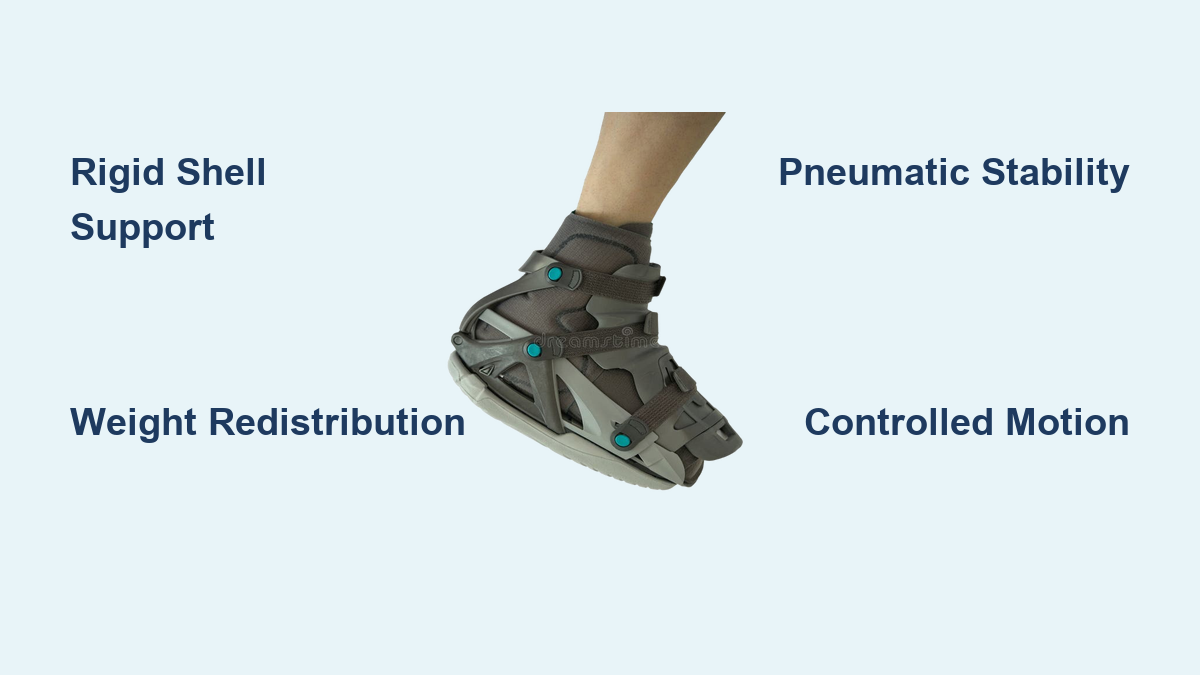
A broken metatarsal or a severe ankle sprain can stop you in your tracks. Suddenly, every step hurts, and your doctor mentions immobilization without a full cast. That’s where the walking boot comes in. So, how does a walking boot work? It stabilizes injuries by combining rigid support, pressure redistribution, and controlled motion to protect healing tissues while allowing limited mobility. Unlike a traditional cast, it’s removable, adjustable, and built to keep you safely mobile during recovery.
This device doesn’t just hold your foot in place. It actively supports healing through biomechanical engineering. Whether you’re managing a stress fracture, tendonitis, or post-surgery recovery, the boot limits harmful movement, reduces strain on injured areas, and promotes proper gait mechanics. In this guide, you’ll learn exactly how walking boots function, which types suit specific injuries, and how to use them safely for optimal recovery.
Core Mechanics of Walking Boots

Rigid Shell Design for Immobilization
The foundation of walking boot function lies in its rigid structure. Made from high-density plastic, the boot forms a protective exoskeleton around the foot, ankle, and lower leg. This shell prevents unwanted twisting, bending, or lateral motion, which is critical for healing ligaments, tendons, and bones.
By locking the foot in a neutral position, the boot minimizes micro-movements that could delay recovery or worsen an injury. Adjustable straps secure the boot snugly, ensuring stability without cutting off circulation. The result is a mobile alternative to a cast that offers protection without permanent confinement.
Weight Redistribution and Pressure Relief
A key function of the walking boot is how it alters weight distribution across the foot. Instead of concentrating pressure on an injury site like a fractured metatarsal or inflamed plantar fascia, the boot spreads body weight more evenly.
The built-in rocker sole plays a crucial role here. As you walk, the curved bottom allows a smooth heel-to-toe roll, reducing impact and minimizing strain. This biomechanical design decreases pain during ambulation and prevents overloading the injured area, making it possible to stay mobile while healing progresses.
Pneumatic Support in Aircast Models
Some walking boots go beyond rigidity with pneumatic (air-filled) technology. These models, such as the Aircast, feature internal air bladders that compress the foot and ankle when inflated.
The even pressure from the air cushions stabilizes the joint more effectively than a standard boot, mimicking the immobilization of a cast. This is especially beneficial for fractures, where minimizing movement at the injury site is essential for proper bone alignment and healing. Users can adjust air pressure for comfort, but should never over-inflate without medical guidance.
Controlled Ankle Movement (CAM) Technology

Adjustable Hinges Limit Range of Motion
Controlled Ankle Movement (CAM) boots take functionality a step further. These specialized devices include mechanical hinges or internal stops that allow healthcare providers to set precise limits on ankle motion.
For example, after ankle surgery, a doctor may lock the boot to prevent any dorsiflexion (upward bending) or plantarflexion (downward pointing). As healing progresses, the settings can be adjusted to gradually reintroduce movement. This enables a controlled transition from immobilization to mobility without needing a new device.
Medical Supervision Required for Adjustments
You should never adjust CAM settings on your own. Doing so risks disrupting the healing process, especially with ligament repairs or post-operative fractures. Only a physician should modify the boot’s range-of-motion limits based on recovery milestones and imaging results.
This feature makes CAM boots ideal for post-surgical rehabilitation, where a structured, progressive approach to mobility is essential.
How Boot Type Matches Injury Type
Plantar Fasciitis: Reducing Ligament Tension
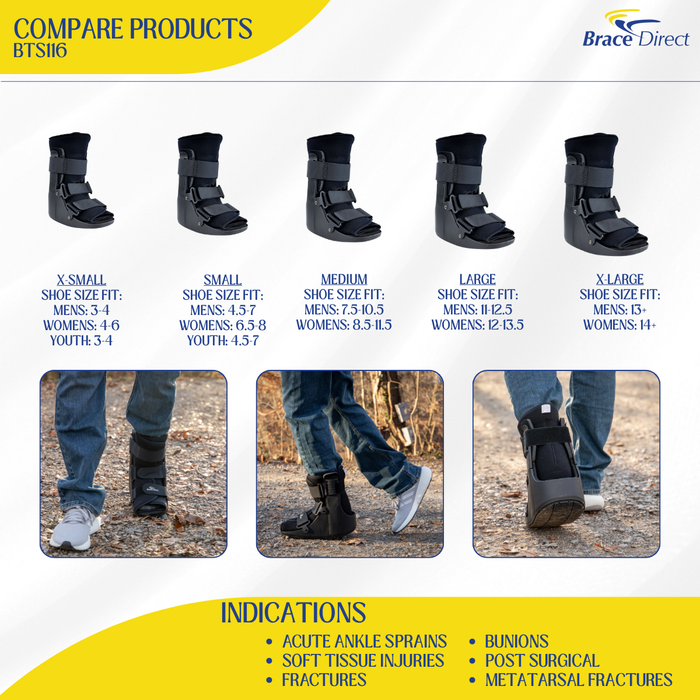
For plantar fasciitis, the walking boot’s job is to relieve tension on the thick band of tissue along the foot’s sole. By holding the foot in a neutral position and using a rocker sole, the boot prevents the arch from stretching during each step.
Duration is typically 7 to 14 days. A tall or short regular boot works, though tall boots are preferred by most patients to prevent shin irritation. Pro Tip: Insert an adjustable arch support like the FootChair Orthotic to further offload the plantar fascia and speed recovery.
Metatarsalgia and Neuroma: Offloading Ball-of-Foot Pressure
Conditions affecting the ball of the foot, such as metatarsalgia, Morton’s neuroma, or sesamoiditis, require pressure reduction under the forefoot. The walking boot’s rocker sole naturally shifts weight backward, away from the painful metatarsal heads.
Duration is usually about 7 days. A regular tall boot is sufficient, as pneumatic features are unnecessary for these soft tissue conditions. Pair with an arch support to transfer load from the ball to the arch, reducing irritation and inflammation.
Sprained Ankle: Full Joint Immobilization
Ankle sprains involve torn or stretched ligaments that need complete rest. The tall walking boot immobilizes the joint, preventing inversion or eversion (rolling inward or outward) that could worsen the injury.
Duration is typically 2 weeks. A tall regular boot is required, since short boots do not provide adequate ankle support. Always use a tall version for sprains.
Foot and Ankle Fractures: Maximum Stability
For fractures, whether in the foot or ankle, the goal is total immobilization. Even slight movement can delay healing or misalign bones.
Duration ranges from 3 to 8 weeks or longer. A pneumatic tall boot (Aircast) is recommended because the air cushions provide cast-like stability, minimizing micro-motion at the fracture site. This is non-negotiable for proper bone healing.
Toe Fractures: Immobilizing Pulling Muscles
Even a broken toe needs a tall boot. Why? Muscles in the lower leg connect to the toes via tendons. Without immobilization, these muscles can contract and pull on the fracture, slowing recovery.
Duration is 2 to 6 weeks. A tall regular boot stops muscle traction by stabilizing the entire lower leg, not just the foot.
Tendonitis: Resting Overworked Tendons
Posterior tibial or peroneal tendonitis requires reducing strain on inflamed tendons. A tall boot limits foot motion, giving tendons time to heal.
Duration is 10 to 14 days. A tall regular boot is usually sufficient, though pneumatic versions are reserved for severe pain. For posterior tibial tendonitis, use orthotics with maximum arch support. For peroneal tendonitis, avoid extra padding to prevent lateral pressure.
Proper Fit and Biomechanical Alignment
Correct Application Steps
To ensure your walking boot works effectively, follow these steps:
- Sit down before putting it on.
- Loosen all straps.
- Slide your foot in gently.
- Fasten straps from bottom to top, ensuring a snug but non-constricting fit.
- Check for skin irritation or pressure points.
Never apply lotions or oils under the boot. They can degrade materials and increase skin slippage.
Fixing Leg Length Discrepancy
The boot adds height to one leg, which can cause pelvic tilt, back pain, and hip strain. The solution is an adjustable heel lift (like the Even-Up device) on your uninjured foot.
This balances your posture, restores natural gait, and prevents secondary injuries. Test different thicknesses to find the most comfortable fit.
Using Crutches and Canes Correctly
Even with a boot, you may need assistive devices. Use crutches or a walker for non-weight-bearing injuries. For a cane, hold it in the hand opposite the injured leg. Move the cane and injured foot forward together to reduce pressure by 30 to 40 percent.
Maintenance, Hygiene, and Skin Safety
Keeping Skin Dry and Healthy
Moisture under the boot risks skin breakdown, itching, and infection, especially with surgical wounds.
If the boot stays on during showering, seal it in a plastic bag taped above the knee. If the boot comes off, dry skin completely before reapplying. Use a cool-air hair dryer to dry the interior if damp. Never use heat.
Managing Itching and Irritation
Itching is common but dangerous if scratched improperly. Blow cool air into the boot with a fan or hair dryer. Never insert pens, sticks, or wires, as these can cause cuts and infection.
Pad sore spots with moleskin or tape. Use a sock liner (like the Aircast Sock Liner) to prevent friction.
Cleaning and Wear Checks
Keep the interior free of dirt and moisture. Replace straps if Velcro fails or material frays. Inspect the sole tread regularly, since worn soles increase fall risk. For pneumatic boots, check for air leaks and replace if bladders don’t hold pressure.
Safe Exercise and Activity Guidelines
Non-Weight-Bearing Lower Body Exercises
Staying active helps circulation and prevents muscle loss. Approved moves include:
- Straight leg raises
- Side-lying hip abductions
- Banded leg extensions
Always get medical clearance before starting any routine.
Partial Weight-Bearing and Core Work
If partial weight-bearing is allowed, try glute bridges, wall ball squats, or sit-to-stand from a high chair. Core exercises like seated Russian twists and supine marches maintain stability without straining the injury.
Cardiovascular Options
A stationary bike is permitted if cleared. Place the pedal under the middle of the foot to avoid strain. Swimming is ideal if using a waterproof boot (like VACOped) or removing the boot under supervision. The SkiErg offers great upper-body cardio if you’re near full weight-bearing.
Avoid uneven terrain, high-impact activities, and anything that causes pain or swelling.
Warning Signs and When to Seek Help
Red Flags Requiring Immediate Care
Stop using the boot and contact your doctor if you experience:
- Severe or worsening pain
- Numbness or tingling in toes
- Burning or stinging under the boot
- Excessive swelling beyond normal
- Fever, drainage, or foul odor (signs of infection)
- Calf pain, redness, or swelling (possible DVT)
These could indicate complications like compartment syndrome, infection, or blood clots.
Monitoring Healing Progress
Contact your provider if pain returns after being cleared to walk, skin sores develop around boot edges, or the boot no longer fits due to swelling or structural damage.
Choosing the Right Boot: Features and Options
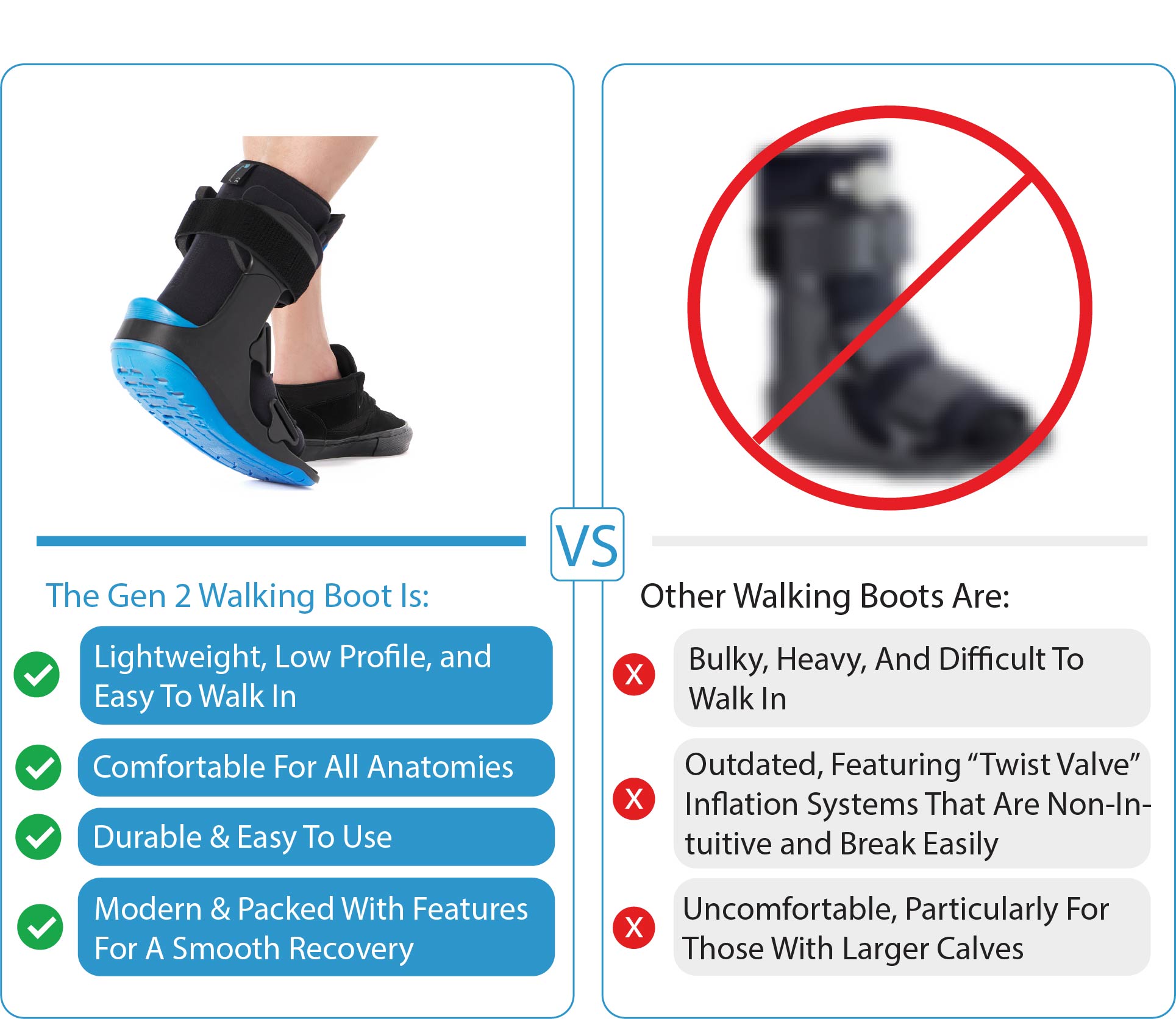
Regular vs. Pneumatic vs. CAM Boots
| Feature | Regular Boot | Pneumatic Boot | CAM Boot |
|---|---|---|---|
| Support Level | Moderate | High (cast-like) | Adjustable |
| Best For | Sprains, tendonitis | Fractures | Post-op rehab |
| Adjustability | Straps | Straps + air | Straps + ROM settings |
| Cost | Lower | Higher | Varies |
Specialized Solutions for Specific Needs
For wide calves, the DonJoy MaxTrax Walker features bendable uprights. For arch support, use FootChair or PowerStep Wide orthotics. For height balance, use an Even-Up heel lift on the opposite shoe. For weather protection, use waterproof covers with open bottoms for traction.
Frequently Asked Questions About Walking Boots
What does a walking boot do for a fracture?
A walking boot immobilizes the injured area to prevent movement that could delay bone healing. Pneumatic (Aircast) models are preferred for fractures because the air cushions provide cast-like stability, minimizing micro-motion at the fracture site.
How long should you wear a walking boot per day?
Most doctors recommend wearing the boot whenever you’re standing or walking. You can typically remove it for sleeping, showering (if allowed), and rest periods. Always follow your specific medical instructions.
Can you walk normally in a walking boot?
You can walk, but your gait will differ from normal due to the rocker sole and added height. Using an Even-Up heel lift on the opposite shoe helps restore a more balanced, natural walking pattern.
Is a walking boot better than a cast?
For many injuries, a walking boot offers advantages over a traditional cast. It’s removable for hygiene and comfort, adjustable for swelling changes, and allows limited mobility. However, severe fractures may still require a cast initially.
How tight should a walking boot be?
Straps should be snug enough to keep your foot secure without causing pressure points, numbness, or tingling. You should be able to fit a finger under each strap, and your toes should remain pink and warm.
When should you go to the ER with a walking boot?
Seek emergency care if you experience severe pain, numbness, burning sensations, excessive swelling, fever, foul odor, or calf pain with redness and swelling. These may indicate infection, compartment syndrome, or deep vein thrombosis.
Key Takeaways for Understanding Walking Boots
A walking boot works by merging rigid support with smart biomechanics to protect injured feet and ankles while allowing safe mobility. The right boot depends on your specific injury: pneumatic models for fractures, tall boots for sprains and tendonitis, and CAM boots for post-surgical recovery.
Proper fit, hygiene, and activity management are essential for healing. Always follow medical advice, monitor for warning signs, and use supportive accessories like heel lifts and orthotics to ensure a smooth, complication-free recovery. Your next step: confirm with your doctor which boot type and duration matches your diagnosis, then follow the application and care guidelines above to get the most out of your recovery.