How Effective Is a Boot Cast for Plantar Fasciitis?
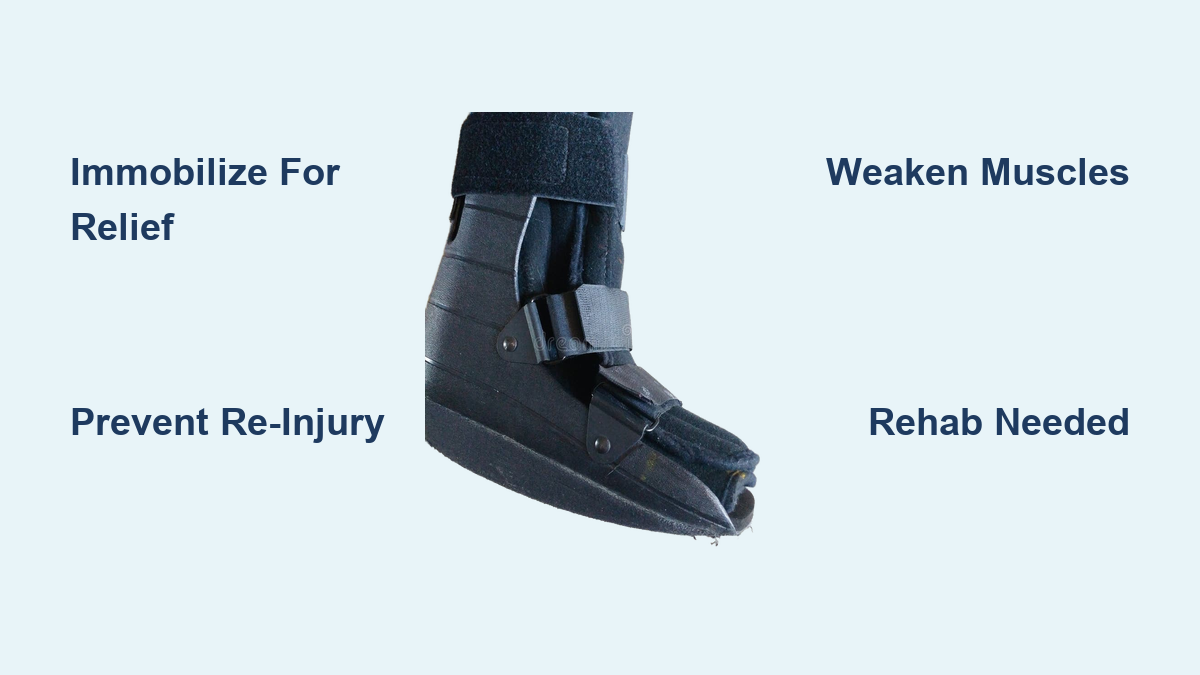
If you’re dealing with sharp heel pain that hits hardest with your first steps in the morning, you’ve probably tried stretches, ice, and better shoes with limited success. When conservative treatments don’t cut it, a boot cast often enters the conversation. Research and clinical practice show that a boot cast delivers significant short-term relief for severe or stubborn plantar fasciitis, especially when other methods fail. That said, it isn’t a permanent fix. Used alone, it manages symptoms rather than correcting the root cause, and it carries risks like muscle weakening and pain recurrence if not followed by proper rehabilitation. This guide covers when a boot cast works, how long to wear it, what risks to watch for, and how to build lasting recovery.
When a Boot Cast Is Recommended
Severe or Refractory Cases
A boot cast isn’t usually the first step. It’s prescribed when standard conservative care fails, meaning months of stretching, orthotics, and physical therapy with little improvement. It’s also a go-to for acute flare-ups where pain is so intense that walking becomes nearly impossible. In these situations, the boot provides rapid relief by halting the repetitive strain that aggravates the plantar fascia.
After Plantar Fascia Rupture
If imaging confirms a partial or complete plantar fascia rupture, a boot cast becomes essential. Unlike standard plantar fasciitis, a rupture requires strict immobilization to allow torn tissue to heal. Walking without protection could worsen the injury and significantly delay recovery.
Post-Injection Support
Corticosteroid injections reduce inflammation quickly, but they also temporarily weaken the fascia. To prevent re-injury, doctors often pair the injection with a boot cast. This combination keeps the foot stable during the vulnerable healing window, maximizing the injection’s benefit while minimizing rupture risk.
How Boot Casts Work
Mechanical Offloading Explained
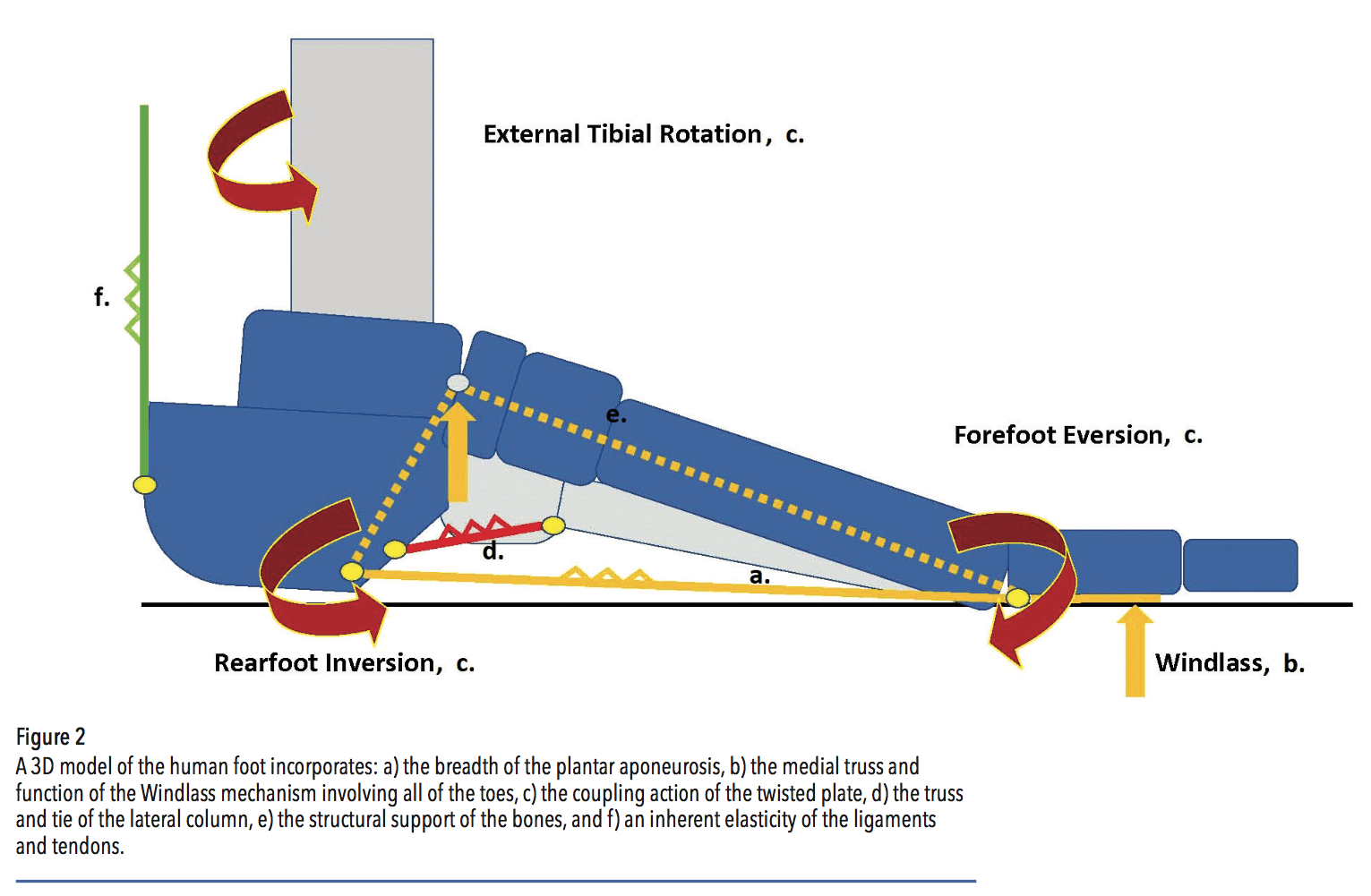
The core function of a boot cast is offloading stress from the plantar fascia. By locking the ankle and foot in place, it stops the tissue from stretching with each step. This break in the gait cycle prevents micro-tears from worsening and gives the fascia a chance to rest, something soft shoes or inserts can’t fully achieve.
Arch Support and Alignment
Beyond immobilization, the rigid shell acts like an external arch support. It stabilizes the medial longitudinal arch, preventing collapse (overpronation) that pulls on the fascia’s heel attachment. This added support reduces strain during weight-bearing activities while wearing the boot.
Immobilization vs. Inflammation Control
The boot doesn’t reduce inflammation directly. Instead, it creates ideal conditions for healing by eliminating movement. If inflammation is the main driver in acute cases, this rest allows the body’s natural anti-inflammatory processes to catch up. However, if the issue is chronic mechanical overload, the boot only masks pain. It doesn’t fix the underlying dysfunction.
Evidence on Effectiveness

Clinical Trial Results
A 2020 study in the Journal of Orthopaedic & Sports Physical Therapy followed 135 patients with chronic plantar fasciitis. Those who wore a boot cast for three months showed significantly greater improvement in pain and function compared to controls. Key factors cited were consistent arch support, reduced strain, and enforced rest, proving the boot’s value in structured treatment.
Patient-Reported Outcomes
Most users report immediate pain reduction, especially first-step morning pain. Many say they can walk more normally in the boot than barefoot or in regular shoes. A common complaint, though, is pain returning within days or weeks of stopping use, highlighting the risk of recurrence without follow-up care.
Success Rate vs. Recurrence
Boot casts have high short-term success rates (70–80%), but long-term outcomes depend on what happens after removal. Patients who skip rehab often relapse. Those who transition into physical therapy maintain their gains. This shows the boot is a bridge, not a final solution.
Recommended Wear Duration
Typical Timeframes
Most protocols recommend wearing the boot for 4 to 12 weeks, depending on severity. Mild cases may improve in 3–4 weeks. Severe or chronic cases, especially with rupture, may need up to 3 months. Your provider will monitor healing and adjust the timeline accordingly.
Factors That Affect Healing Time
- Age and Health: Younger, healthier patients heal faster. Conditions like diabetes slow recovery.
- Activity Level: Jobs requiring standing or walking prolong healing. Sedentary work allows quicker progress.
- Compliance: Skipping wear time or resuming activity too soon extends recovery.
- Injury Type: A simple strain resolves faster than a partial tear.
Case Examples
- John, 32, runner: Needed 8 weeks due to high-impact stress and delayed diagnosis.
- Sarah, 45, office worker: Improved in 5 weeks with strict adherence and home exercises.
- Linda, 68, diabetic: Required 10 weeks with frequent check-ins and modified weight-bearing.
The Weaning Process
Why You Can’t Stop Cold Turkey
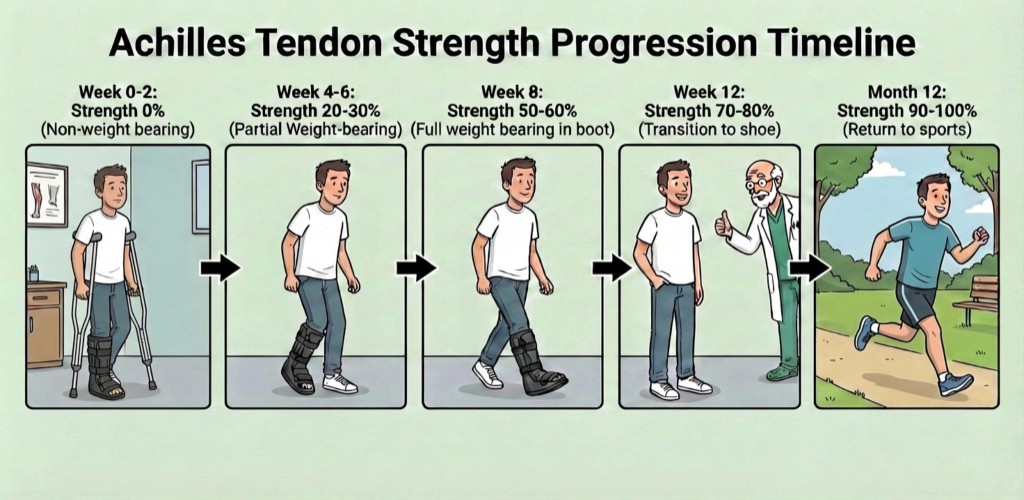
Removing the boot abruptly increases re-injury risk. Muscles weaken, joints stiffen, and the fascia isn’t ready for full load. A sudden return to normal shoes can trigger a “roaring back” of pain, sometimes worse than before.
Step-by-Step Transition Plan
- Partial Wear: Start by wearing the boot only during long walks or standing tasks.
- Supportive Footwear: Switch to shoes with firm arch support and heel cushioning, such as stability running shoes.
- Gradual Increase: Add 15–30 minutes of barefoot or shoe walking daily, monitoring for pain.
- Night Splint Use: Continue wearing a night splint to prevent morning tightening.
- Daily Stretching: Focus on calf and plantar fascia stretches before getting out of bed.
Risks and Limitations
Muscle Atrophy and Weakness
After just 2–3 weeks of immobilization, foot and calf muscles begin to weaken. The tibialis posterior, flexor digitorum brevis, and intrinsic foot muscles lose tone, reducing dynamic arch support. This can leave you more vulnerable to future injury.
Joint Stiffness
Lack of ankle motion leads to reduced dorsiflexion, a major contributor to plantar fasciitis. If not addressed, this stiffness forces the foot to overpronate, reigniting the cycle of pain.
High Recurrence Without Rehab
Studies show up to 50% of patients relapse within 6 months if they don’t do rehab after boot removal. The boot fixes nothing; it only pauses the problem. Without correcting tight calves, weak muscles, or poor gait, pain returns.
Secondary Pain and Gait Changes
Wearing a bulky boot alters your stride. You may limp, shift weight to the other leg, or rotate your hip, leading to knee, hip, or back pain. These secondary issues can outlast the original heel pain if not corrected.
Boot Cast vs. Functional Restoration

Immobilization vs. Active Healing
| Feature | Boot Cast (Immobilization) | Functional Restoration |
|---|---|---|
| Goal | Stop pain via rest | Fix mechanics via movement |
| Duration of Relief | Short-term | Long-term |
| Recurrence Risk | High without rehab | Low with proper rehab |
| Best For | Acute flare-ups, rupture | Chronic cases, prevention |
The True Fix: Beyond the Boot
For lasting results, combine boot use with:
– Calf and ankle mobility drills to restore dorsiflexion.
– Strengthening exercises for foot intrinsics and posterior tibialis.
– Gait retraining to correct overpronation.
– Dry needling or soft tissue work on trigger points at the medial calcaneal tubercle, FDB, and quadratus plantae.
When to Consider a Boot Cast
Ideal Candidates
- Pain unresponsive to 6–8 weeks of PT and orthotics.
- Severe morning pain limiting daily function.
- Confirmed plantar fascia tear.
- Need for rapid pain relief before a critical event.
Not for Mild or Early Cases
If you’re catching plantar fasciitis early, skip the boot. Focus on stretching, proper footwear, and activity modification. A boot in mild cases can do more harm than good by weakening muscles unnecessarily.
Alternatives and Adjuncts
First-Line Treatments
- Physical Therapy: Stretching (Achilles, plantar fascia), strengthening (towel curls, heel raises), and manual therapy.
- Orthotics: Custom or OTC inserts to support the arch and correct alignment.
- Night Splints: Keep the foot in dorsiflexion overnight, preventing morning micro-tears.
- NSAIDs: Short-term use for pain and inflammation.
Advanced Options
- Corticosteroid Injections: Fast relief, but limited to 1–2 doses due to tissue weakening.
- Extracorporeal Shock Wave Therapy (ESWT): Stimulates healing in chronic cases (3–6 sessions).
- Platelet-Rich Plasma (PRP): Emerging option for tissue regeneration.
Patient Decision Guide
Ask Yourself:
- Do I need immediate pain relief to function? A boot cast can help.
- Am I willing to do rehab after? You must commit to prevent relapse.
- Is my job active or sedentary? Active jobs require longer recovery and cautious return.
- Have I tried PT and orthotics? A boot is for when these fail.
Consult a Professional
Never self-prescribe a boot. A podiatrist or physical therapist should:
– Confirm the diagnosis, ruling out stress fracture or nerve issues.
– Assess biomechanics, including foot shape, gait, and ankle mobility.
– Prescribe the right boot type and wear schedule.
– Guide the transition to rehab.
Frequently Asked Questions About Boot Casts for Plantar Fasciitis
How long does it take for a boot cast to work for plantar fasciitis?
Most patients notice pain relief within the first week of consistent wear. However, full healing typically takes 4 to 12 weeks depending on severity. Mild cases may resolve in 3–4 weeks, while severe or ruptured cases can require up to 3 months.
Can I walk normally while wearing a boot cast?
Yes. A walking boot is designed to let you move without putting stress on the plantar fascia. Many patients actually walk more comfortably in the boot than barefoot or in regular shoes. However, your gait may change, so watch for secondary knee, hip, or back pain.
Will my plantar fasciitis come back after the boot comes off?
Without follow-up rehab, recurrence rates reach 50% within 6 months. The boot doesn’t fix tight calves, weak foot muscles, or poor gait mechanics. To prevent relapse, commit to physical therapy, stretching, and strengthening after boot removal.
Is a boot cast better than a night splint for plantar fasciitis?
They serve different purposes. A night splint gently stretches the fascia overnight to reduce morning pain. A boot cast provides full-day immobilization for severe cases or ruptures. Night splints are first-line; boots are reserved for when other treatments fail.
Can I exercise while wearing a boot cast?
Low-impact activities like swimming or upper-body work are usually safe. Avoid running, jumping, or heavy lifting that stresses the foot. Always check with your provider before resuming any exercise routine.
What happens if I wear a boot cast too long?
Extended use causes muscle atrophy and joint stiffness. After just 2–3 weeks, foot and calf muscles weaken, and ankle dorsiflexion drops. Wearing the boot longer than prescribed can leave you with worse mechanics than before, increasing re-injury risk.
Final Verdict on Boot Cast Effectiveness for Plantar Fasciitis
A boot cast is highly effective for short-term relief in severe or treatment-resistant plantar fasciitis. It works by stopping the cycle of micro-trauma through immobilization and support. Clinical evidence supports its use, especially when combined with injections or after rupture.
But here’s the truth: it isn’t a cure. Used alone, it’s a temporary fix with high recurrence. Its real value lies as a stepping stone, a tool to break the pain cycle so you can begin the real work of restoring mobility, strength, and proper mechanics.
For long-term success, pair the boot with a rehab plan. Start ankle mobility drills, strengthen your foot muscles, and correct gait flaws. That’s how you move from symptom relief to permanent recovery.