How to Take Care of Ariat Boots
You spent good money on a pair of Ariat boots, and now you want them to last. Whether you wear them for work, riding, or weekends around town, knowing how to take care of Ariat boots keeps them looking sharp and feeling comfortable for years. Skip the routine, and leather cracks, stitching fails, and odors set in fast.
This guide covers every step you need. You’ll learn how to break in new boots the right way, clean each leather type without causing damage, control stubborn odors, and store your boots so they hold their shape. We’ll also cover when it’s time to repair versus replace.
Break In New Ariat Boots the Right Way
Start With Thick Socks
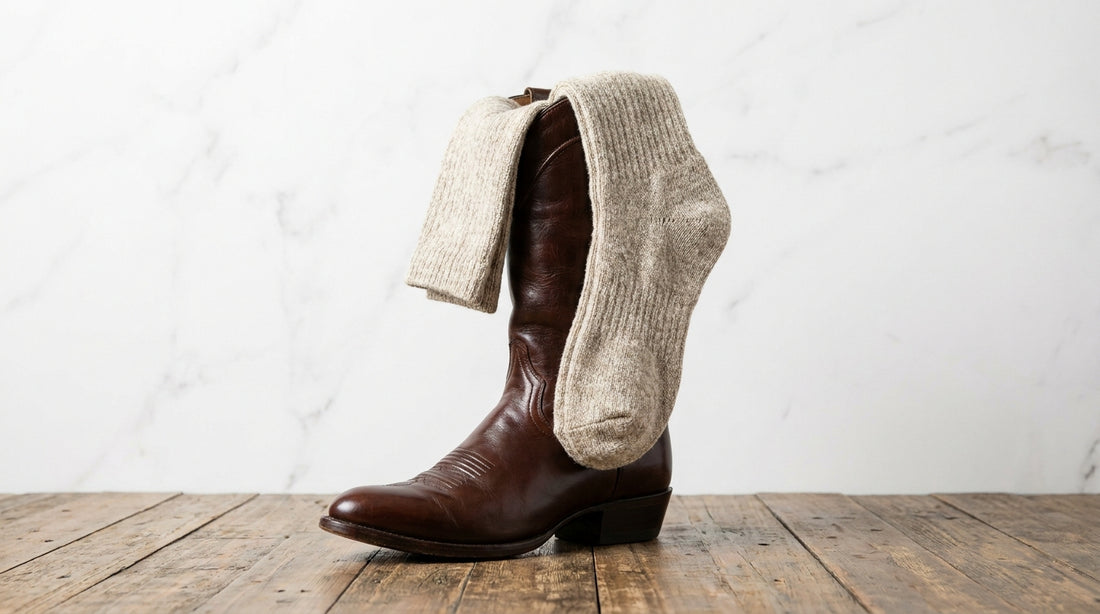
Wear your new Ariat boots around the house with thick or double-layered socks. The extra padding creates gentle pressure inside the boot, forcing the leather to stretch and mold to your foot. This method highlights tight spots early so you can address them before they become blisters.
Skip the Oil at First
Resist the urge to condition new boots right away. Applying oil too soon softens the leather before it has shaped to your foot, which leads to a loose, sloppy fit. Wait at least a few weeks of regular wear before starting any conditioning routine.
Give It Time
Breaking in takes anywhere from a few days to several weeks. Thicker leathers like full-grain and bison need more time. Lighter styles may feel comfortable within days. Pay attention to pressure points and address them early with targeted wear or a professional stretching service.
Clean Ariat Boots by Material Type
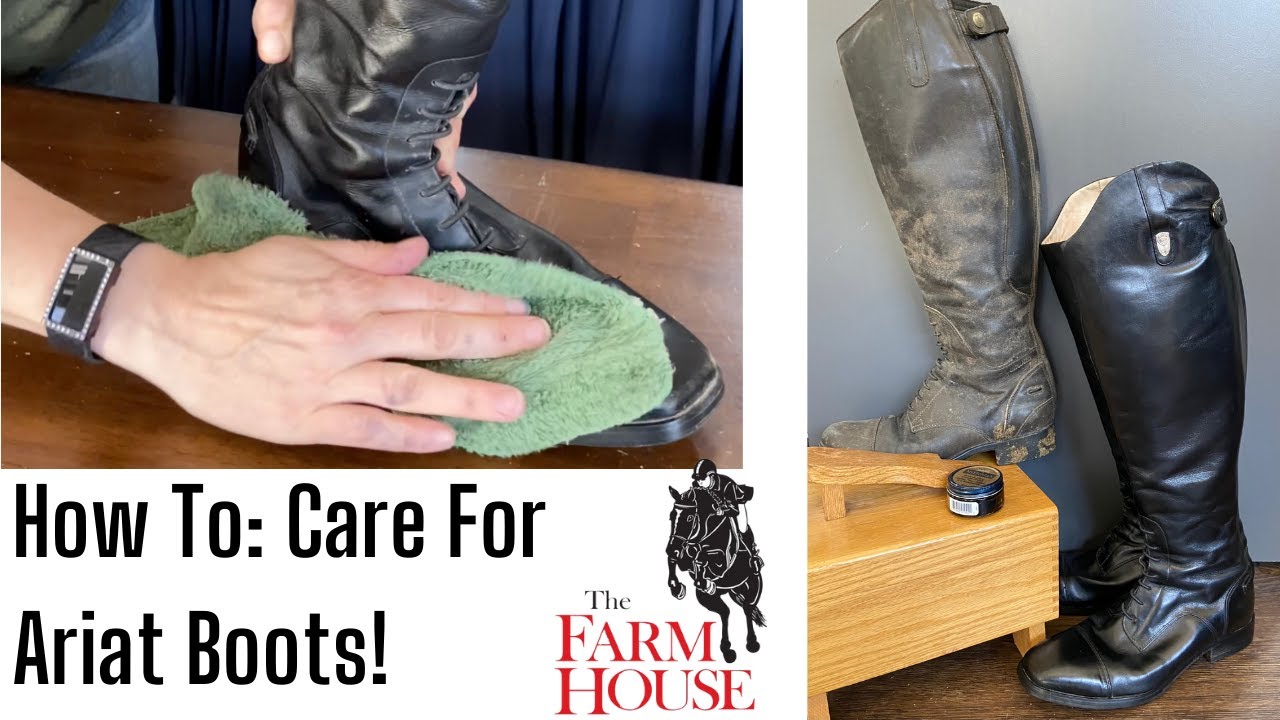
Different leathers demand different care. Using the wrong product can ruin the finish, so always match your cleaner to the material.
Exotic Leathers: Alligator, Caiman, Lizard
Brush gently in the direction of the scales using a soft-bristled brush. Wipe with a slightly damp cloth and never soak the leather. Condition every 2–3 months with a high-quality exotic leather conditioner, then apply a protective spray for water and stain resistance. Harsh cleaners will lift or damage the quills.
Ostrich Leather
Follow the quill pattern with a soft brush. Wipe clean with a damp cloth and condition every 2–3 months. Always use shaped shoe trees to prevent the quills from collapsing. Finish with an exotic-specific protective spray.
Sueded Exotics: Caiman and Python
Lift dirt with a suede brush. For deeper stains, use a cleaner made for sueded exotics. Condition every 2–3 months with a specialized product. Never apply wax or standard polish. Use a protectant spray designed for both suede and exotics.
American Bison
Remove dust with a dry brush. For grime, wipe with a damp cloth and mild soap. Apply a bison-specific conditioner every 2–3 months to keep the leather supple. Buff lightly and protect with a waterproofing spray made for bison.
Full-Grain, Top-Grain, and Goat Leather
Brush off debris and wipe with a damp cloth. For stubborn dirt, use mild soap. Patent leather requires patent-specific cleaners only. Condition every 2–3 months with full-grain leather conditioner. Polish with matching wax for shine and protect with a water-repellent spray.
Nubuck, Rough-Out, and Suede
Restore texture with a nubuck or suede brush. Test any specialized cleaner on a hidden area first. Condition with a suede-specific formula and never use wax. Apply a suede protector spray to resist water and stains.
Hair-On Leather
Brush the hair side gently and wipe with a damp cloth if needed. Condition only the leather side, never the hair. Protect with a spray made for hair-on leather and store carefully to avoid crushing the hair.
Waterproof Top-Grain Leather
Wipe with a damp cloth and use mild soap if necessary. Condition with a waterproof leather conditioner. Reapply waterproofing spray after every cleaning or heavy moisture exposure to keep the protection strong.
Textile Uppers
Spot clean with a damp cloth and mild detergent. Air dry completely before wearing or storing. Apply a fabric protector spray to resist stains. Avoid folding or compressing the material to prevent creasing.
BOA® Fit Systems
Wipe the dial and cables with a damp cloth. Never submerge the system or apply conditioner. Loosen the laces before storing to reduce tension on the mechanism.
Maintain Work Boots Like a Pro
Work boots take a beating from mud, chemicals, and daily stress. A consistent routine keeps them safe and functional.
Clean After Every Tough Job
If you work in mud or grime daily, clean your boots every night. Dried debris breaks down leather and weakens stitching over time. For routine wear, clean once a week or at minimum every two weeks.
Follow a Step-by-Step Cleaning Process
- Remove laces and soak them in soapy water, then air dry.
- Tap boots together to loosen dried mud, then scrub seams, toes, and the tongue with a soft nylon brush.
- Wipe with a damp cloth. For soaked boots, remove insoles and hand-scrub the interior.
- Avoid harsh chemicals like alcohol, which degrade leather and safety features.
- Never machine wash. It destroys structure, strips waterproofing, and can damage your washer.
Dry Boots Safely
Set boots in indirect sunlight or on a boot dryer. Never use a clothes dryer or direct heater. High heat cracks leather and shrinks the shaft. Let boots dry completely before conditioning.
Re-Condition After Every Clean
Cleaning strips natural oils from the leather. Once dry, apply a thin, even coat of conditioner or boot oil. Focus on stress areas like the toe box and flex points. Avoid over-oiling and keep product off metal hardware.
Control Odors in Ariat Work Boots
Wear the Right Socks
Choose wool or antimicrobial socks like Ariat’s Tek Work Sock. These wick moisture and fight odor-causing bacteria. Always start with clean socks and never reuse a pair.
Use Baking Soda Overnight
Sprinkle baking soda inside boots after each use. It neutralizes acids and absorbs moisture. Tap out the excess in the morning. It’s safe, cheap, and surprisingly effective.
Try Antimicrobial Inserts
For persistent odors, add aftermarket odor-fighting insoles. These work alongside your regular insoles to control bacteria throughout the day.
Clean the Interior
Use shoe shampoo or an interior cleaner occasionally. Follow product instructions and always let the interior dry fully before wearing again.
Condition and Protect Ariat Leather
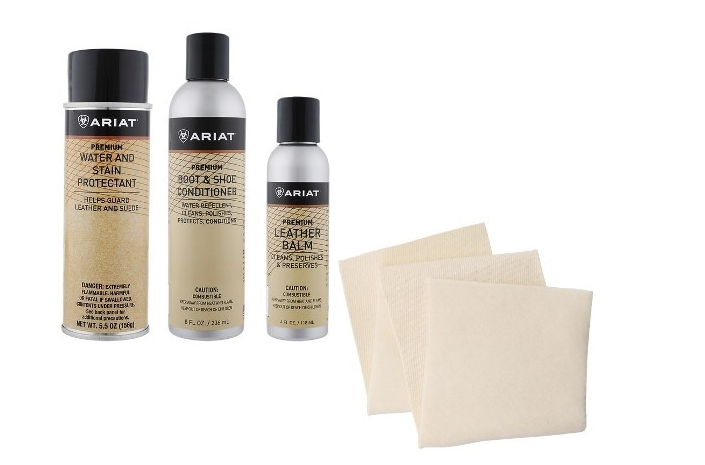
Condition Every 2–3 Months
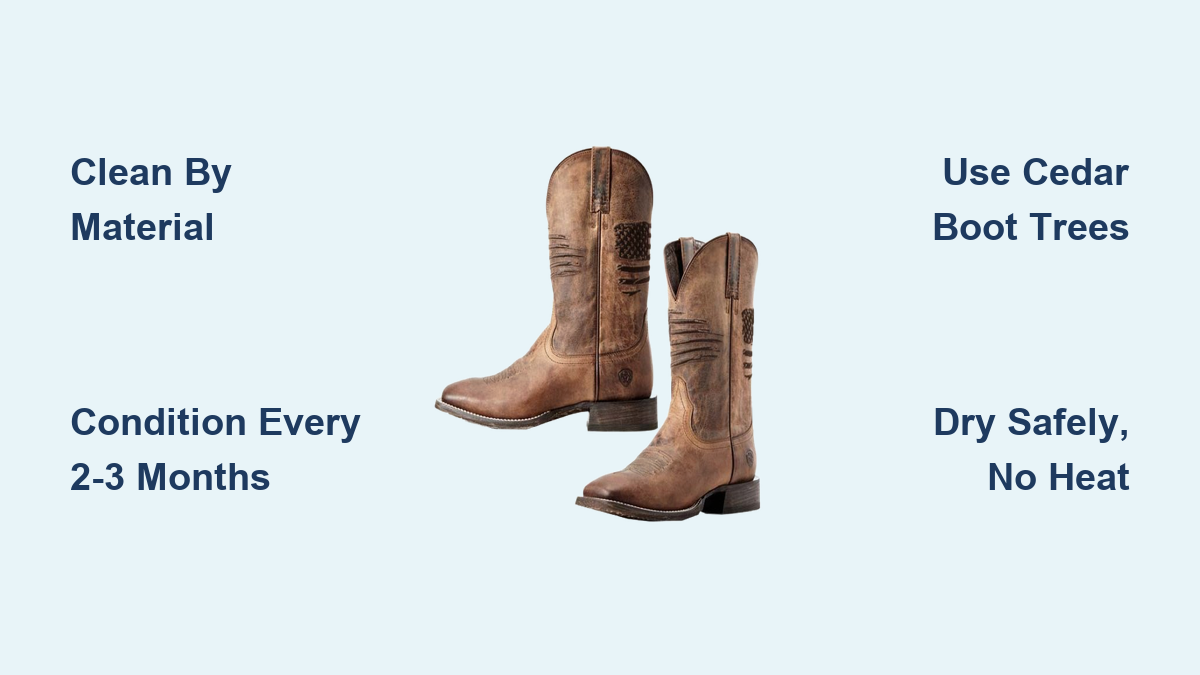
This is the golden rule for most leather types. If your boots face heavy use or wet conditions, condition every 3–6 months. Dry, cracked, or blotchy leather needs immediate attention.
Apply Conditioner Correctly
Use a clean cloth or soft brush to massage conditioner into all areas, including seams, pull straps, and embroidery. Let boots dry 20–30 minutes after cleaning before applying. Always use products specific to your leather type.
Re-Waterproof After Cleaning
Waterproofing wears off with use. After each clean or rainstorm, spray on a fresh coat of protector. Use the right formula for your material, whether suede, full-grain, or exotic.
Store Ariat Boots the Right Way
Keep Them in a Cool, Dry Place
Store indoors in a closet or on a shelf away from direct sunlight. Never leave boots in a car or shed where temperature and humidity fluctuate. Heat and moisture warp leather and promote mold.
Use Cedar Boot Trees
Insert cedar shoe trees to:
– Maintain the boot’s shape
– Prevent toe curling
– Absorb residual moisture
– Fight odors naturally
Use shaped trees for ostrich leather to preserve the quill structure.
Stand Boots Upright
Never stack or pile boots on top of each other. This crushes the shaft and distorts the fit. Let them stand tall in a well-ventilated area.
Loosen Laces Before Storing
For lace-up styles, untie the laces before putting boots away. This reduces stress on the eyelets and keeps the collar flexible.
Use Breathable Storage Bags
Store boots in fabric bags or boxes. Never use plastic, which traps moisture and causes mildew. For hair-on boots, make sure no pressure is applied to the hair side.
Fix Common Boot Problems
Remove Creases Safely
- Stuff boots tightly with paper or socks until the leather expands.
- Warm the leather with a blow dryer on low for a few seconds at a time.
- Massage creases out with your hands while warm.
- Stop immediately if the leather feels hot.
- Cool at room temperature with stuffing still inside to set the shape.
Handle Water Damage
If boots get soaked, dry them at room temperature. Never use direct heat. Once dry, condition immediately to restore lost oils and prevent cracking.
Repair Stitching and Soles
Fix small tears in stitching right away to stop them from spreading. Resole boots when treads wear thin or become uneven. A good cobbler can extend your boot’s life by years.
Know When to Replace Ariat Boots
Work Boots: 6–12 Months
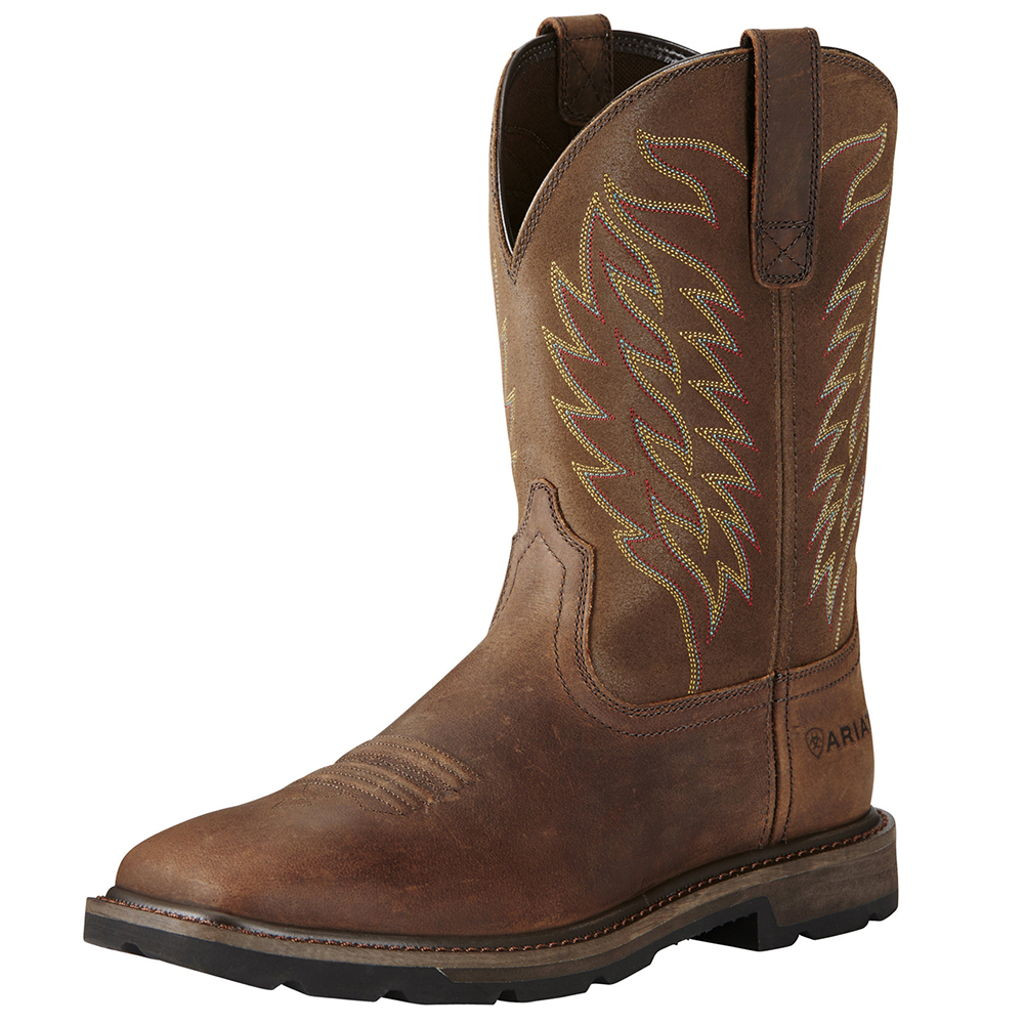
With daily use, expect to replace work boots every 6 months to a year. Even with excellent care, constant stress wears them down. Safety always comes first.
Casual Boots: Years With Care
Dress and casual Ariats can last many years when cleaned and stored properly.
Signs It’s Time to Replace
- Damaged toe cap: Dents or cracks in steel or composite safety toes
- Worn soles: Uneven wear or holes in the outsole
- Cracked leather: Sides or toes splitting, especially if conditioning doesn’t help
- Loss of support: Aches, blisters, or instability mean the internal structure is failing
- Poor fit: A loose or sliding boot won’t protect you properly
Boost Boot Longevity With Smart Habits
Use the Right Products
Always match your cleaner, conditioner, and protector to the exact leather type. Using the wrong product, like wax on suede, can ruin the finish permanently.
Clean Mud Immediately
Removing mud right after use is the single most important habit for extending boot life in tough jobs. Letting it dry in accelerates wear on leather and stitching.
Maintain Your Accessories
If a leather care spray trigger clogs, unscrew it, soak in warm water for a minute, and pump under water to clear the mechanism. Reattach once clean.
Care for Down Apparel Too
If you own Ariat down vests or jackets, tumble dry with dryer balls to restore loft. If air drying, shake vigorously once completely dry.
Match Replacement Insoles
When swapping insoles, choose ones with similar thickness and support. Wrong insoles alter fit and reduce comfort.
Frequently Asked Questions About Ariat Boot Care
How Often Should I Condition My Ariat Boots?
Condition most leather Ariat boots every 2–3 months. If you wear them heavily or expose them to wet conditions, condition every 3–6 months. Dry, cracked, or blotchy leather needs immediate conditioning regardless of the timeline.
Can I Use Regular Soap on Ariat Leather Boots?
Mild dish soap diluted in water is safe for cleaning most leather types. However, avoid harsh chemicals like alcohol, which damage leather and compromise safety features. Patent leather requires patent-specific cleaners only.
Is It Safe to Machine Wash Ariat Work Boots?
No. Never put work boots in a washing machine. Machine washing destroys boot structure, strips waterproofing, and can damage your washer. Always clean by hand using a damp cloth, soft brush, and mild soap.
How Do I Stop My Ariat Work Boots From Smelling?
Wear wool or antimicrobial socks, sprinkle baking soda inside overnight, and use cedar boot trees to absorb moisture. For persistent odors, add antimicrobial insoles and clean the interior periodically with shoe shampoo.
When Should I Replace My Ariat Work Boots?
Replace work boots every 6–12 months with daily use. Key warning signs include damaged toe caps, worn or uneven soles, cracked leather, loss of support, and a loose fit. Safety should always be your top priority.
What’s the Best Way to Store Ariat Boots Long-Term?
Store boots indoors in a cool, dry place away from sunlight. Insert cedar boot trees to maintain shape and absorb moisture. Keep them upright in breathable fabric bags, never plastic, and loosen laces to reduce stress on eyelets.
Key Takeaways for Caring for Your Ariat Boots
Taking care of Ariat boots comes down to consistency. Clean them after every tough job, condition every 2–3 months, and store them with cedar boot trees in a breathable bag. Match every product to your specific leather type, and never use heat to dry wet boots.
Pay attention to warning signs like worn soles, cracked leather, and loss of support. When safety or comfort fails, replace the boots rather than risk injury. Start with a basic care kit today: a soft brush, a damp cloth, leather conditioner, and cedar boot trees. Build the habit now, and your Ariats will deliver performance and protection for years to come.