
How to Wear Hiking Boots: A Simple Guide
You’ve invested in a solid pair of hiking boots—now it’s time to wear them right. Simply lacing them up and hitting the trail isn’t enough. How to wear hiking boots properly can mean the difference between a pain-free adventure and a blister-riddled disaster. A well-worn boot supports your feet, prevents injury, and boosts confidence on rugged terrain. But when worn incorrectly, even the most expensive boots can cause discomfort, fatigue, or long-term foot problems.
This guide breaks down the exact steps to wear hiking boots for optimal comfort, performance, and even style. From achieving a perfect heel lock to choosing the right socks, lacing smartly, and breaking in your boots safely, every detail matters. Whether you’re trekking through mud, scrambling up a rocky ridge, or pairing your boots with jeans for a weekend brunch, you’ll learn how to make them work for every situation.
Achieve the Right Boot Fit
The foundation of wearing hiking boots correctly starts with fit. A boot that looks great but doesn’t fit well will sabotage your hike.
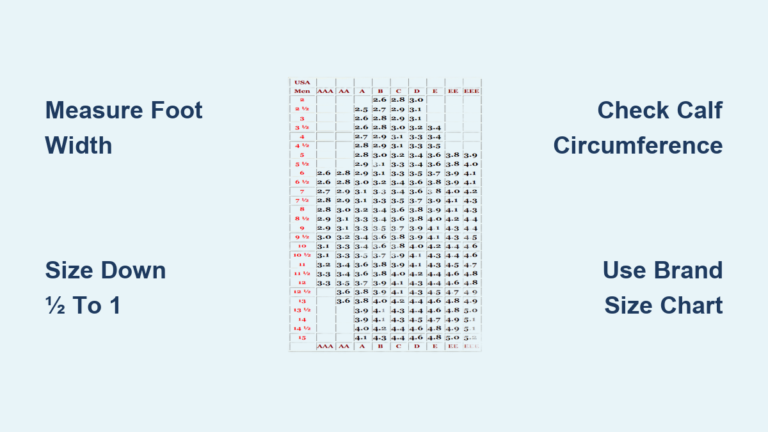
Check Toe Room with the Finger Test
Proper toe space prevents bruised toenails on steep descents. To test:
1. Lace the boot loosely.
2. Slide your foot forward until your toes touch the front.
3. A properly sized boot should allow one to two fingers behind your heel.
This gap accounts for foot swelling during long hikes and downhill movement. If only one finger fits, consider sizing up—especially if you plan on backpacking.
Pro Tip: Measure both feet. Always size for your larger foot, as even a small difference can lead to pressure points.
Align the Ball of Your Foot
Your foot’s widest part—the ball—should align with the boot’s widest section. This ensures balanced support and reduces instability. If your foot feels pinched in the midfoot but has extra toe room, the boot’s last (shape) may not match your foot type.
Expert Note: Prioritize midfoot alignment over toe space. A slightly long boot is better than one that squeezes your arch or ball.
Assess Width and Heel Lock
After lacing:
– Too narrow? You’ll feel pressure on the sides or toes.
– Too wide? Your foot slides side to side, increasing friction and blister risk.
– Heel lift should be less than ¼ inch (0.6 cm).
To test, stand on your toes or walk down a slope. If your heel lifts excessively, the boot may be too big—or your lacing technique needs adjustment.
Warning: Lacing can’t fix a fundamentally poor fit. If your heel slips more than half an inch, consider a different size or width.
Optimize Fit with Socks and Insoles
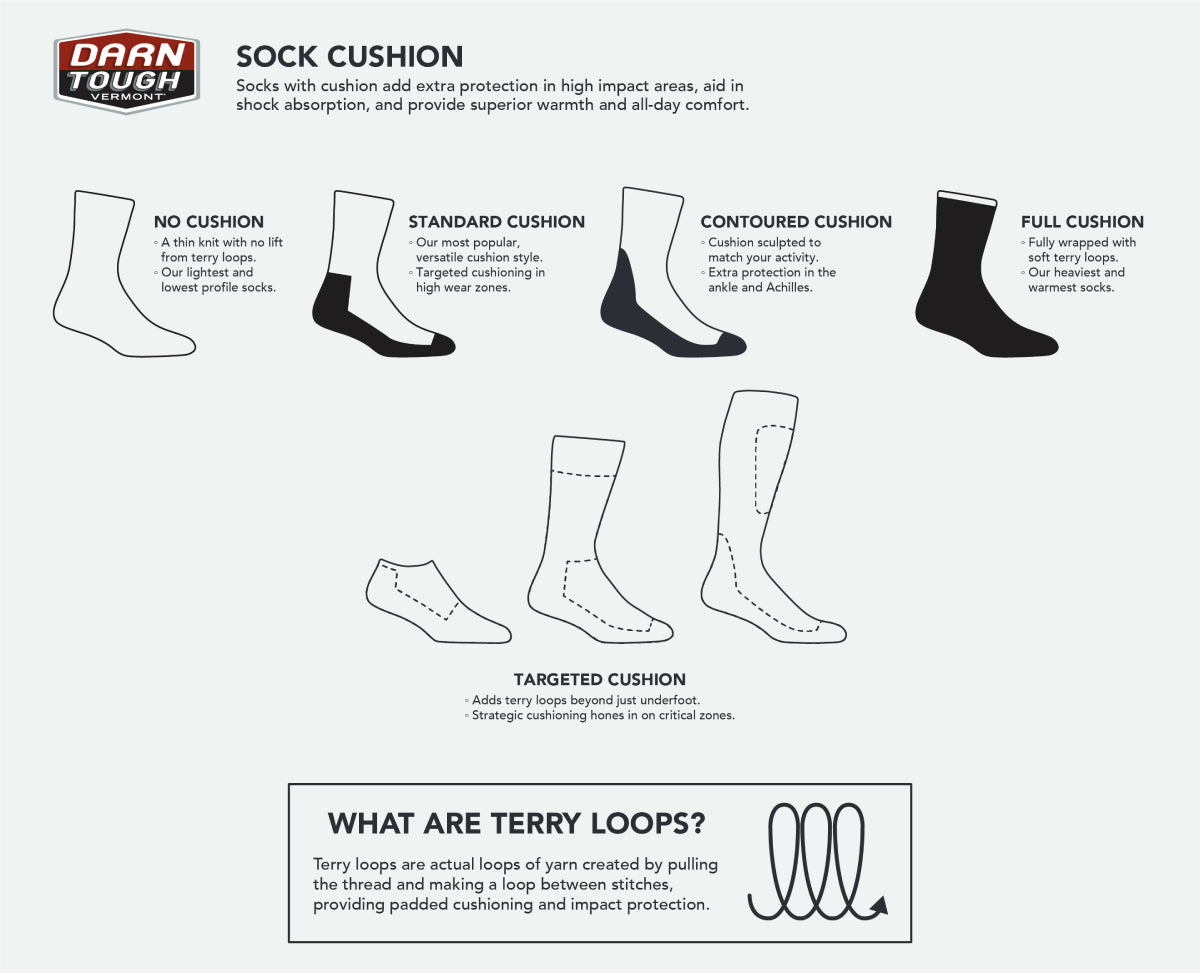
Even the best-fitting boots need the right socks and insoles to deliver all-day comfort.
Choose the Right Sock Thickness
Socks are a quick way to fine-tune fit:
– Too wide? Try thicker socks (e.g., merino wool).
– Too tight? Switch to thinner, low-profile pairs.
– Never wear cotton—it absorbs moisture and increases blister risk.
Top Picks: Darn Tough and SmartWool offer durable, odor-resistant, moisture-wicking options perfect for long hikes.
Upgrade to Performance Insoles
Factory insoles are flimsy and flat. Replacing them improves support and fills dead space.
Superfeet Green Insoles
- Ideal for boots with extra volume.
- Offer firm arch support and deep heel cupping.
- Reduce foot fatigue and improve stability.
CURREX HIKEPRO™ Insoles
- Feature a non-slip heel grip to prevent slippage.
- Dynamic arch support with three height options.
- Made with 40% recycled EVA foam—eco-friendly and effective.
Expert Note: Match insoles to your arch. Flat feet need firm support; high arches benefit from cushioned models.
Lace for Heel Lock and Comfort
How you lace your boots determines heel stability, pressure distribution, and overall comfort.
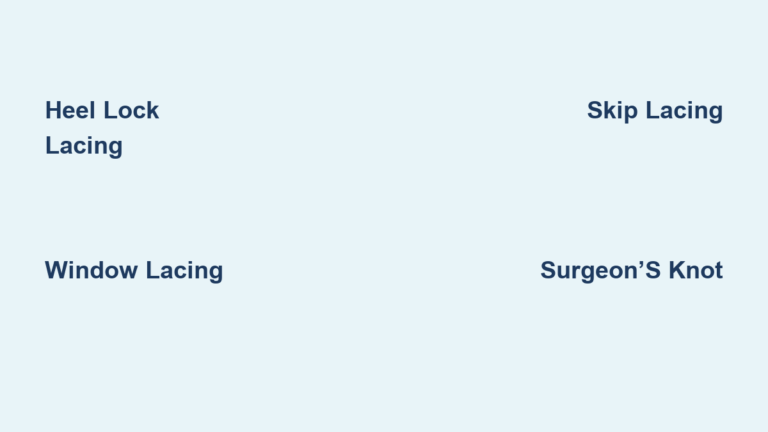
Use the Heel Lock Lacing Technique
Also known as the Runner’s Loop, this method locks your heel in place.
Steps:
1. Lace normally up to the eyelet just above the ankle.
2. Create a loop with each lace (like starting a bow).
3. Pass the lace through the opposite loop from inside out.
4. Pull tight—this cinches the ankle collar.
5. Finish lacing and tie as usual.
Visual Cue: The ankle should feel snug but not pinched.
Try the Surgeon’s Knot for Extra Hold
At the ankle level, tie a double knot before continuing lacing. This adds tension exactly where you need it—ideal for steep terrain or loose trails.
Replace Worn Laces
Stretched or frayed laces won’t hold tension. Upgrade to durable, waxed laces that grip better and last longer.
Break In Boots Before the Trail

Never wear brand-new hiking boots on a 10-mile hike. Skipping the break-in period is the #1 cause of trail blisters.
Walk 10–20 Miles First
Start with:
– 1–2 miles around the house or neighborhood.
– Gradual increases on flat, forgiving trails.
– Wear your planned hiking socks and insoles.
Purpose: Softens stiff materials, molds the boot to your foot, and reveals pressure points early.
Red Flag: Persistent hot spots or pain after 10 miles mean the boot may not fit—consider exchanging.
Wear the Right Socks for the Conditions
Socks regulate temperature, wick sweat, and reduce friction.
Pick by Material and Height
| Sock Type | Best For | Why It Works |
|---|---|---|
| Merino Wool | All seasons | Wicks moisture, resists odor, stays warm when wet |
| Synthetic Blends | Warm weather | Fast-drying, durable |
| Double-Layer | Blister prevention | Inner layer moves with foot, outer with boot—reducing friction |
Match Height to Activity
- Ankle/Crew Socks: Day hikes, warm weather.
- Tall/Over-the-Knee: Cold climates, snow, or when wearing leggings.
- Thermal Socks: Winter hikes—pair with insulated boots.
Critical Rule: Always test boots with the same socks you’ll wear hiking.
Style Hiking Boots Off the Trail
Hiking boots aren’t just for the woods. With the right pairing, they’re a fashion staple.
Pair with Skinny or Cuffed Jeans
- Skinny jeans slide smoothly over boot shafts—clean and modern.
- Straight-leg jeans, cuffed just above the ankle, avoid bunching and look balanced.
- Avoid boot-cut styles—they can catch on laces or trip you.
Pro Styling Tip: Tuck the jeans into the boot or roll the hem for a crisp look.
Tuck in Leggings for Cold Weather
Leggings fit snugly into the boot shaft, eliminating gaps. Ideal with:
– Thermal leggings.
– Merino wool socks.
– Padded leather collars for comfort.
Celeb Style: Fashion icons like Karlie Kloss wear hiking boots with leggings and oversized sweaters.
Wear with Shorts in Warm Weather
- Choose tapered shorts that end above the knee.
- Pair with crew or ankle socks to prevent blisters.
- Great for urban hikes or summer adventures.
Avoid: Going sockless—friction and odor will follow.
Use Boots for Daily Wear
Some hiking boots are built for city life too.
Timberland Premium 6-Inch Boots: Urban Ready
- Waterproof leather and rustproof hardware.
- Cushioned midsole for all-day comfort.
- Direct-attach construction for durability.
Style Hack: Pair with chinos, a bomber jacket, and a white tee for rugged sophistication.
Color Matters
- Classic Yellow or Tan: Timeless, versatile.
- Black or Gray: Sleek, modern, office-appropriate.
- Bold Colors: Make a statement—pair with neutral outfits.
Understand Key Boot Features

Knowing what your boots offer helps you wear them better.
Critical Performance Elements
- Vibram Soles: Deliver grip on wet rocks, mud, and loose terrain.
- Gore-Tex Linings: Keep feet dry without overheating.
- Reinforced Toe Caps: Protect against stubs and debris.
- Ankle Support: High-cut boots stabilize on uneven ground—ideal for backpacking.
Choose by Boot Type
| Type | Height | Flex | Best Use |
|---|---|---|---|
| Hiking Shoes | Low | High | Light trails, speed hiking |
| Day Hiking Boots | Mid | Moderate | Weekend hikes, moderate terrain |
| Backpacking Boots | High | Stiff | Heavy loads, rugged mountains |
Rule of Thumb: The heavier your pack, the stiffer and higher the boot should be.
Fix Common Fit Problems
Even with care, issues arise. Here’s how to solve them fast.
Heel Slipping? Lock It In
Causes: Loose heel cup, worn laces, flat insoles.
Fixes:
– Use heel-lock lacing.
– Install CURREX or Superfeet insoles.
– Tighten laces at the ankle, not the top.
Toes Hitting the Front? Adjust Fit
Causes: Boot too short, downhill hiking.
Fixes:
– Ensure ½ to ¾ inch of space in front.
– Lean back when descending.
– Consider sizing up if pain persists.
Getting Blisters? Reduce Friction
Causes: Moisture, slippage, cotton socks.
Fixes:
– Wear merino wool socks.
– Apply blister tape (e.g., Leukotape) to hot spots.
– Upgrade insoles to stabilize your foot.
Feet Going Numb? Loosen Up
Causes: Over-tight lacing, poor circulation.
Fixes:
– Loosen upper laces.
– Ensure toe box isn’t compressed.
– Stop and retie if numbness occurs.
Foot Sliding Side to Side? Fill the Gap
Causes: Too-wide boot, flat insole.
Fixes:
– Wear thicker socks.
– Use volume-filling insoles.
– Try a narrower last (boot shape) if available.
Follow the Wear Checklist
Use this step-by-step routine every time you gear up.
Before You Buy
- Measure feet in the afternoon (they swell).
- Use a Brannock Device or CURREX ArchMap™.
- Wear hiking socks during fitting.
- Walk on an incline if the store has a ramp.
After Purchase
- Insert performance insoles.
- Wear with correct socks.
- Lace using heel-lock method.
- Break in over 10–20 miles.
- Inspect for hot spots or pressure.
On the Trail
- Retie laces if they loosen.
- Change socks if feet get sweaty.
- Check for debris inside the boot.
Maintain Boots for Longevity
Proper care extends boot life and performance.
Clean After Every Hike
- Remove dirt with a brush.
- Wipe leather with a damp cloth.
- Never machine wash.
Dry Naturally
- Air dry at room temperature.
- Avoid direct heat—cracks leather.
Re-Waterproof Regularly
- Apply Nikwax or Mink Oil every 3–6 months.
- Re-treat after heavy rain or cleaning.
Replace Worn Parts
- Swap out laces and insoles every 6–12 months.
- Resole if the tread wears down.
Storage Tip: Keep boots in a cool, dry place—away from sunlight.
Final Note: Knowing how to wear hiking boots correctly turns a simple step into a system of comfort, safety, and style. From the first fit test to the final lace pull, every detail matters. Whether you’re summiting a peak or walking to brunch, your boots should feel like an extension of your feet—not a burden. Invest in fit, upgrade your insoles, break them in, and wear them with confidence. Your feet will thank you, mile after mile.