How Cowboy Boots Should Fit: Quick Steps
Slipping on a pair of cowboy boots and feeling your heel float freely or your toes press against the wall is a frustrating experience. The question of how should a cowboy boot fit matters more than with any other footwear, because cowboy boots have no laces to fine-tune the fit. Everything depends on getting the right size, shape, and tension from the moment you put them on.
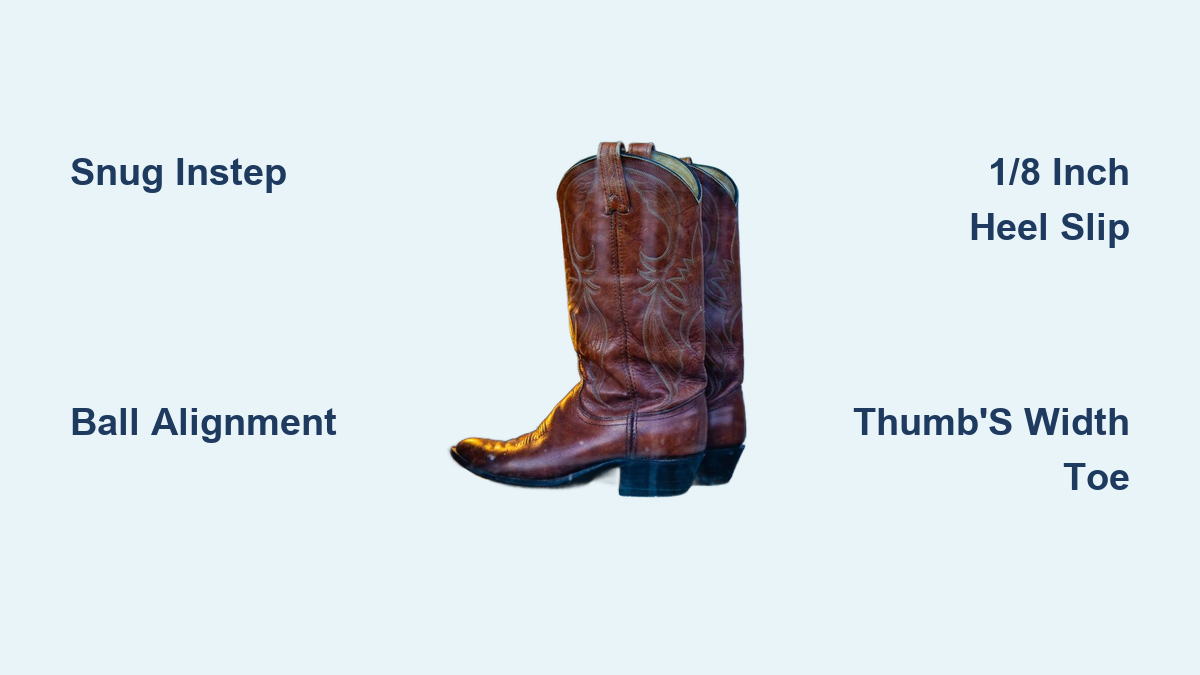
A properly fitted cowboy boot should feel snug across the instep, allow roughly 1/8 inch of heel lift when new, and provide about a thumb’s width of space past your longest toe. The ball of your foot must align with the boot’s widest point, and the leather should feel firm without causing sharp pain. Quality boots mold to your feet over time, but they must start with the right foundation.
This guide walks you through every fit zone, break-in expectation, and brand-specific detail so you can buy with confidence. You will learn exactly how cowboy boots should feel, what red flags to avoid, and how to troubleshoot problems before they ruin your investment.
Snug Instep, Not Painful

The instep is the crown of cowboy boot fit. Without laces, the leather tension across the top of your foot is what holds the boot in place. A proper instep creates a firm handshake feel: secure, supportive, and never crushing.
Feel Resistance When Pulling On
When you slide your foot into a cowboy boot, you should feel distinct resistance as your foot passes over the arch. This tension is normal and expected. The tighter the instep, the more secure the boot will stay during walking. If your foot glides in effortlessly, the boot is too loose and will never hold properly.
Listen for the Pop
As your heel drops into the heel cup, a faint pop or click should be audible. This sound confirms your heel has pushed past the heel counter and settled onto the insole. No pop means your foot may not be fully seated, or the instep is too loose to create proper contact.
Expect Initial Tightness
New boots often feel tight across the instep, and that is acceptable. Leather softens with body heat, moisture, and movement. However, sharp pain, numbness, or an inability to get your foot in signals the wrong size or last shape.
Pro Tip: If you fall between sizes, sizing down slightly is safe when the instep feels snug but manageable. Leather stretches width-wise, not length-wise.
Align the Ball of Your Foot
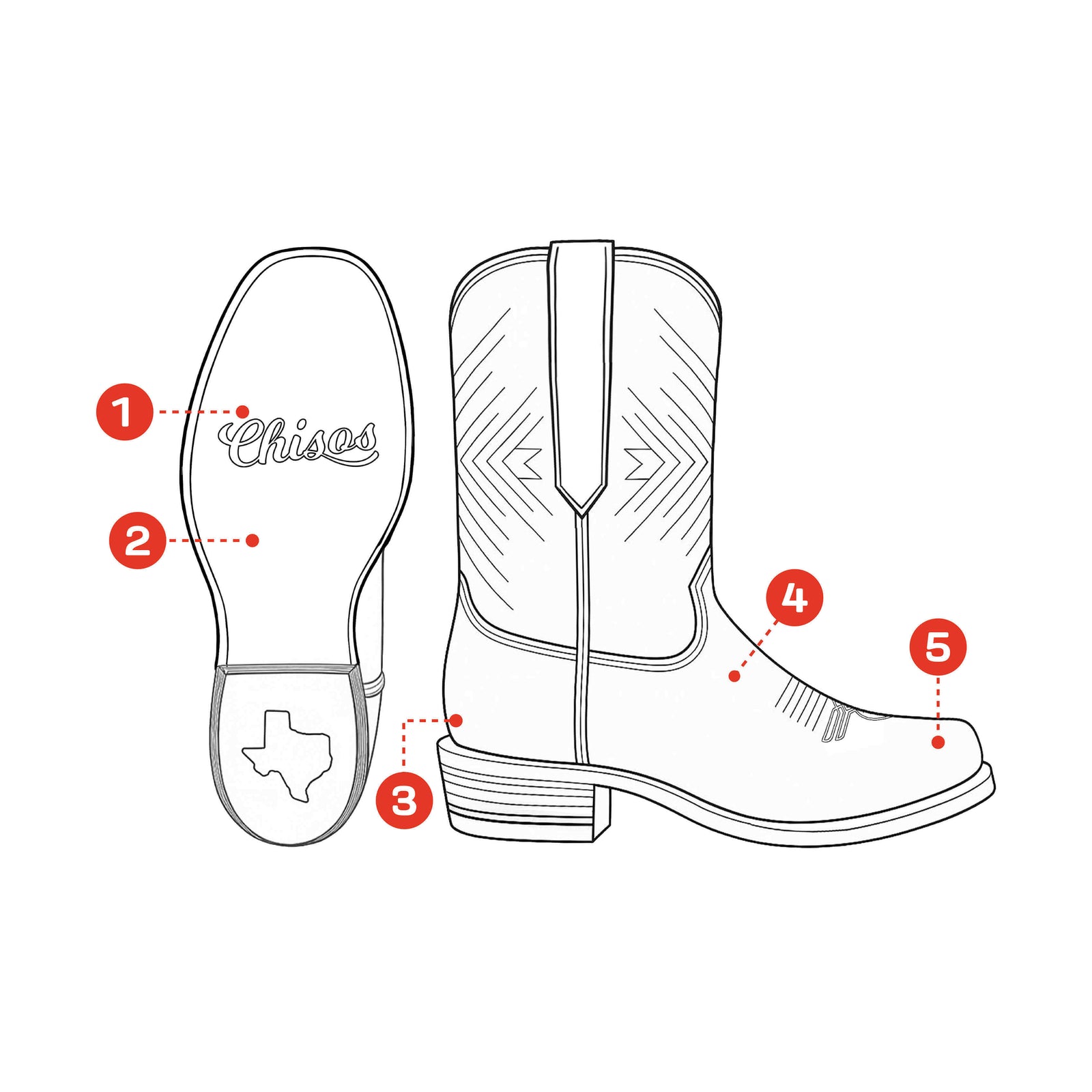
Ball placement is one of the most overlooked aspects of fit. The widest part of your foot must sit directly over the widest part of the boot’s outsole.
Match Ball to Boot’s Widest Point
The ball of your foot (where the metatarsals meet the toes) is where your foot naturally bends. If this joint sits too far forward or backward, every step will feel awkward, like walking on a plank.
Test While Standing
Put the boot on and stand straight. Wiggle your toes. The boot’s flex point should line up exactly under the base of your toes. Pressure in front of or behind that joint means the size or last is wrong.
Avoid Sizing Down Blindly
Some buyers size down to chase a tighter feel, but if it throws off ball alignment, discomfort follows. A half-size mistake can misalign this critical zone. Always prioritize placement over perceived snugness.
Accept Slight Heel Slip
Unlike dress shoes or sneakers, a little heel lift is normal in new cowboy boots. In fact, it is desirable.
Ideal Heel Lift: 1/8 to 1/2 Inch
Expect about 1/8 inch (3mm) of vertical heel movement when walking. Some guides allow up to 1/2 inch for brand-new boots. This slippage decreases as the sole flexes and the heel counter molds to your shape.
Why Heel Slip Happens
The rigid heel cup does not conform immediately. As you walk, leather compresses, the insole settles, and the heel locks in. Think of it as a break-in phase where the boot learns your foot.
Diagnose Problematic Slippage
- More than 1/2 inch of lift means the boot is likely too large.
- Zero lift means the boot may be too tight or your arch sits too far forward.
- Lateral (side-to-side) movement indicates poor fit or wrong width.
Warning: Excessive slippage causes blisters. Use a thin heel grip during break-in if needed.
Leave Thumb’s Width in the Toe Box
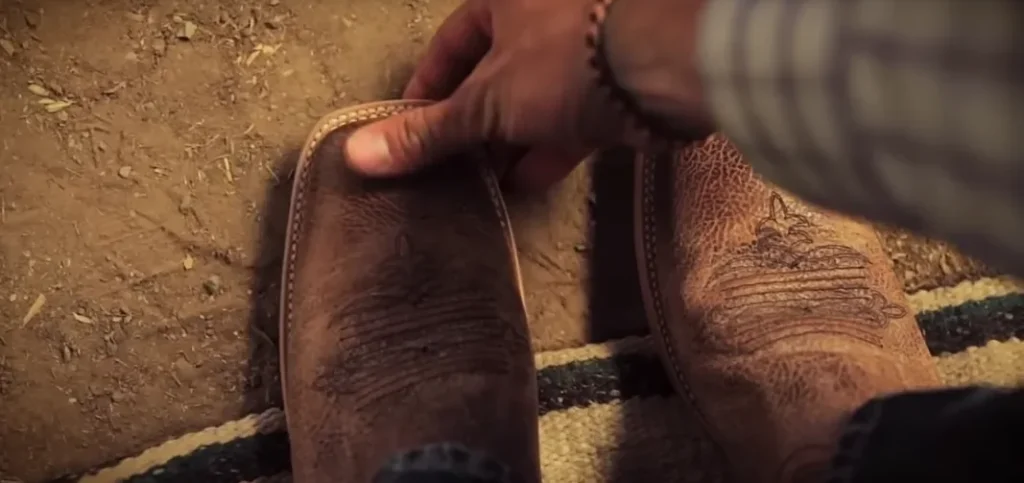
The toe box is about space, not tightness. Your toes need room to move, especially during long days on your feet.
Use the Thumb Test
Stand up and press your thumb sideways across the top of the boot, just behind the toe cap. There should be roughly 1/2 to 1 inch of space between your longest toe and the end of the boot.
Don’t Let Toe Shape Fool You
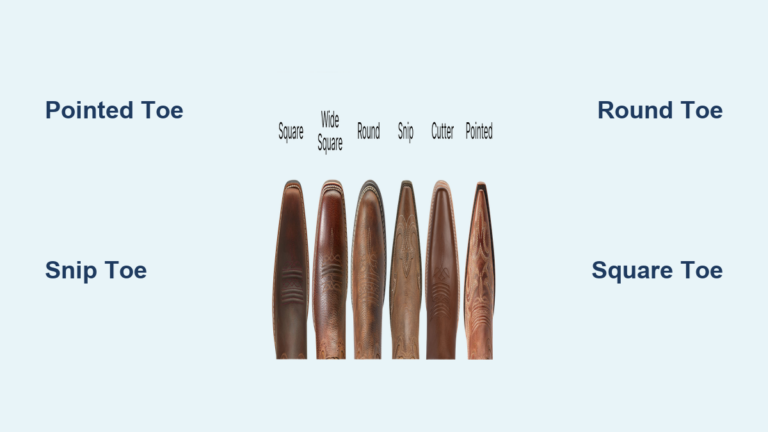
- Snip or R-toe styles feel narrower and suit slim feet.
- Square or round toe styles offer more room for wider feet.
Regardless of shape, your toes should never touch the front and should wiggle freely side to side.
Length Doesn’t Stretch
Unlike width, boot length does not stretch significantly. If your toes are crowded now, they will stay crowded. Always size up when in doubt.
Walk It Out: Dynamic Fit Check
Standing still does not reveal the full picture. You need to walk on a hard surface to confirm the fit.
What to Test For
- Does the heel stay seated after the initial pop?
- Is heel lift controlled, not clunky?
- Are there any hot spots at the instep, toes, or ankle?
- Does the arch support feel firm without digging in?
- Does the boot feel like an extension of your leg?
Break-In Is Normal
Expect stiffness in the first few wears. Start with 30-minute indoor sessions, then an hour, before wearing all day. Wear your usual socks and use moleskin on pressure points to avoid blisters.
Know Your Anatomical Fit Zones
Cowboy boot fit is about matching specific boot parts to specific foot parts.
Instep: The Anchor Point
- Snug means secure.
- Loose means sloppy.
- Painful means wrong size.
This area holds the boot on. Aim for firm tension that eases after 10 to 15 wears.
Arch: Support, Not Pressure
The boot’s arch should mirror your foot’s arch. High arches may need a custom insole. Low arches require a boot that does not collapse or create pressure points.
Heel Counter: Stability Zone
The heel should sit snugly against the back wall. Vertical movement is fine, but side-to-side movement is not. Harsh rubbing causes blisters until the leather softens.
Shaft and Calf: Comfort Above the Ankle
The shaft should hug your calf without pinching or gapping. For wide calves, look for expansion seams (like Durango’s Easy-Fit), hidden gore panels, or brands offering wide calf options such as Tony Lama or Ariat Wide.
Understand Leather Break-In Dynamics
Cowboy boots are made to mold, not just wear out. Leather responds to heat, moisture, and pressure.
Where Leather Stretches
- Instep stretches significantly.
- Ball width stretches moderately.
- Length does not stretch meaningfully.
- Heel height does not change.
This is why length must be correct from day one.
Snug vs. Painful: Know the Difference
| Snug Fit | Painful Fit |
|---|---|
| Mild pressure across instep | Sharp pain or numbness |
| Resolves after 5 to 10 wears | Persists or worsens |
| Allows toe wiggling | Toes feel crushed |
| Heel slips slightly | Heel rubs raw |
If it hurts, it will not break in safely. Return or exchange.
Fit by Brand: What to Expect

Not all boots fit the same, even at the same size.
Ariat
Runs true to dress shoe size. Sizing down is common for those between sizes due to leather stretch. Focus on instep tension and ball alignment.
Tony Lama
Runs true to dress shoe size, one size smaller than sneakers. Emphasizes professional fitting and offers wide widths and special lasts.
Durango
Runs true to standard sizing. Known for the X-Pand System and Easy-Fit expansion seams. Ideal for wide calves or hard-to-fit feet.
General Rule
Most heritage western brands follow dress shoe sizing, not athletic shoe sizing. If you wear a size 10 in dress shoes, start there.
Fix Common Fit Issues
Use this quick guide to troubleshoot problems:
| Symptom | Likely Cause | Fix |
|---|---|---|
| Heel slips more than 1/2 inch | Boot too big or wrong ball placement | Try half size smaller |
| No heel lift | Too tight or arch too far forward | Check fit and alignment |
| Toes hit the front | Boot too short | Size up; length does not stretch |
| Instep too tight to enter | Wrong width or size | Try wider or half size up |
| Arch pain | Poor arch match | Add insole or change brand |
| Foot slides in easily | Instep too loose | Try smaller size or narrower last |
Final Fit Checklist
Before you buy, verify all of these:
- Heel lifts 1/8 inch to 1/2 inch when new
- Thumb’s width of space past toes
- Ball of foot aligns with boot’s widest point
- Snug instep with resistance on entry
- Audible pop when heel seats
- No pinching or numbness
- Comfortable walk on hard floor
If all boxes are checked, you have found your fit.
Frequently Asked Questions About Cowboy Boot Fit
Should cowboy boots be tight at first?
Yes, cowboy boots should feel snug across the instep and tight when new. Leather stretches over time, so a snug start leads to a custom fit. However, the fit should never cause sharp pain, numbness, or the inability to get your foot into the boot. Tightness that resolves after a few wears is normal; pain that persists is a sizing problem.
How much heel slip is normal in new cowboy boots?
About 1/8 inch (3mm) of vertical heel lift is ideal. Some guides allow up to 1/2 inch for brand-new boots. This slippage decreases as the sole flexes and the heel counter molds to your foot. More than 1/2 inch means the boot is too large; zero lift means it may be too tight.
How much space should be in the toe of a cowboy boot?
There should be roughly 1/2 to 1 inch of space between your longest toe and the end of the boot, about one sideways thumb’s width. Your toes should never touch the front and should wiggle freely side to side. Length does not stretch, so getting this right at purchase is critical.
Do cowboy boots stretch over time?
Yes, cowboy boots stretch in specific areas. The instep stretches significantly, and the width across the ball of the foot stretches moderately. However, the length of the boot does not stretch meaningfully, and heel height does not change. This is why length must be correct from day one.
Should you size down in cowboy boots?
Sizing down can work if you fall between sizes and the instep feels snug but manageable. Leather stretches width-wise, so a slightly tight boot often breaks in beautifully. However, sizing down should never compromise ball alignment or cause pain. When in doubt, prioritize proper placement over perceived snugness.
What does the pop mean when putting on cowboy boots?
The pop is a faint clicking sound that occurs when your heel pushes past the heel counter and settles onto the insole. This sound confirms your foot is fully seated in the boot. No pop may mean your foot is not fully in, or the instep is too loose to create proper contact.
Key Takeaways for Finding the Perfect Cowboy Boot Fit
A perfect cowboy boot fit starts snug and evolves into a custom glove for your foot. Focus on four critical zones: instep tension, ball alignment, heel slip, and toe room. Expect some tightness at first, but never sharp pain. Remember that leather stretches in width but not in length, so getting the size right from the start saves you from blisters and returns.
Your next step is simple: try on boots in the late afternoon when your feet are slightly swollen, wear the socks you plan to use, and walk on a hard surface before committing. When in doubt, try multiple brands, since lasts vary widely. Your feet will thank you for the patience.