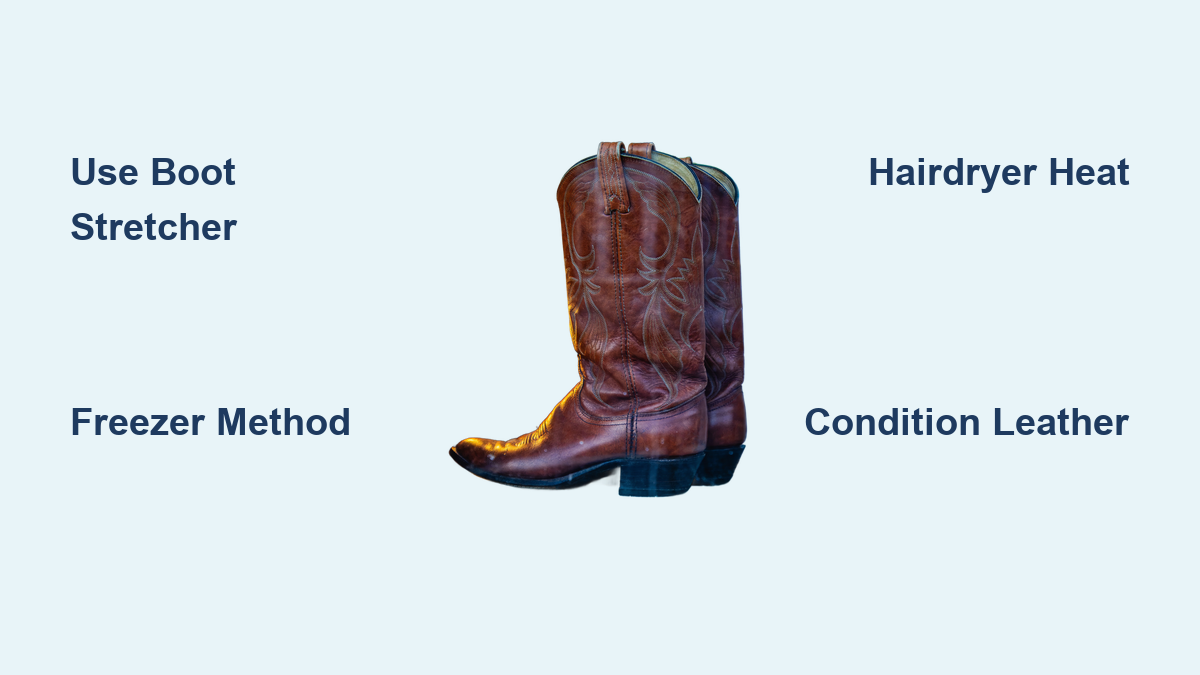
How to Stretch Cowboy Boots: Quick Steps
You finally found the perfect pair of cowboy boots, but sliding them on feels like wrestling a leather vise. That stiff, pinching sensation across the instep or toes is one of the most common frustrations with new boots. The tight fit is actually intentional, designed to ensure the leather eventually molds to your unique foot shape, but waiting for that to happen naturally can take months.
Learning how to stretch a cowboy boot the right way lets you speed up the break-in process safely. This guide walks you through proven methods using moisture, heat, mechanical tools, and professional help, so you can achieve a custom fit without cracking the leather, staining the lining, or voiding your warranty.
Use a Boot Stretcher for Controlled, Even Stretching

A boot stretcher is the most reliable tool for expanding leather without guesswork. It applies steady, adjustable pressure that widens the boot gradually, making it ideal for stiff leathers that resist natural breaking-in.
Insert the Stretcher and Expand Slowly
Slide the stretcher fully into the boot shaft. Turn the handle or knob just a quarter to half turn at a time to avoid tearing seams or cracking the leather. Leave the device in place for at least 24 hours, then check the fit. Repeat over several days if needed, since most leather gains roughly 1/8 to 1/4 inch of width with consistent use.
Target Pain Points with Bunion or Toe Plugs
Many stretchers come with removable wooden plugs designed to address specific pressure spots. Attach a plug to the area where you feel the most tightness, typically the inside of the shaft or the ball of the foot. Expand the stretcher as usual to deliver a localized stretch without over-widening the entire boot.
Pro Tip: Wear the boots for 20–30 minutes immediately after stretching. Thick socks and movement help the leather “set” in its new shape.
Try the Freezer Method for Stubborn Toe or Heel Pinch
When a specific spot pinches and nothing else works, the freezer method uses expanding ice to push the leather outward from the inside. It is low-cost, surprisingly effective, and works overnight.
Fill and Seal a Heavy-Duty Water Bag
Use a gallon-sized freezer-grade ziplock bag. Fill it about one-third full with water, squeeze out all the air, and seal it tightly. Hold it over the sink first to check for leaks, since any spill could damage the boot’s interior lining.
Position the Bag and Freeze Overnight
Place the sealed bag inside the tight area, pointed toward the toe or resting at the heel. If you need to stretch the calf, stuff the toe of the boot with crumpled newspaper to push the bag upward into position. Stand the boot upright in the freezer for at least 8 hours. As water freezes, it expands by about 9%, applying steady outward pressure against the leather.
Let the Ice Thaw Before Removing
Never pull a frozen bag out of the boot. Wait 15–20 minutes after removing the boot from the freezer so the ice softens slightly. This prevents tearing the lining or distorting the heel counter. Try the boots on with thick socks afterward and repeat once if needed, waiting 24 hours between attempts to let the leather recover.
Warning: Skip this method on exotic leathers like ostrich or snake. Their porous surfaces absorb water easily and can be permanently damaged.
Apply Heat with a Hairdryer While Wearing the Boots
Heat softens leather fibers and makes them pliable, so combining warmth with foot pressure delivers fast, foot-shaped results. This method works especially well when you need to break in boots before a big event.
Warm the Tight Areas on Medium Heat
Put on two pairs of thick socks and slide the boots on. Use a hairdryer on medium heat, keeping it 6–8 inches from the leather and moving it in circular motions. Focus on the instep, ankle, and toe areas. Never hold the dryer in one spot for more than 20 seconds to avoid scorching or drying out the leather.
Flex Your Foot as the Leather Heats
While heating, wiggle your toes, flex your ankle, and shift your weight from side to side. This motion guides the leather to stretch exactly where your foot needs it. Keep the boots on until they cool completely, around 30 minutes, so the new shape sets properly.
Expert Note: For extra stretch, spritz the inside of the boot with rubbing alcohol before heating. It breaks down fiber tension and speeds up softening.
Wear Thick Socks to Break In Boots Gradually
This is the safest, most natural method for stretching cowboy boots. Your foot does the shaping while body heat warms and softens the leather over time.
Layer a Cotton Sock Under a Thick Performance Sock
Wear a thin cotton sock underneath a thick performance sock made from wool or a synthetic blend. The double layer adds volume and creates a friction buffer that prevents blisters during the stiff break-in phase. Ariat Performance Socks and Darn Tough hiking socks are popular choices.
Walk Indoors in Short Bursts to Start
Begin with 30–60 minutes of indoor wear. Walk, squat, and flex your feet to work the leather. Repeat daily, gradually extending wear time as comfort improves. After 3–5 days, transition to short outdoor walks. Most boots loosen noticeably within 2–3 weeks of consistent wear.
Pro Tip: Apply leather conditioner every few days during this process to keep fibers supple and accelerate softening.
Use the Plastic Bag Trick to Slip Into Tight Insteps
If you cannot get your foot past the shaft, forcing it can collapse the heel counter or stretch the collar out of shape. A simple plastic bag solves the problem.
Slide Your Foot In with a Bag and Walk
Place your foot inside a thin plastic shopping bag, then slip it into the boot. The slippery surface reduces friction and lets your heel glide through smoothly. Once inside, remove the bag and walk around. Use this trick only 1–2 times until the leather begins to yield on its own.
Never use oil, grease, or excessive force. These can permanently damage the leather or stitching.
Condition Leather to Soften Fibers and Speed Up Stretching
Leather conditioner does more than add shine. It hydrates the fibers, making them more flexible and responsive to pressure from any stretching method.
Apply Conditioner to Both Interior and Exterior
Use a high-quality conditioner like Obenauf’s or Bick 4 on the inside and outside of tight areas, focusing on the instep, toe box, and shaft. Let it absorb for 10–15 minutes before wearing, and reapply every 2–3 days during the break-in phase.
Pair Conditioner with Other Stretching Techniques
Conditioner works best when combined with mechanical or thermal methods:
– Apply before using a boot stretcher
– Use after the freezer method to restore lost moisture
– Rub in before heat-stretching for faster, safer results
Avoid silicone-based products on full-grain leather. They clog pores and reduce breathability.
Spray Boots with a Stretching Solution for Quick Results
Boot stretch sprays are formulated to relax leather fibers quickly. They penetrate deep to loosen the material, making it more responsive to foot pressure or mechanical stretching.
Spray and Wear Immediately
Follow the product instructions carefully, since some sprays target the interior while others work on the exterior. Most require you to put the boots on right after application. Wear them with thick socks for 1–2 hours. The chemical softening combined with foot expansion delivers noticeable results in a single session.
Combine with Heat or Mechanical Pressure
For best results, use stretch spray alongside a boot stretcher or hairdryer. The spray preps the leather, while heat or pressure does the shaping. Popular options include Saphir Renovateur and Kiwi Boot Stretch.
Test first: Always spray a small, hidden area to check for discoloration before treating the entire boot.
Visit a Professional Cobbler for Precision Stretching

If your boots are expensive, made of exotic leather, or simply not responding to home methods, a cobbler offers the safest and most precise solution.
Get Targeted Stretching with Industrial Tools
Cobblers use heavy-duty stretchers with interchangeable attachments, including bunion plugs, toe spreaders, and calf expanders. These tools target exact pressure points while preserving the boot’s overall structure. A cobbler can stretch the instep without widening the heel or expand the shaft for calf comfort.
Save Time and Avoid Costly Mistakes
A single 30-minute professional session can achieve what takes weeks at home. Cobblers also know which leathers tolerate moisture or heat and which do not. Bring the socks you plan to wear with the boots so the cobbler can stretch them to match your actual fit.
Cost: Professional stretching typically runs $20–$50 per pair, well worth it for boots over $300 or delicate materials.
Know When Stretching Will Not Work
Not every tight boot can be saved. Stretching has real limits, and recognizing them prevents wasted effort and damaged leather.
Boots More Than Half a Size Too Small
Leather stretches about 1/8 to 1/4 inch in width with proper techniques. If your boots are a full size too small, stretching will not fix the problem. You will end up with a distorted shape and poor support.
Cramped Toes Usually Signal the Wrong Size
Snugness over the instep is normal and expected. But if your toes feel cramped, the boot is likely too short. No stretching method can add length to a boot.
Rule of thumb: You should have roughly a thumbnail’s width of space between your longest toe and the end of the boot.
Avoid Water and Heat on Delicate Materials
Suede, nubuck, and exotic skins absorb water easily and can warp, stain, or stiffen permanently. Even full-grain leather can crack if overheated or dried too quickly. When in doubt, consult a professional before applying any moisture or heat.
Follow a 2-Week Stretching Plan for Best Results
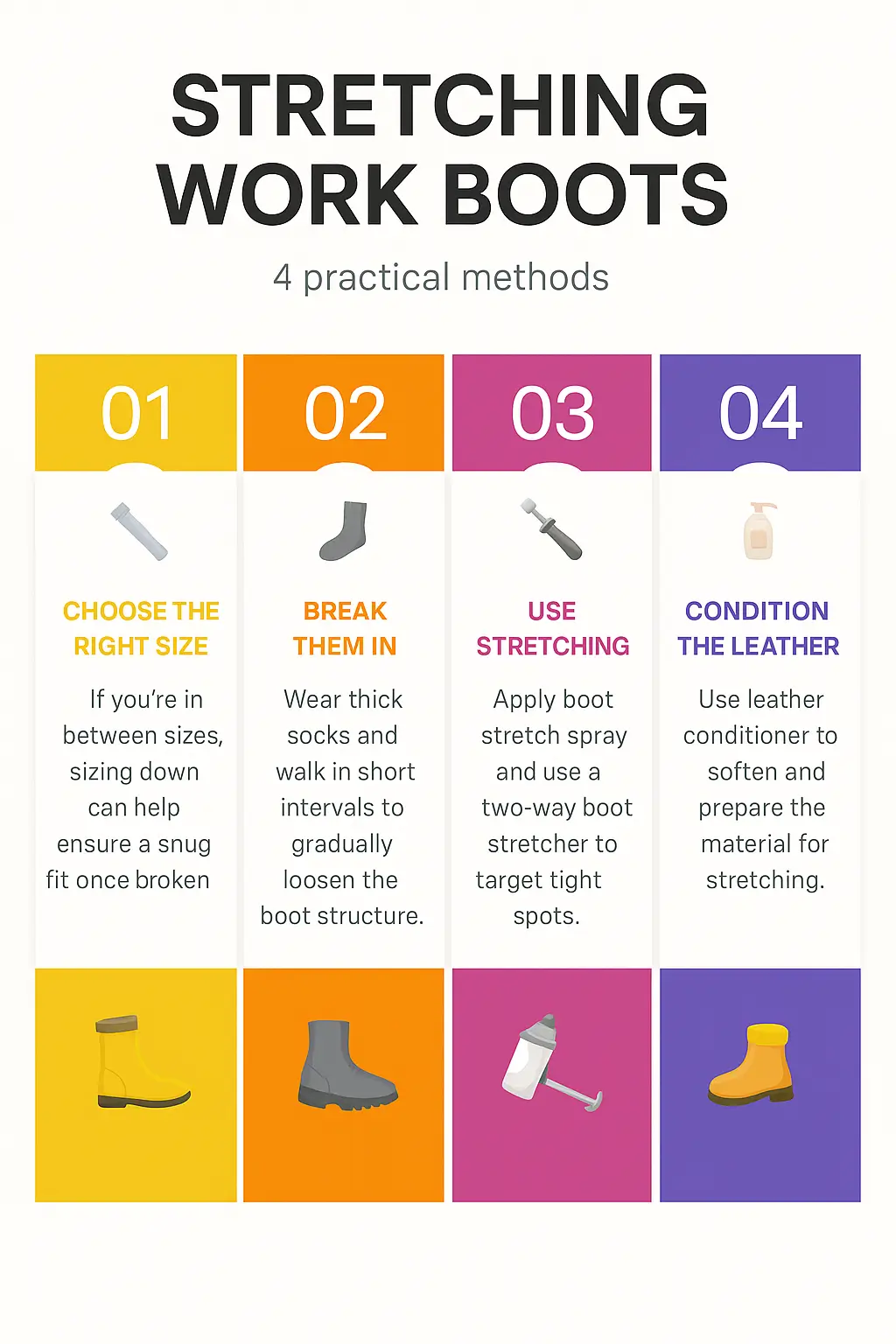
Combining methods in a logical sequence produces faster, safer results than relying on a single technique.
Week 1: Soften and Shape
- Day 1: Condition the boots and wear them with double socks for 1 hour
- Day 3: Use the hairdryer method for 30 minutes
- Day 5: Insert a boot stretcher (with bunion plug if needed) for 48 hours
- Day 7: Repeat conditioning and wear for 2 hours
Week 2: Target and Refine
- Day 8: Try the freezer method on the toe box if tightness remains
- Day 10: Apply stretch spray and wear for 2 hours
- Day 12: Visit a cobbler if home methods fall short
- Day 14: Test with regular socks and resume daily wear
Maintain the Fit After Stretching
Once you achieve the right fit, protect your results with consistent care.
Use Boot Trees or Shapers
Insert boot trees when you are not wearing the boots. They maintain shape, absorb moisture, and prevent creasing in the areas you worked to stretch.
Rotate Your Pairs
Avoid wearing the same boots two days in a row. Leather needs time to rest and recover its form between wears.
Condition Monthly
Even after breaking in, apply conditioner every 4–6 weeks. It keeps the leather flexible and prevents cracking over time.
Frequently Asked Questions About Stretching Cowboy Boots
Can cowboy boots be stretched a full size?
No. Leather typically stretches only about 1/8 to 1/4 inch in width, which is less than half a size. Boots that are a full size too small cannot be saved through stretching and should be exchanged for the correct size.
How long does it take to stretch cowboy boots?
It depends on the leather and the method. Wearing thick socks takes 2–3 weeks for noticeable results. A boot stretcher works in 24–48 hours. The freezer method delivers results overnight but should be limited to spot stretching.
Is it safe to use water to stretch cowboy boots?
Water can stretch leather but carries significant risks, including staining, warping, and voiding the warranty. Avoid soaking suede, nubuck, or exotic leathers. For full-grain leather, use the freezer method with a sealed bag rather than direct soaking.
Will stretching damage the leather?
Stretching is safe when done gradually and correctly. Risks arise from forcing tools too fast, overheating with a hairdryer, or soaking delicate materials. Always condition the leather before and after stretching to keep fibers supple.
Should I take new cowboy boots to a cobbler for stretching?
If the boots cost over $300, are made of exotic leather, or feel painful after a week of home methods, a cobbler is the safest choice. Professionals have industrial tools that target specific pressure points without damaging the boot’s structure.
Can I stretch the shaft of a cowboy boot?
Yes. A boot stretcher with a shaft attachment or the freezer method with a newspaper-wedged water bag can expand the calf area. For best results, visit a cobbler who specializes in shaft stretching.
Key Takeaways for Stretching Your Cowboy Boots Safely
Start with the gentlest methods first: thick socks, leather conditioner, and indoor wear. These low-risk techniques handle most minor fit issues within 2–3 weeks. Escalate to boot stretchers, hairdryer heat, or the freezer method only if natural breaking-in falls short. Avoid water soaking, excessive heat, and forceful stretching, all of which can permanently damage leather.
When in doubt, especially with expensive or exotic boots, trust a professional cobbler. With patience and the right approach, your cowboy boots will not just fit, but feel custom-made for your feet.