Types of Boot Heels: A Complete Guide
If you’ve ever stood in a shoe store staring at rows of boots, you’ve probably realized that heels are not one-size-fits-all. From the subtle lift of a roper heel to the dramatic curve of a fashion cowboy heel, types of boot heels vary widely in shape, height, and purpose. Choosing the right heel affects how you walk, how you ride, and how long you can stay on your feet without pain. Whether you need stirrup security for horseback riding, all-day support for work, or a bold silhouette for nights out, this guide covers every major heel type so you can shop with confidence.
Below, you’ll find detailed breakdowns of Western, work, and fashion heel styles, plus tips on materials, sole pairings, and how to match a heel to your lifestyle.
Western and Riding Heel Styles

These heels were born in horseback culture and remain essential for riders, ranchers, and Western fashion lovers. Their angled profiles keep your foot locked in stirrups while offering varying levels of walking comfort.
Fowler Heel: The Original Cowboy Standard
Invented in 1883 by John Fowler, the Fowler heel is one of the oldest designs still in use today. It stands between 1-1/8″ and 1-1/4″ tall, striking a balance between tradition and practicality.
Key features include:
- Straight cut: The edge sits perpendicular to the ground for walking stability.
- Pitched (slanted): Angles slightly backward, often seen on dressier “church boots.”
The Fowler is a favorite among ranchers because it’s low enough to avoid catching in stirrups yet tall enough to provide a refined Western silhouette. If you want a do-it-all cowboy heel that won’t trip you up on flat ground, this is your starting point.
Roper Heel: Stability for Fast Work
At just 1 inch high, the Roper heel is shorter and sharper than the Fowler. It was designed specifically for rodeo cowboys in roping events, where ground stability and quick dismounts matter most.
Key features include:
- Sharp angle at the back for grip in stirrups
- Available in both straight and pitched versions
- Often described as nearly flat
Because of its compact design, the Roper is less likely to snag when jumping off a horse. Today, it’s widely used by anyone who works with livestock and values foot security without sacrificing mobility.
Walking Heel: Comfort for All-Day Wear
Measuring 1-3/8″, the Walking heel is slightly taller than the Fowler but features a wide, flat base. Many versions use rubber for shock absorption.
Key features include:
- Engineered for continuous standing or walking
- Common in modern Western work boots
- Offers superior support over long shifts
This heel is ideal for people who wear cowboy-style boots daily but spend little time in the saddle. Its broad footprint distributes weight evenly, reducing fatigue, which makes it a top pick for servers, healthcare workers, and fashion-forward wearers who log miles in their boots.
Cowboy Heel: The Classic Riding Profile
The quintessential Western heel ranges from 1-3/8″ to 1-1/2″, with some riding variants reaching 2″. It features a distinct slanted stack angled at 120–130 degrees.
Key features include:
- Heel breast (front) tilted slightly back
- Tapers inward toward the ground
- Prevents foot from slipping forward in stirrups
While it excels in the saddle, the Cowboy heel is less comfortable for walking due to its height and angle. Still, it remains a staple in traditional and women’s Western boots, where the silhouette enhances posture and style even if worn more for looks than riding.
Riding Heel (Underslung): Maximum Stirrup Security
Standing 2 inches tall, this is the most aggressive heel in the riding category. Also called an Underslung Heel, it has a pronounced forward curve under the boot.
Key features include:
- Blocks forward foot slide in stirrups
- Provides unmatched stability during long rides
- Inner edge may remain vertical (BlockPacker style)
Designed for serious equestrians and ranchers, this heel keeps your foot locked in place, which is essential when riding at speed or over rough terrain. However, it’s awkward for walking and best reserved for those who prioritize saddle time over sidewalk miles.
Dogger Heel: Hybrid Power for Wrestlers
At 1.25″, the Dogger (short for Bulldogger) heel blends elements of the Cowboy and Block heels. It’s chunkier than a standard cowboy heel, with an angled back and straighter sides.
Key features include:
- Wider base improves ground traction
- Retains enough slant for stirrup security
- Built for short rides followed by explosive movement
Originally made for steer wrestlers, the Dogger is now popular in Pacific Northwest work boots and semi-dress styles. It’s not recommended for Engineer boots due to fit issues, but for rugged utility with a touch of flair, it delivers.
Fashion Heel: Style Over Substance
Ranging from 3″ to 4″, this is the tallest Western heel and the least functional. Narrow, sharply slanted, and often paired with exotic leathers or bold colors, it’s almost exclusively found on cowgirl boots.
Key features include:
- Designed for visual impact
- Poor walking comfort; requires break-in
- Minimal riding utility
These heels turn heads at concerts, parties, or photo shoots but aren’t meant for farm work or long strolls. They represent the “Coastal Cowgirl” aesthetic, which is Western-inspired fashion worn more for identity than occupation.
Work and Utility Boot Heels

Built for durability and traction, these heels serve tradespeople, outdoor workers, and anyone navigating uneven or hazardous terrain. Their designs prioritize grip, stability, and foot protection.
Logger Heel: Grip for Steep Terrain
Also called the Woodsman Heel, this heel stands 1.5″ to 2″ tall with a concave outer curve that tapers inward.
Key features include:
- Originally used by lumberjacks climbing trees
- Now essential for linemen, arborists, and trail workers
- Provides superior grip on slopes and logs
The curved profile digs into soft ground, preventing slips. While it takes time to adapt to walking in Logger heels, they’re unmatched for climbing. Avoid pairing them with sleek boots, as they look out of place on refined styles.
Block Heel: Stability in Dress and Service
Defined by its 90-degree straight edges, the Block heel is thick, broad, and built for balance.
Key features include:
- Base wider than the natural heel
- Height varies based on the shoe last
- Most effective at low to medium heights
This heel shines in Chelsea boots, service boots, and Derbies. It offers excellent support for standing all day and pairs well with formal or semi-formal attire. Tall block heels can look clunky, so proportion matters.
Lineman Heel: Asymmetrical Traction
A hybrid design combining Dogger and Block features:
- Outer side slightly angled for climbing
- Inner side cut at 90 degrees for stability
Made for utility workers who climb poles and walk flat surfaces, this heel gives the best of both worlds: grip when ascending and balance when grounded. It’s a niche but highly functional choice for electricians, telecom technicians, and field professionals.
Packer Heel: Riding Meets Utility
Found on Packer boots, this heel is a variant of the Block with a more angled outer edge.
Key features include:
- Sometimes called “BlockPacker”
- Inner portion remains vertical
- Outer part slants like a Dogger or Riding heel
It offers a middle ground between pure stability and stirrup retention, which is ideal for riders who also do ground work. Less common than other styles, but valued for its versatility in mixed-use environments.
Fashion and Dress Boot Heels
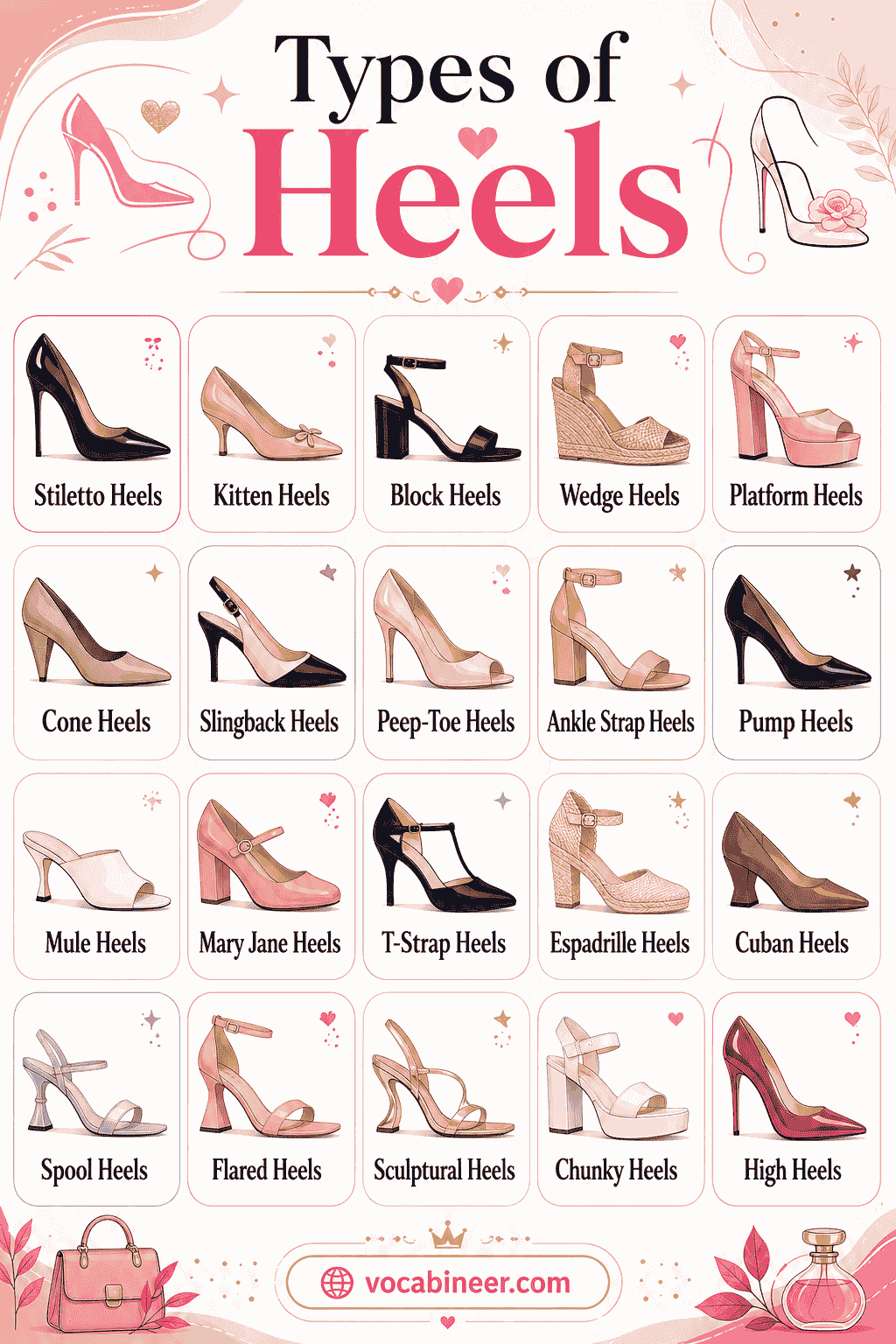
These heels focus on aesthetics, leg elongation, and trend alignment. While some offer modest comfort, most trade function for form, making them perfect for style-driven wear.
Cuban Heel: Retro Style with Function
A thick, low heel that tapers inward on the sides and back but has a straight front (breast).
Key features include:
- Different from Cowboy heel due to straight breast
- Historically used in Flamenco and Tango
- Adds subtle lift with vintage flair
Best on Chelsea boots, Beatle boots, and dress shoes, the Cuban heel works well with slim silhouettes. It’s often confused with the Dogger, but the sleek profile and straight front set it apart.
Stiletto Heel: Height and Drama
Tall, thin, and sharply pointed at 3 inches or more, the stiletto is all about impact.
Key features include:
- Minimal ground contact increases pressure
- Elongates the leg and improves posture
- Common in over-the-knee and party boots
While unstable on soft or uneven surfaces, the stiletto is a staple of formal wear, evening events, and bold fashion statements. Limit wear time if comfort is a concern.
Kitten Heel: Petite Elegance
Measuring 1″ to 2″, the kitten heel is a miniature stiletto with a slender, slightly tapered profile.
Key features include:
- Offers polish without pain
- Ideal for office wear, dates, or daily errands
- Found mostly on ankle boots and low-cut styles
It’s the perfect compromise between flats and high heels: elegant enough for professional settings, comfortable enough for all-day wear.
Wedge Heel: Seamless Comfort
A continuous slope from toe to heel with no separation between sole and heel.
Key features include:
- Distributes weight evenly
- Great for casual outings and summer styles
- Popular in open-toe sandal boots and boho designs
Because there’s no heel-to-sole transition, wedges reduce strain on the ball of the foot. They’re a top choice for beachwear, festivals, and anyone who wants height without the pinch.
Platform Heel: Bold and Balanced
Features an elevated sole under the forefoot, reducing the arch angle while maintaining total height.
Key features include:
- Makes tall heels more wearable
- Adds a modern, edgy look
- Often paired with chunky or block bases
Common in combat boots, winter styles, and Gogo boots, platforms let you wear 4-inch heels without the extreme lean. They’re a favorite in streetwear and alternative fashion.
Chunky Heel: Streetwear Statement
Thick, geometric, and often irregular in shape, this heel screams attitude.
Key features include:
- Adds structure to combat and fashion boots
- Supports grunge, punk, and urban aesthetics
- Dominates current market trends
While sometimes confused with the Block heel, the Chunky heel is bolder and more sculptural. Found across ankle, knee-high, and over-the-knee styles, it’s a defining feature of today’s boot fashion.
Flat Heel: Zero Lift, Maximum Comfort
No elevation, just a flat sole from toe to heel.
Key features include:
- Found in combat boots, work boots, and sneaker hybrids
- Prioritizes function and minimalism
- Ideal for long walks or sensitive feet
If you want no heel at all, this is your choice. It’s the ultimate in comfort and practicality, especially when paired with cushioned insoles.
How to Choose the Right Heel Type
Picking the best heel means matching form to function. Here’s how to decide based on your needs.
For Horseback Riding
Best choices: Riding Heel (2″) or Cowboy Heel (1.5″)
Why: The slanted profile locks your foot in the stirrup, preventing dangerous slips.
Avoid: Flats, wedges, or stilettos, as none offer secure stirrup retention.
For Ranch Work and Roping
Best choices: Roper Heel (1″) or Fowler Heel (1-1/4″)
Why: Low height and sharp angles provide ground stability and quick dismounts.
Sole tip: Pair with rubber or hybrid soles for better traction on dirt and mud.
For Logging or Climbing
Best choice: Logger Heel (1.5″–2″)
Why: The concave outer edge grips bark and uneven ground.
Note: Expect a walking adjustment period; don’t wear them straight out of the box for city strolls.
For All-Day Walking or Standing
Best choices: Walking Heel (Western) or Block Heel (General)
Why: Wide base plus moderate height equals even weight distribution.
Material tip: Opt for rubber stacks for shock absorption and noise reduction.
For Formal Events or Dancing
Best choices: Cuban Heel (men/dancers), Stiletto (women), or Leather-soled Cowboy Heel
Why: Cuban heels pivot smoothly; stilettos elongate legs; leather soles glide for line dancing.
For Fashion Statements
Best choices: Fashion Heel (3–4″), Platform, or Chunky Heel
Why: These prioritize silhouette and trend alignment.
Wear tip: Limit use to short durations, as comfort often takes a backseat.
Heel Materials and Sole Pairings

The material of the heel stack and sole affects durability, noise, and comfort.
Heel Stack Materials
- Wood: Traditional in Western boots. Classic look but firmer underfoot.
- Rubber: Common in walking and work heels. Cushions impact and reduces noise.
- Leather: Used in dress heels. Elegant but less durable.
- Synthetic/Composite: Budget-friendly. Mimics wood or leather but may wear faster.
Sole Pairings
| Sole Type | Best For | Limitations |
|---|---|---|
| Leather | Dress boots, indoor wear, dancing | Slippery when wet |
| Rubber | Work, outdoor, wet conditions | Less elegant; louder on hard floors |
| Hybrid | All-day wear, dress plus function | Higher cost; specialized construction |
Brands like Ariat and Justin use hybrid soles, which feature leather uppers with rubber heels, for boots that look sharp but perform well.
Market Trends and What to Know Before Buying

Boot heel popularity shifts with fashion and function. Here’s what’s trending and what buyers care about.
Price Tiers and Brands
- Budget ($20–$45): Synthetics dominate. Brands include DREAM PAIRS and Globalwin. Common in chunky and platform styles.
- Mid-Range ($45–$70): Mix of real leather and improved synthetics. Brands include Soda and Lumeheel. Sustainability features are rising.
- Premium ($70+): Genuine leather and advanced comfort tech. Brands include Frye, Ariat, and Stuart Weitzman.
Consumer Insights
- Comfort ratings: Roper, Block, and Chunky heels score highest (4.4–4.6 stars).
- Fit issues: “Wide calf” and “true to size” are top search filters, so check reviews carefully.
- Durability: Work heels earn praise for sole strength; fashion heels draw criticism for break-in pain.
Trending Styles
- Chunky/Block heels: Rule streetwear, combat, and ankle boots.
- Sustainability: Recycled materials and ethical certifications are gaining traction.
- Western fusion: Cowboy heel profiles on stiletto or chunky bases, blending tradition with modern fashion.
Frequently Asked Questions About Boot Heels
What is the most comfortable type of boot heel?
The Walking Heel and Block Heel consistently rank as the most comfortable options. Their wide bases distribute weight evenly, reducing foot fatigue during long periods of standing or walking. Rubber compositions add extra shock absorption.
Which boot heel is best for horseback riding?
The Riding Heel (2″) and Cowboy Heel (1.5″) are best for riding. Their slanted profiles lock the foot in the stirrup, preventing dangerous slips. Avoid flat heels or stilettos, which lack the necessary grip.
What is the difference between a Cuban heel and a Cowboy heel?
Both heels taper inward, but the Cuban heel has a straight front (breast), while the Cowboy heel has an angled front. The Cuban is associated with dress boots and dance shoes, while the Cowboy heel is built for Western riding.
Are chunky heels in style?
Yes, chunky heels dominate current boot trends, especially in combat, ankle, and streetwear styles. They offer more stability than stilettos while delivering a bold, modern silhouette.
What heel height is best for beginners?
A 1″ to 1.5″ heel, such as a Roper, Fowler, or low Block, is ideal for beginners. These heights provide a slight lift without compromising balance, making them easier to walk in for extended periods.
Key Takeaways for Choosing the Right Boot Heel
Understanding the types of boot heels empowers you to make smarter footwear choices, whether you’re working a ranch, dancing the night away, or stepping out in style. The Roper delivers stability for fast work, the Stiletto brings drama for formal events, and the Logger heel grips uneven terrain like no other. Match your heel to your lifestyle, prioritize materials for your environment, and don’t let fashion override function when safety matters. With this guide in hand, you’re ready to walk, ride, or dance confidently in any pair you choose.