Custom Ski Boot Fitting Guide 2026
If your ski boots hurt, your ski day suffers. That is why custom ski boot fitting is not a luxury. It is the essential upgrade that transforms painful, fatiguing days into smooth, powerful, and comfortable runs. Unlike off-the-shelf boots that force your feet into generic shapes, custom fitting molds the boot precisely to your anatomy, turning it into a seamless extension of your body. The result is immediate comfort, better control, and longer ski days without numb toes or aching feet.
Custom ski boot fitting uses advanced technology, including 538-point 3D foot scanning and CAD/CAM-milled orthotics, to create a data-driven fit no guessing game can match. Whether you are a weekend warrior or a high-performance skier, this process eliminates the break-in period, enhances energy transfer to your skis, and corrects biomechanical imbalances that cause fatigue. You will walk into your boots confidently, knowing every tweak was made for your feet, not someone else’s.
Here is how expert fitters turn discomfort into precision and what you need to know before booking your appointment.
Start with a Foot Scan
3D Mapping Beats Guesswork
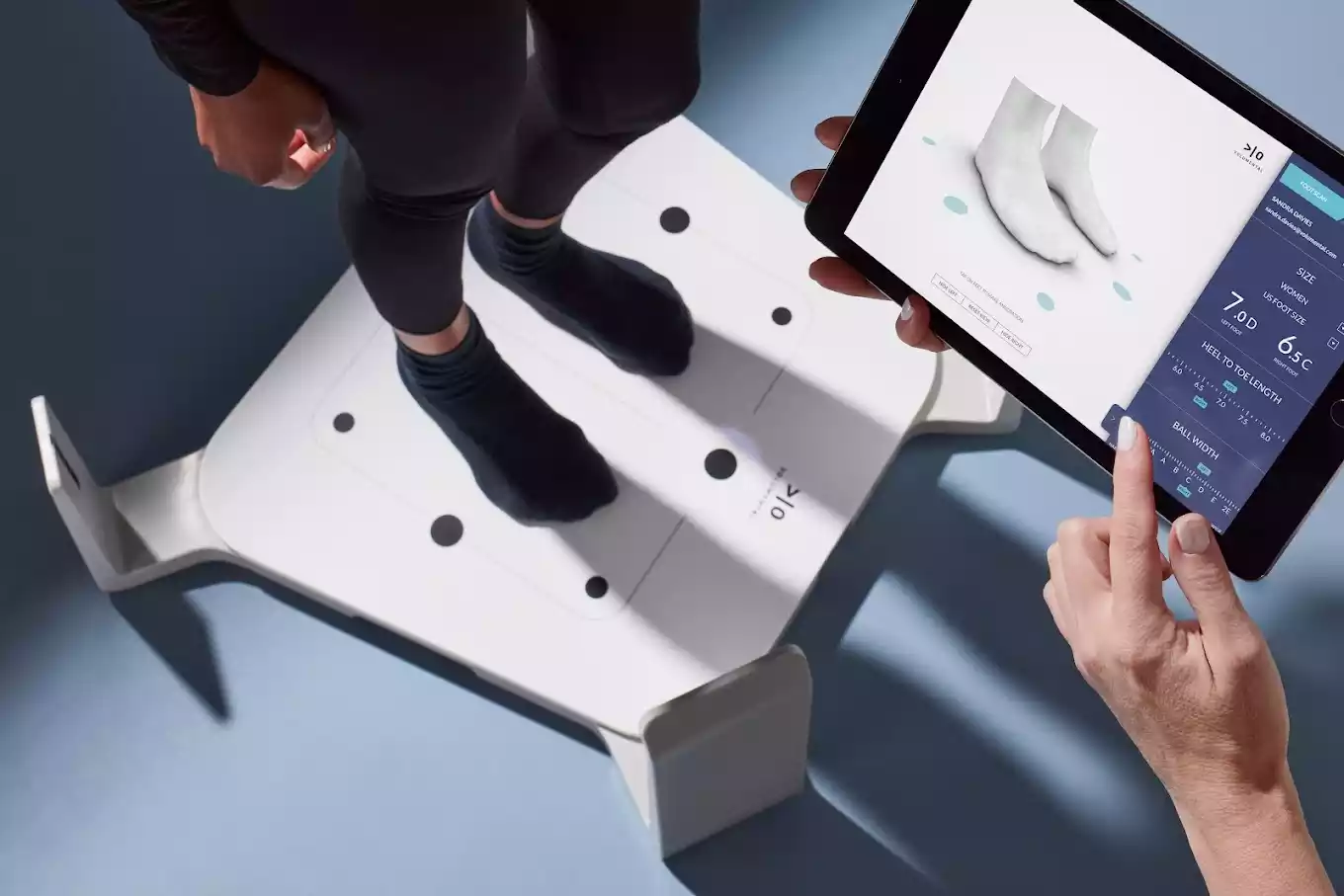
The first step in custom ski boot fitting is a 3D digital scan of your foot, capturing 538 precise data points across the sole. This is not a basic size measurement. It is a topographical map that reveals arch height, pressure zones, and asymmetries invisible to the eye. The scan ensures your fit starts with factual data, not assumptions.
Unlike traditional tracing or hand measurements, 3D scanning detects subtle imbalances between your left and right foot. These differences, often overlooked, are critical for preventing fatigue and ensuring balanced skiing. The scan data feeds directly into orthotic fabrication, guaranteeing your footbed matches your exact anatomy.
Why Scanning Matters
- Reveals hidden pressure points
- Detects asymmetries between feet
- Enables exact orthotic milling
- Removes human error from sizing
This digital foundation sets the stage for every step that follows, from shell selection to alignment.
Choose the Right Shell
Match Skill to Shell Type
The boot shell is the rigid frame that transfers your movements to the ski. A proper fit starts with selecting an ability-specific shell, not just the right size. Expert fitters analyze your skiing level, terrain preference, and physical build to recommend the best model from brands like Salomon, Technica, Dalbello, Atomic, and Armada.
| Skill Level | Shell Flex | Ideal For |
|---|---|---|
| Beginner/Recreational | 70–90 flex | Comfort, easy turning |
| Intermediate | 90–110 flex | All-mountain versatility |
| Advanced/Expert | 110–130+ flex | Power, precision, control |
A soft shell may feel comfortable at first but will not support aggressive skiing. A stiff shell on a beginner can cause pain and poor technique. The goal is balance: enough support for performance, enough forgiveness for comfort.
Alpine vs. Touring Boots
- Alpine boots are designed for resort skiing and maximum downhill power.
- Touring boots are lighter, with walk modes for uphill travel. Custom fitting ensures they still deliver solid downhill performance.
Fitters often recommend Atomic or Tecnica touring models for skiers who split time between the resort and backcountry.
Build on a Custom Footbed

Orthotics Are the Foundation
No amount of shell adjustment or liner molding can fix a weak foundation. Custom orthotics (footbeds) are the base of every elite boot fit. Without them, your foot collapses inside the boot, forcing you to over-tighten buckles, which cuts circulation and causes cold, numb feet.
Using your 3D scan data, a CAD/CAM milling machine carves a precise EVA (ethyl vinyl acetate) orthotic tailored to your foot’s unique shape. The finished footbed is trimmed, sealed with non-slip fabric, and ready to stabilize your arches and heels.
Benefits of Custom Footbeds
- Prevent foot collapse and slippage
- Eliminate need to over-tighten buckles
- Improve balance and ankle articulation
- Boost warmth through better circulation
Brands like Sidas, Superfeet, Fastech, and Remind offer high-end options, but fully milled custom footbeds deliver unmatched precision.
Footbed Warranty Perks
Many pro shops include a $50 discount on custom footbeds when purchased with new boots. Some even offer a season-long fit guarantee, allowing unlimited adjustments if discomfort arises. This support ensures your investment pays off in comfort and performance.
Customize the Liner
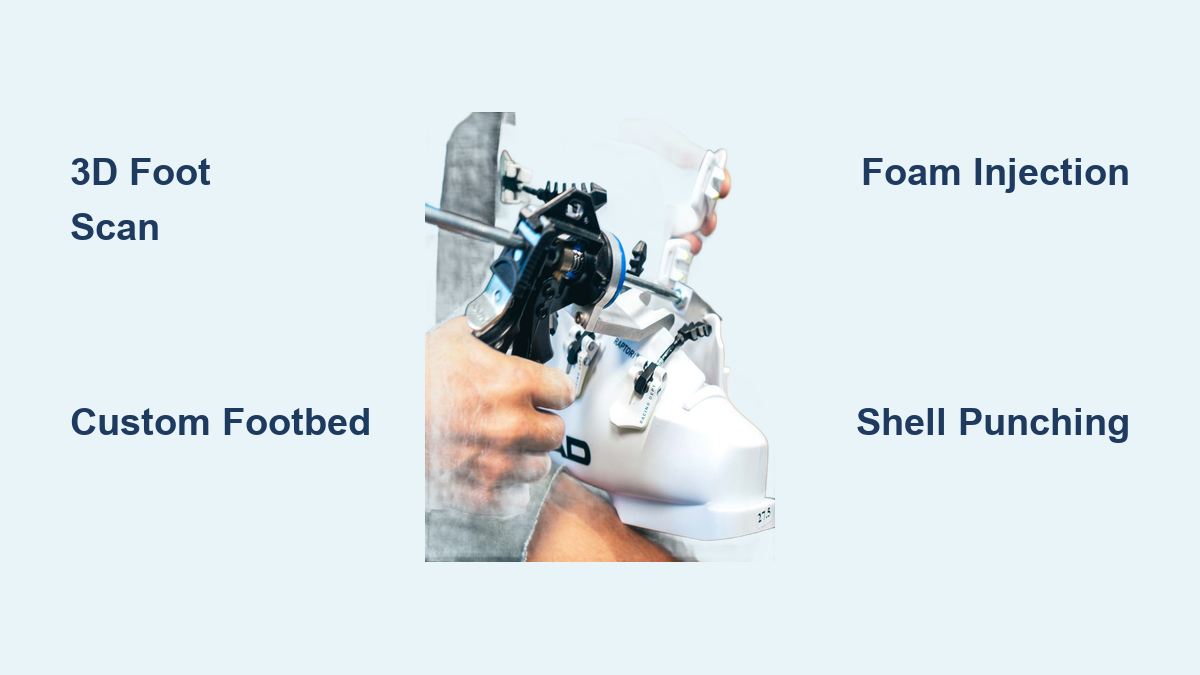
Foam Injection for Instant Fit
Once the shell and footbed are set, the liner is customized to eliminate internal voids. Foam injection is the gold standard for immediate, no-break-in comfort.
Here is how it works:
1. The skier inserts their foot (with custom footbed) into the boot.
2. A technician injects a gel-like memory foam into targeted areas of the liner.
3. The foam solidifies in about 5 minutes, conforming exactly to the foot’s shape.
The result is a true custom fit that feels perfect from the first run. No molding ovens, no waiting, just precision comfort.
Heated Liners for Warmth
Some injected liners integrate Surefoot Winterheat technology, offering 10 heat settings controlled via smartphone app. This keeps toes warm all day, especially valuable for skiers prone to cold feet. The heating element is embedded during the injection process, so it does not compromise fit.
Heat-Moldable Liner Options
For skiers not using injection, premium heat-moldable liners like Zipfit and Intuition are excellent alternatives.
– Heated in an oven and molded around the foot inside the shell.
– Takes 30 minutes to 2 hours depending on material.
– Still superior to stock liners but requires more time and may need minor tweaks post-mold.
Both methods drastically improve warmth and eliminate slippage compared to generic liners.
Modify the Shell
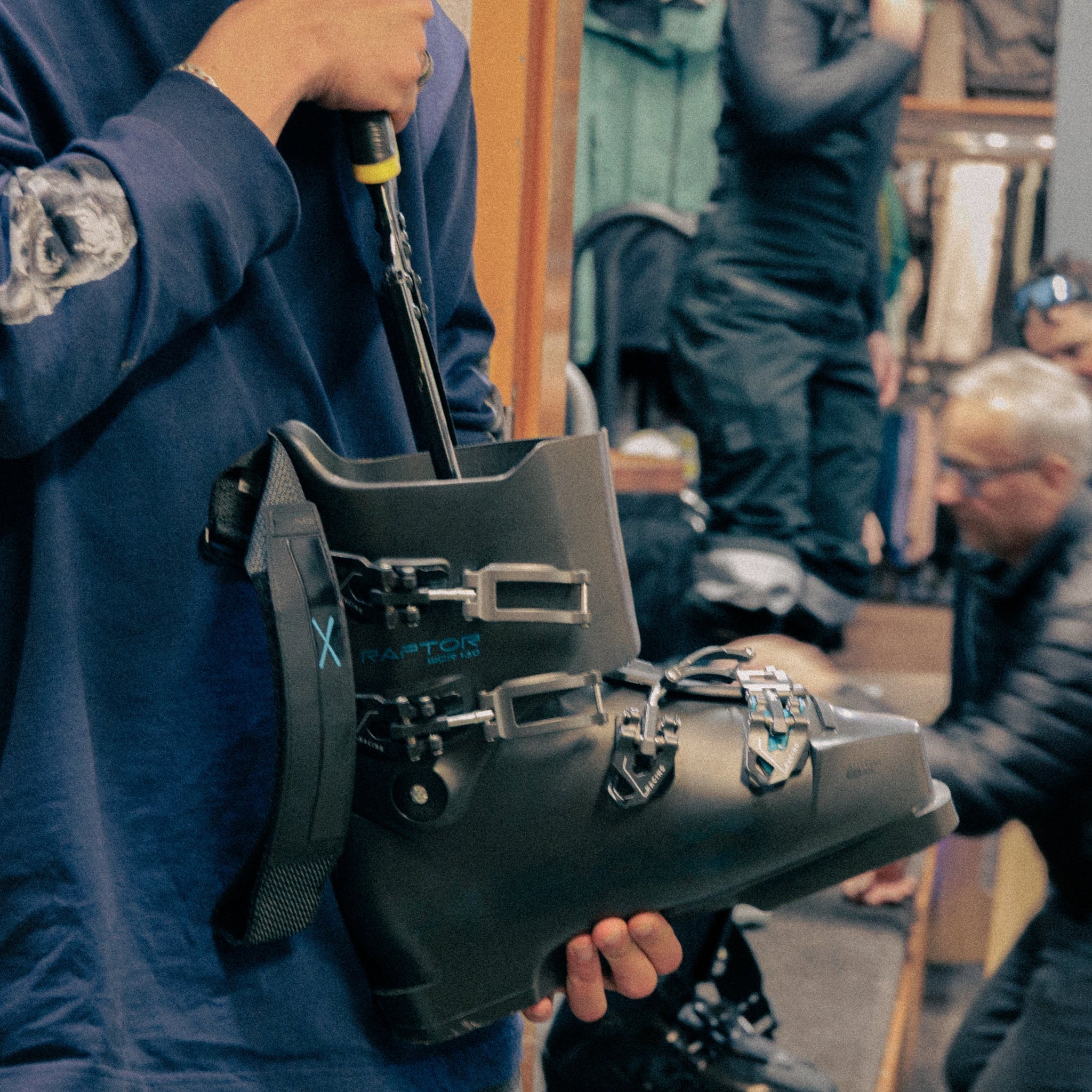
Punching for Pressure Relief
Even with a perfect internal fit, your foot’s bony anatomy, such as bunions or ankle protrusions, can create pressure points. Punching the shell solves this.
The process:
– A technician heats a specific area of the plastic shell.
– Uses a mechanical press to expand the material outward.
– Creates extra room without weakening the boot’s structure.
Common punch zones:
– Medial ankle (inside ankle bone)
– Lateral malleolus (outside ankle)
– Bunion areas
– Forefoot width
This customization ensures the shell hugs the foot without pinching, making long days more comfortable.
Canting for Proper Alignment
Canting corrects knee alignment relative to the boot’s midline. If your knees angle inward (knock-kneed) or outward (bow-legged), your boots force you into a misaligned stance, making edge control harder and increasing fatigue.
Proper canting:
– Ensures you stand flat on your skis.
– Balances pressure from edge to edge.
– Reduces strain on knees and hips.
– Enables smoother, more efficient turns.
Fitters use alignment jigs and shims to adjust the boot’s angle, often testing stance on a balance board. The goal is a neutral, powerful position where your body works with the ski, not against it.
Fit for Your Skiing Style
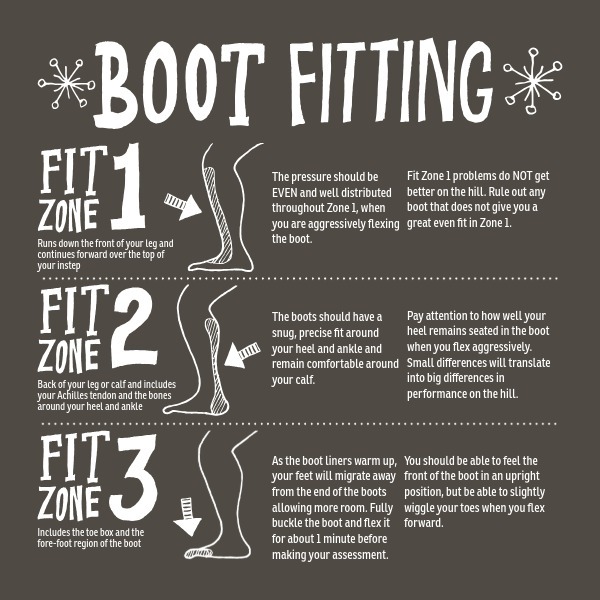
Women’s Fit Needs
Women’s feet and biomechanics differ from men’s, not just in size, but in structure. Women often have narrower heels, higher arches, and different calf shapes. While women’s specific boots exist, they are still mass-produced.
True customization means treating each woman as an individual athlete. A fitter will:
– Use 3D scans to detect unique arch and heel dimensions.
– Select shells with appropriate calf and instep room.
– Customize liners to prevent heel lift.
This personalized approach beats generic gender-based designs every time.
Performance Skiers and Racers
Elite skiers demand zero lag between input and ski response. For racers and aggressive skiers, the fit must be locked down but not restrictive.
Key customizations:
– Rigid, full-length custom footbeds for maximum stability.
– Foam-injected liners for instant, precise response.
– Stiff shells (120+ flex) matched to strength and technique.
– Aggressive canting to optimize edge angles.
These skiers often return yearly for tune-ups to maintain peak performance as boots age.
Recreational Skiers and Comfort Seekers
If you ski weekends and hate sore feet, custom fitting is a game-changer. The focus here is comfort without sacrificing control.
Solutions include:
– Custom footbeds to stop over-tightening.
– Heated liners for warm toes.
– Shell punching to relieve pressure points.
– Softer shells with customized liners for forgiveness.
You will ski longer, with less fatigue, and actually enjoy walking in your boots.
Backcountry and Touring Skiers
Backcountry skiers need a boot that performs on the ascent and descent. The challenge is balancing walkability with downhill power.
Custom fitting helps by:
– Selecting lightweight touring shells (e.g., Atomic Backland, Tecnica Zero G).
– Using low-bulk custom liners that do not hinder walk mode.
– Ensuring a secure heel lock for efficient climbing.
– Molding liners for comfort during long approaches.
The result is a boot that feels natural on the hike and responsive on the run.
Trust the Warranty
Long-Term Fit Protection
A quality custom fit comes with peace of mind. Reputable shops offer strong guarantees:
- Two-Year Fit Warranty: Covers adjustments like punching, canting, and liner tweaks.
- Season-Long Guarantee: Unlimited free modifications in the first season if you buy a custom footbed.
- Free Adjustments: Most fit-related tweaks are included for the first two years on boots purchased in-store.
These warranties reflect confidence in the process and protect your investment.
Repair and Resole Options
Boots take a beating. Over time, shells can crack, buckles break, and liners compress. Specialized shops offer:
– Shell repairs and resoling.
– Buckle and rivet replacements.
– Liner refreshes or re-injections.
Regular maintenance keeps your custom fit performing like new for years.
Maintain Your Fit
Care for Longevity
Even the best custom fit degrades without care. Extend your boot life with these habits:
- Dry boots completely after each use. Moisture breaks down liners and shells.
- Store open and at room temperature, never in a hot car or sealed bag.
- Avoid stepping on the heel, as it collapses the spine and ruins heel hold.
- Inspect buckles and liners seasonally for wear.
Proper care preserves the integrity of your custom modifications.
Re-Evaluate Over Time
Feet change. Boots age. After several seasons, you may need:
– New liners or re-injection.
– Updated footbeds due to arch drop.
– Shell adjustments from material fatigue.
Schedule a fit check every 2–3 years to maintain peak performance.
Frequently Asked Questions About Custom Ski Boot Fitting
How long does a custom ski boot fitting take?
Initial appointments range from 30 minutes for basic selection and molding to over 2 hours for comprehensive custom injection and alignment work. Complex modifications involving foam injection, shell punching, and canting require the longer timeframe.
What is a 538-point foot scan?
A 538-point foot scan is a proprietary 3D digital scanning method that captures precise measurements across the entire sole of your foot. This data creates a topographical map used to mill custom orthotics and guide shell selection, far surpassing the accuracy of manual measurements.
Are custom footbeds worth the extra cost?
Custom footbeds are considered the foundation of any quality boot fit. They prevent foot collapse, eliminate the need to over-tighten buckles, improve circulation, and boost warmth. Many shops offer a $50 discount when footbeds are purchased with new boots, and some include a season-long fit guarantee.
Can custom fitting fix cold feet and numbness?
Yes. Cold feet and numbness typically result from over-tightened buckles compensating for foot movement inside the boot. Custom footbeds stabilize the foot, allowing proper buckle tension without cutting off circulation. Heated liner options like Surefoot Winterheat add 10 smartphone-controlled heat settings for extra warmth.
What is the difference between foam injection and heat-moldable liners?
Foam injection uses gel-like memory foam injected into the liner that solidifies in about 5 minutes for an instant custom fit. Heat-moldable liners (like Zipfit or Intuition) are heated in an oven and molded around your foot inside the shell, taking 30 minutes to 2 hours. Both eliminate break-in time and outperform stock liners.
How often should I get my custom boots re-evaluated?
Schedule a fit check every 2–3 years, or sooner if you notice discomfort. Feet change over time, liners compress, and shells experience material fatigue. Many shops include free adjustments for the first two years, and performance skiers often return yearly for tune-ups.
Key Takeaways for Custom Ski Boot Fitting
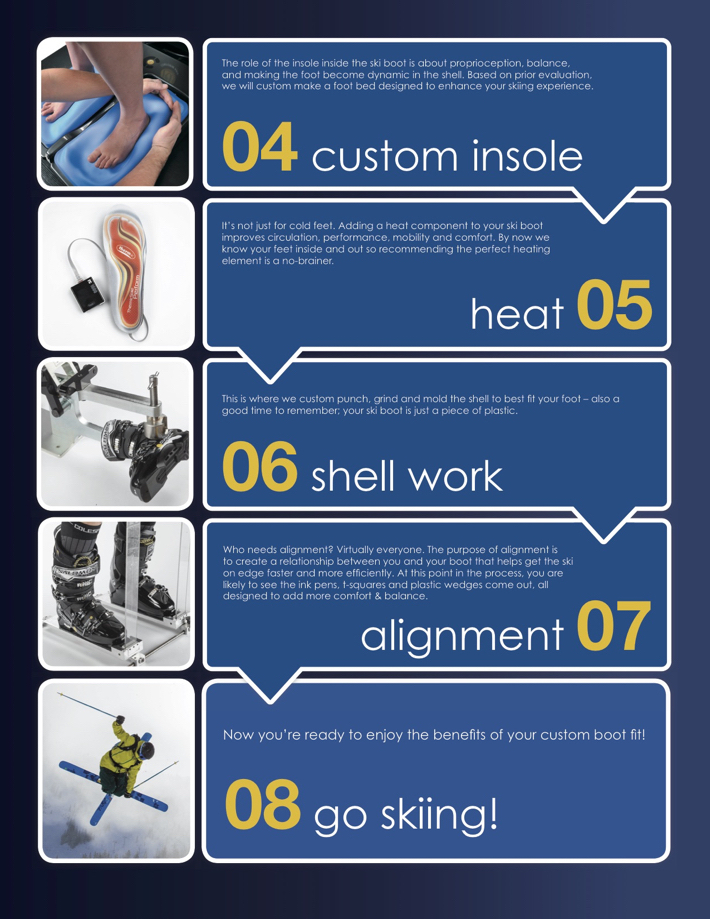
Custom ski boot fitting is the most impactful upgrade you can make to your ski experience. It is not just about comfort. It is about control, power, and endurance. By starting with a 3D foot scan, building on a custom footbed, and fine-tuning the shell and liner, expert fitters eliminate pain and maximize performance.
The process works because it treats your feet as unique, not generic. Every modification, from the 538-point scan to the final canting adjustment, is data-driven and tailored to your anatomy. Warranties back the work, and proper maintenance extends the benefits for years.
Your next step is simple: book a fitting appointment with a reputable shop that uses 3D scanning and CAD/CAM technology. Bring your ski socks and any previous boots. Walk out with a setup built entirely for your feet, and feel the difference on your very first run.