Men’s Boot Width Guide
Finding the right pair of boots isn’t just about length. Boot width plays an equally critical role in comfort, support, and long-term foot health. Too narrow, and you’ll suffer cramping, blisters, and pressure points. Too wide, and your foot will slide, causing heel rub and instability. Unlike lace-up shoes that allow some adjustment, many boots, especially cowboy and pull-on styles, offer little to no flexibility once on. That means getting the width right from the start is essential.
This guide cuts through the confusion with a clear, data-driven men’s boot width guide. You’ll learn how widths are measured, how to accurately measure your own feet, and how to match your foot type to the right width and boot style. Whether you’re shopping online or in-store, this resource ensures you make an informed decision. No more guessing, returns, or discomfort.
Boot Width Letters Explained

Men’s boot widths follow a standardized letter system, with each letter representing a specific fit. These aren’t arbitrary labels. They reflect real, measurable differences in interior space.
What Do Width Letters Mean?
- B (Narrow): For slim feet. If standard boots feel loose or your heel slips, B width may offer a more secure fit.
- D (Standard/Regular): The most common width. Ideal for average foot width. Think of this as the “medium” setting.
- E (Wide): Slightly roomier than D, offering extra space in the forefoot. Great for mild swelling or slightly broad feet.
- EE (Extra Wide): Approximately ½ inch wider than D. A go-to for wide-footed men needing more volume.
- EEE (Triple Wide): The widest standard option. Designed for very wide feet, medical conditions, or those who need maximum room.
Width Isn’t One-Size-Fits-All
Crucially, a “D” width isn’t the same across sizes. A Size 8 D is narrower than a Size 12 D because width scales with foot length. Each width step (e.g., D to E) increases by 3/16 of an inch, and this incremental spacing applies relative to the foot length.
Measure Your Foot Correctly
Guessing your boot width leads to poor fit. Use this proven method to measure your feet at home with accuracy.
Tools You’ll Need
- Hard, flat floor (no carpet)
- Large sheet of paper or cardboard
- Standard wood pencil (not pen or mechanical pencil)
- Ruler or tape measure
- Socks you plan to wear with your boots
Step-by-Step Measurement
-
Trace Your Foot
– Place paper on a hard floor.
– Stand on it barefoot, wearing your boot socks.
– Hold the pencil vertically and trace the outline of your foot, keeping it snug to the skin. -
Measure Length and Width
– Length: From heel to longest toe.
– Width: Across the widest part (usually the ball of the foot).
– Pro Tip: Measure both feet. Use the larger one for sizing. -
Adjust for Accuracy
– Subtract 0.2 inches from both measurements to account for pencil thickness.
– Or, measure from the inside edge of the traced line. -
Time Your Measurement
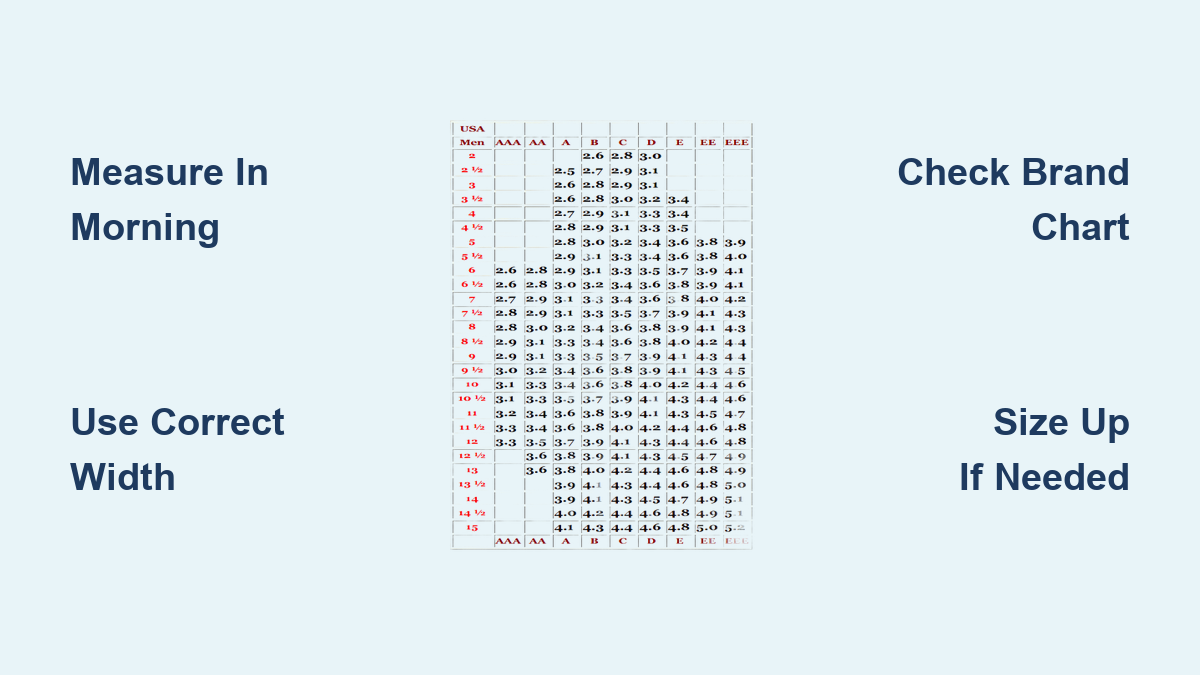
– Do it in the morning. Feet swell during the day, so morning measurements prevent buying boots that become too tight.
Know Your Instep Height
Even with correct width, a high instep can make boots feel tight. Visually assess:
- Low: Flat top of foot
- Medium: Average arch
- High: Prominent arch or tightness across the instep
High insteps often require wider widths or brands with high-instep lasts, even if foot width is average.
Boot Width Chart: Size-by-Size Guide
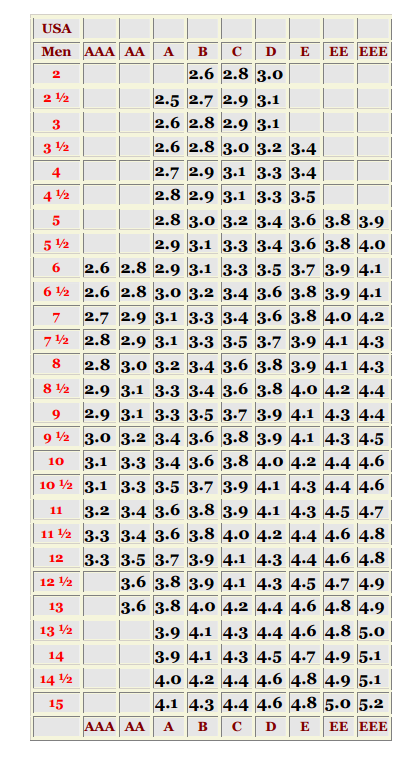
Use this men’s boot width chart to match your measurements to the correct width. Values are in inches and based on industry standards.
| US Size | Foot Length | D Width | EE Width | EEE Width |
|---|---|---|---|---|
| 6 | 9 1/4″ | 3 5/8″ | 3 7/8″ | 4″ |
| 7 | 9 5/8″ | 3 7/8″ | 4 1/8″ | 4 1/4″ |
| 8 | 10″ | 4 1/8″ | 4 3/8″ | 4 1/2″ |
| 9 | 10 1/4″ | 4 3/8″ | 4 5/8″ | 4 3/4″ |
| 10 | 10 5/8″ | 4 5/8″ | 4 7/8″ | 5″ |
| 11 | 11″ | 4 7/8″ | 5 1/8″ | 5 1/4″ |
| 12 | 11 1/4″ | 5 1/8″ | 5 3/8″ | 5 1/2″ |
| 13 | 11 5/8″ | 5 3/8″ | 5 5/8″ | 5 3/4″ |
| 14 | 12″ | 5 5/8″ | 5 7/8″ | 6″ |
When You’re Between Widths
If your measurement falls between D and EE, choose E width if available. If not, size up to EE. Leather stretches slightly in length but barely in width, so it’s better to err on the side of roominess.
Cowboy Boot Fit Rules
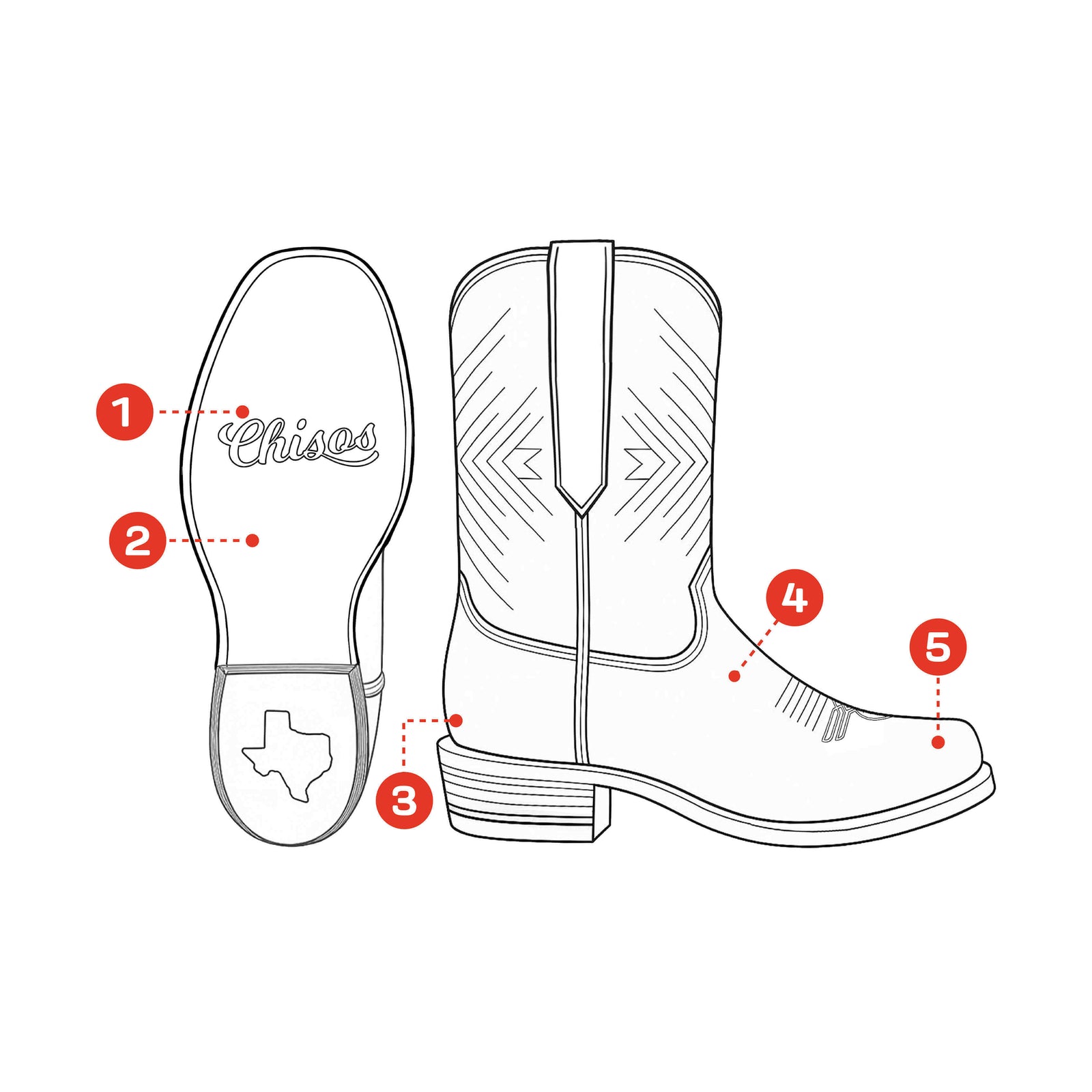
Cowboy boots are non-adjustable. No laces, no zippers. That makes width and length accuracy critical.
Key Fit Points
- Ball of Foot: Should feel snug, not tight.
- Heel Slip: 1/4 to 1/2 inch is normal in new boots. It reduces as the sole flexes and leather molds.
- Instep: Must hold the foot securely. Too loose means slippage; too tight means pain.
Toe Shape Matters
- Round/Square Toe: Standard fit. May feel tight for wide feet.
- Square Toe Advantage: Offers more lateral space in the toe box. If EE width still feels cramped, switch to a square toe. It’s a functional width upgrade.
Pro Tip: Brands like Justin Boots (e.g., Caddo 11″ Western Boot) design square toes specifically for wide-footed wearers. The shape adds room without needing a wider width code.
Pull-On Boot Width Tips
Pull-on boots rely on elastic side panels or leather stretch to fit. Because of this, they often run slightly larger than lace-up styles.
Sizing Advice
- Try multiple sizes if possible.
- Look for styles with elastic goring that accommodate wider calves or feet.
- If your foot slips, the boot is likely too wide or too long. Don’t assume it’s the right fit just because it’s easy to pull on.
Lace-Up and Zip-Up Boot Width Guide
These styles are more forgiving thanks to adjustable closures, but width still matters.
How Socks Affect Fit
- Wearing thick socks? You may need to size up in width (e.g., D to E).
- Always measure and try on boots with the socks you’ll actually wear.
Lacing Adjustments
- Use heel-lock lacing to reduce heel slip.
- Loosen the midfoot if the instep feels tight. Even with the right width, lacing can fine-tune fit.
Troubleshoot Common Fit Issues
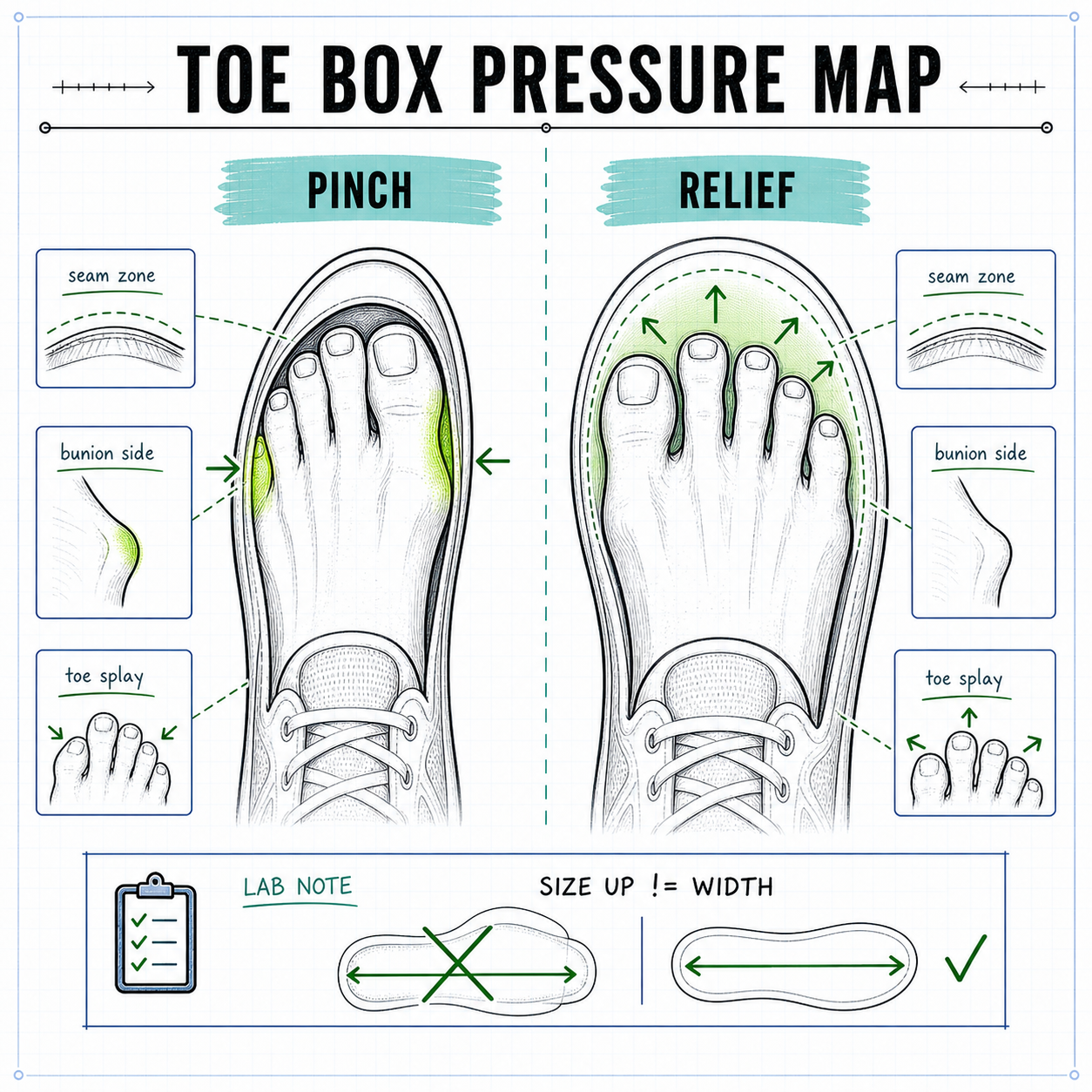
Even with careful measurement, problems can arise. Here’s how to fix them.
Toe Box Cramping
- Cause: Width too narrow or toe shape mismatch.
- Fix: Move up one width (D → E → EE) or switch to square toe for added room.
Excessive Heel Slip (Over 1 Inch)
- Cause: Boot too long or too wide in the heel.
- Fix: Try a half-size smaller or a narrower width (E → D).
Instep Pressure
- Cause: High instep with standard width.
- Fix: Upgrade to EE width or find a brand with a high-instep last.
Feet Feel Swollen by Afternoon
- Cause: Diurnal swelling not accounted for.
- Fix: Choose EE width or size up 0.5 in length if width options are limited.
Brand Variability: Why Charts Aren’t Universal

No two brands fit the same, even with identical size and width labels.
Why Fit Differs
- Lasts: Each brand uses unique molds (lasts). A Size 10 D in Brand A may fit like a 9.5 in Brand B.
- Materials: Thicker leather stretches less. Handmade boots may vary slightly due to humidity during production.
- Construction: Goodyear welted vs. cemented soles affect interior volume.
Always Check the Brand’s Chart
Never rely solely on generic charts. Always consult the specific brand’s size guide before buying. Some even offer fit quizzes or let you send in a well-fitting boot for comparison.
Who Should Wear Which Width?
Match your foot profile to the right width for all-day comfort.
Average Width Feet
- You: No foot pain, heels stay put, standard shoes fit fine.
- Best Width: D (Standard)
Wide or High-Volume Feet
- You: Need “wiggle room,” toes feel cramped, socks leave marks.
- Best Width: EE (Extra Wide) or E (Wide) if EE isn’t available.
Very Wide or Swollen Feet
- You: Chronic swelling, medical conditions (e.g., edema), struggle to find shoes.
- Best Width: EEE (Triple Wide) or Square Toe in EE for added toe box space.
Narrow Feet
- You: Heels slip, standard boots feel like boats, prefer snug fit.
- Best Width: B (Narrow), or size down in length only if toe room allows.
Frequently Asked Questions About Men’s Boot Width
How Do I Know If I Need a Wide Boot?
If standard-width boots cause cramping in the forefoot, pressure on the sides of your toes, or leave red marks after wear, you likely need a wide width (E or EE). Measure your foot at the ball and compare it to the D-width column for your size. If your measurement exceeds the D value, move up a width.
Does Boot Width Change With Size?
Yes. Width measurements scale with foot length. A Size 6 D is physically narrower than a Size 14 D. Each width step adds approximately 3/16 of an inch, but that increase applies proportionally to the overall foot length.
What’s the Difference Between E and EE Width?
E (Wide) offers moderate extra room in the forefoot and toe box. EE (Extra Wide) provides significantly more volume and is approximately ½ inch wider than D. If you find E too snug but don’t need the maximum room EEE offers, EE is typically the best middle-ground choice.
Can I Stretch Boots That Are Too Narrow?
Leather stretches very little in width compared to length. Stretching tools may provide marginal relief, but they won’t transform a D width into an EE. For consistent comfort, it’s far better to buy the correct width from the start.
Is Heel Slip Normal in New Boots?
A slight heel slip of 1/4 to 1/2 inch is normal in new cowboy and pull-on boots. This reduces as the sole flexes and the leather molds to your foot. However, if your heel slips more than 1 inch, the boot is likely too long or too wide.
Should I Measure My Feet in the Morning or Evening?
Measure in the morning. Feet swell throughout the day, so morning measurements reflect your foot at its smallest volume. This prevents you from buying boots that feel fine in the morning but become painfully tight by afternoon.
Key Takeaways for Choosing the Right Boot Width
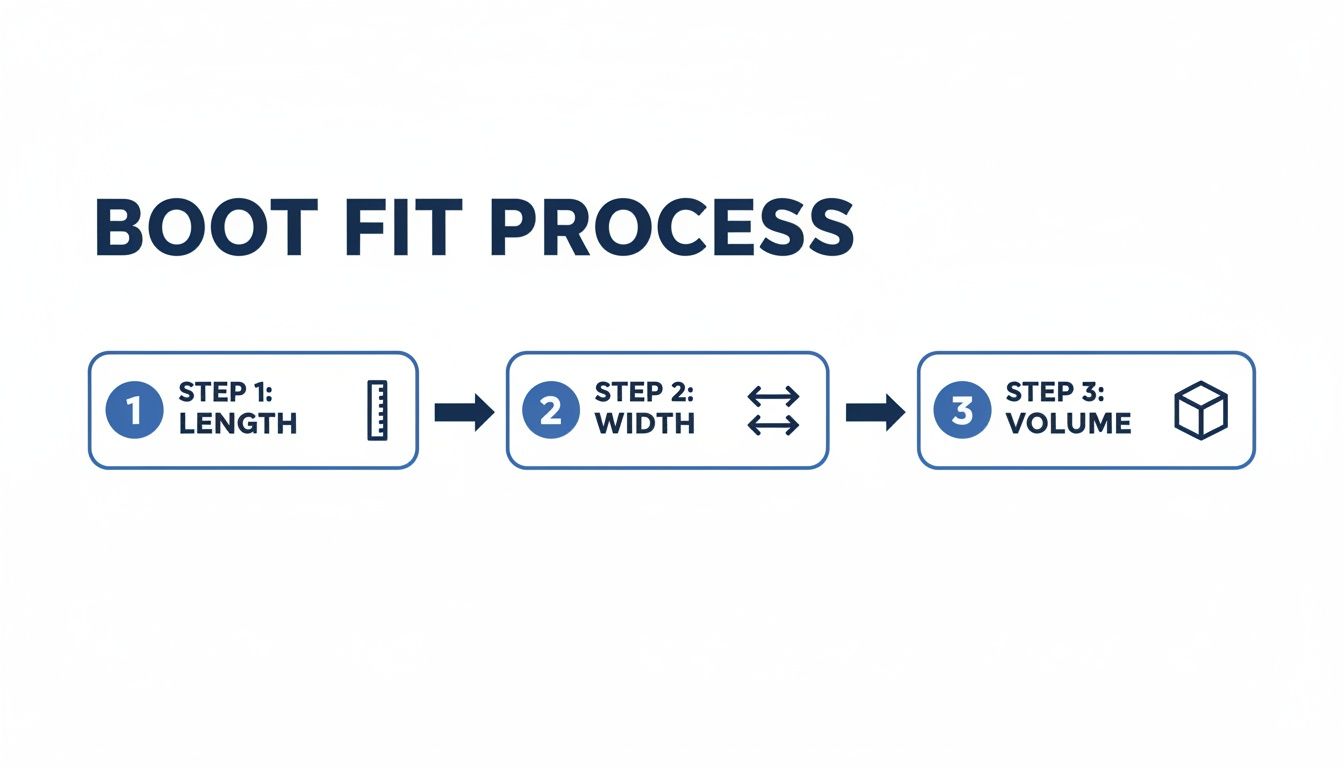
The right width transforms boot comfort from a daily struggle into effortless support. Start by measuring both feet in the morning with your intended socks, then subtract 0.2 inches for pencil thickness. Cross-reference your corrected measurements against the brand’s specific chart, not a generic one. Remember that width scales with length, so a D in one size isn’t the same as a D in another.
If you’re between widths, always size up. Leather stretches in length but barely in width, so roominess beats restriction every time. For non-adjustable boots like cowboy and pull-on styles, accuracy is non-negotiable. For lace-up boots, account for sock thickness and use lacing techniques to fine-tune the fit.
Your next step: grab a pencil, paper, and ruler. Take ten minutes to measure your feet properly before your next boot purchase. Your feet will carry you for thousands of miles. Give them the fit they deserve.