How to Clean Oboz Hiking Boots
You’ve just returned from a long trail—your Oboz hiking boots are caked with mud, splattered with creek water, and starting to smell. Now what? Tossing them in a corner or shoving them in the washing machine might seem like the easiest fix, but it’s also the fastest way to ruin a high-performance pair of hiking boots. Knowing how to clean Oboz hiking boots properly is essential for preserving their support, waterproofing, and breathability. Without proper care, dirt degrades materials, moisture breeds odor and mold, and harsh cleaning methods can dis-bond midsoles or destroy waterproof membranes.
Oboz officially recommends a 3-Step System: Clean, Proof, Dry—in that exact order. This isn’t just marketing jargon; it’s a proven method that keeps your boots functional, comfortable, and trail-ready for years. In this guide, you’ll learn the exact steps to deep-clean your Oboz boots safely, which products to use (and never use), how to restore water repellency, and how to dry and store them correctly. Whether you own a pair of Bridger Mids, Sawtooths, Proximity models, or any Oboz boot with nubuck, suede, or synthetic uppers, this guide covers it all.
Remove Laces and Insoles Before Cleaning
Start by disassembling your boots for a complete clean. Pull out the O Fit Insoles™ and unlace the boots completely. This exposes hidden grime in the heel cup, tongue, and eyelet areas, and allows air to circulate during drying. Leaving insoles in during cleaning traps moisture, which leads to odor and potential mold.
- Gently lift the insole from the heel edge to remove it without tearing.
- Unlace the boots fully so you can clean around the collar and tongue.
- Set both components aside to air dry separately after cleaning.
Pro Tip: Make it a habit to remove insoles after every hike, even in dry weather. This simple step prevents long-term odor and keeps your boots fresh between adventures.
Brush Off Loose Dirt and Mud
Never scrub a dirty boot with water right away—this can grind grit into the fabric and damage the upper. Use a soft-bristled or stiff nylon brush (a clean toothbrush works great) to knock off dried mud, dust, and debris.
- Focus on high-traffic zones: toe box, heel, midsole edge, and lug patterns.
- Brush in one direction, especially on nubuck or suede, to avoid fraying the nap.
- Pay attention to stitching and seams where dirt accumulates.
This dry prep step protects the material during cleaning and ensures better results when you apply cleaner. It also prevents abrasion that could compromise water resistance over time.
Deep Clean With Nikwax or Mild Soap
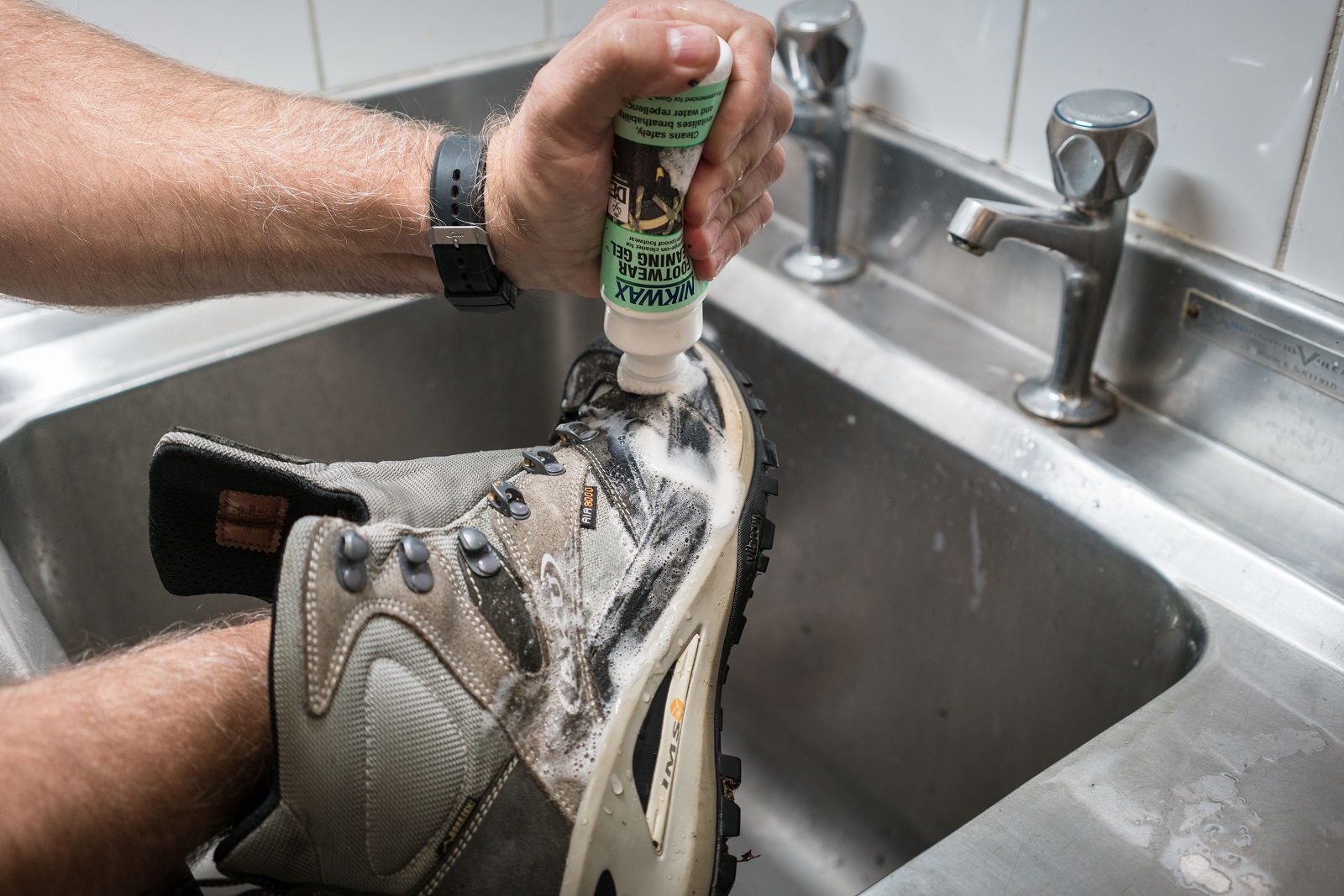
Now it’s time to deep clean. Nikwax Footwear Cleaning Gel is Oboz’s top-recommended product because it’s pH-balanced, non-toxic, and safe for bonded construction and waterproof membranes like B-DRY.
Apply the Cleaning Gel
- Shake the bottle well before use.
- Press the sponge applicator to release the gel.
- Work it into stained or heavily soiled areas using circular motions.
- For stubborn mud, use a nylon brush to gently agitate the surface.
Don’t have Nikwax? A diluted mild dish soap solution (1 part soap to 10 parts water) can be used in a pinch. Apply with a sponge or soft cloth, but avoid anything scented, antibacterial, or abrasive.
Rinse Without Soaking
- Dampen a clean cloth with lukewarm water and wipe away all soap residue.
- Never submerge the boots—soaking can weaken adhesives and damage internal layers.
- Rinse until no suds remain; leftover soap can interfere with waterproofing.
❌ Never machine wash or dry. The agitation and heat can dis-bond midsoles, warp heel counters, and ruin cushioning. Oboz warns: “Whatever you do, do not put your shoes in a clothes washer or dryer! This will send your footwear to an early grave.”
Air Dry Boots Naturally—Never Use Heat
Drying is the most overlooked but critical step. Heat destroys hiking boots. Radiators, dryers, hair dryers, and even hot cars can warp materials, crack adhesives, and ruin waterproof membranes.
Safe Drying Procedure
- Stuff boots with crumpled newspaper or paper towels—they absorb internal moisture.
- Place in a well-ventilated room at 60–70°F (15–21°C).
- Keep away from:
- Direct sunlight (UV fades and degrades materials)
- Heaters, stoves, or campfires
-
Enclosed hot spaces like cars
-
Allow 24–48 hours for full drying.
User Warning: One hiker reported midsole separation after drying boots near a campfire. The heat weakened the adhesive permanently—avoid shortcuts at all costs.
Replace stuffing every few hours to speed up drying. Let insoles and laces air dry separately—never machine dry them.
Reapply Waterproofing With Nikwax Buck & Suede Proof
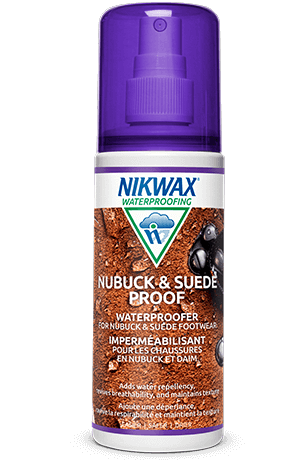
Cleaning removes the Durable Water Repellent (DWR) coating. If water no longer beads on the surface, it’s time to re-proof your boots.
When to Re-Waterproof
- Once per season, or more often with heavy use.
- When water soaks into the upper instead of beading.
- Even boots with B-DRY membranes need external DWR—this keeps the outer layer shedding water and prevents “wet but not leaking” clamminess.
Apply Nikwax Buck & Suede Proof
This spray is specifically formulated for Oboz’s nubuck and suede uppers.
Step-by-Step Application
- Ensure boots are clean and slightly damp (not wet or dry).
- Hold the spray 5 cm (2 inches) from the surface.
- Apply evenly across the entire upper.
- Focus on high-wear areas: toe cap, lacing zone, and heel.
- Wipe off excess with a clean cloth to prevent sticky residue.
Let boots dry completely—usually 12–24 hours—before wearing.
✅ Pro Tip: Test on a small area first. Some darkening is normal, especially on light-colored uppers.
Avoid Harmful Cleaning and Waterproofing Products
Not all outdoor gear products are safe for Oboz boots. Some can cause permanent damage.
Products to Avoid
- Sno-Seal – Wax-based; can dis-bond cemented midsoles.
- Mink Oil – Overly greasy; darkens leather and reduces breathability.
- Bleach, solvents, or household detergents – Strip finishes and degrade adhesives.
- Machine washing or drying – Destroys structural integrity.
Stick with Nikwax-approved products—they’re designed to work with Oboz’s bonded construction and waterproof membranes.
Restore Nubuck and Suede Texture After Drying

After waterproofing, the upper may look flat or matted. Revive the nap to restore texture and water beading.
Brush the Surface
- Use a soft nylon brush or suede eraser.
- Brush gently in one direction to lift fibers.
- This restores the velvety feel and improves performance.
Avoid wire brushes—they can scratch or permanently damage the surface.
Visual Cue: If the upper looks dull or soaked-in, brushing helps it repel water again.
Store Oboz Boots Properly for Longevity
Improper storage leads to cracked leather, mold, and adhesive failure. Follow these steps for off-season care.
Pre-Storage Checklist
- Clean and dry boots completely.
- Reapply waterproofing before storage.
- For leather models, apply Nikwax for Nubuck Leather to prevent drying.
Ideal Storage Conditions
- Keep in a cool, dry place away from sunlight.
- Avoid basements or garages with humidity swings.
- Never store in plastic bags—trapped moisture causes mildew.
Oboz Recommendation: “If you have a style with leather, we suggest conditioning them to keep the leather from drying out.”
Condition Leather for Off-Season Storage (Optional)
While not needed after every clean, leather conditioning during storage helps prevent cracking.
- Use Nikwax for Nubuck Leather—it’s non-greasy and compatible.
- Apply sparingly with a clean cloth.
- Buff gently after absorption.
Avoid heavy oils like neatsfoot or mink oil—they clog pores and attract dirt.
Troubleshoot Common Boot Problems
Even with care, issues arise. Here’s how to fix them fast.
Boots Smell Bad?
- Remove insoles after every hike.
- Air out boots overnight.
- Hand wash insoles with mild soap and air dry.
- Use odor absorbers: baking soda (sprinkle inside, vacuum out after 8 hours) or charcoal inserts.
❗ Never machine wash insoles—they lose shape and cushioning.
Water Soaks In?
- DWR has worn off—reapply Nikwax Buck & Suede Proof.
- Ensure boots were clean before waterproofing—dirt blocks adhesion.
- Spot-treat high-wear areas if needed.
Insoles Are Worn or Dirty?
- Remove and hand wash with mild soap.
- Air dry completely before reinserting.
- Replace every 6–12 months for hygiene and support.
Follow a Seasonal Maintenance Schedule
Stay ahead of wear with simple routines.
After Every Hike
- Knock off mud.
- Remove insoles and laces.
- Air dry at room temperature.
Every Few Months (or after 5–10 hikes)
- Deep clean with Nikwax.
- Inspect for wear.
- Re-proof if water doesn’t bead.
Before and After Season
- Full clean, proof, and dry.
- Condition leather (if applicable).
- Store properly.
This routine can double the lifespan of your Oboz boots.
Why Cleaning Oboz Boots Matters
It’s not just about looks. Regular care protects your investment and trail performance.
Benefits of Proper Boot Care
- Extends boot life by preventing material breakdown.
- Maintains waterproofing and breathability.
- Prevents odor and mold.
- Preserves structural integrity.
- Keeps boots trail-ready.
Hikers who skip cleaning report shorter boot life, musty smells, and reduced comfort.
Compatible Oboz Boot Models
This cleaning method works for all Oboz hiking boots, including:
- Oboz Bridger Mid
- Oboz Sawtooth
- Oboz Proximity
- Oboz Vapor
- And all styles with nubuck, suede, or synthetic uppers and B-DRY membranes
The care process is universal—only product choice changes slightly based on material.
Final Checklist: Clean, Proof, Dry
Use this quick reference after every hike or deep clean:
✅ Remove laces and insoles
✅ Brush off dirt and mud
✅ Clean with Nikwax or mild soap
✅ Rinse thoroughly—no soaking
✅ Air dry at room temperature
✅ Stuff with newspaper for faster drying
✅ Reapply Nikwax Buck & Suede Proof
✅ Wipe off excess spray
✅ Brush upper to restore texture
✅ Condition leather (for storage)
✅ Store in cool, dry place
Final Note: By following the Clean, Proof, Dry system with the right tools and techniques, your Oboz hiking boots will stay supportive, dry, and comfortable for countless adventures. Avoid shortcuts like machine washing or heat drying—they may save time now but cost you a pair of boots later. Stick with Nikwax, keep it natural, and your Oboz footwear will keep you steady on every trail.