Boot Width Guide: How to Measure
Choosing the right boots isn’t just about length. Boot width is the hidden key to comfort, support, and long-term wearability. Too narrow, and you’ll suffer pinching and blisters. Too wide, and your foot will slide, causing instability and heel rub.
This boot width guide cuts through the confusion. You’ll learn what those letters mean (B, D, EE), how to measure your foot correctly, and how to match your foot shape to the right width. We’ll break down brand-specific quirks, material behavior, and real-world fit fixes so you can buy with confidence.
Boot Width Letters Explained
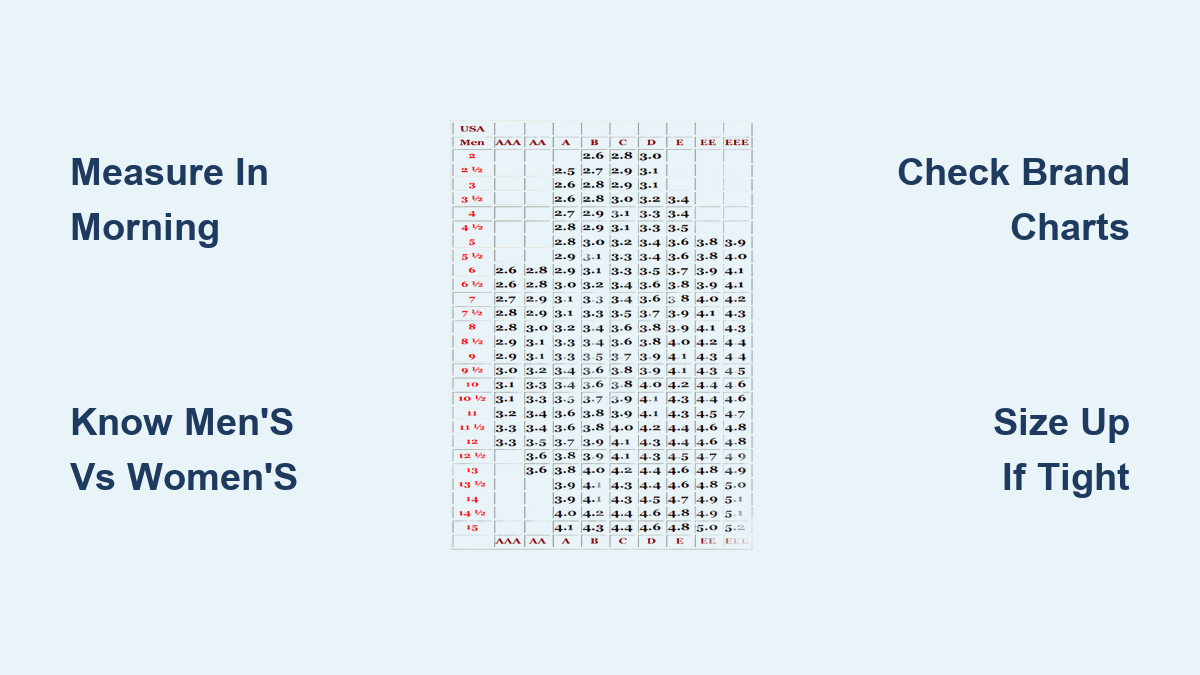
Boot width uses a letter system ranging from AAA (narrowest) to EEE (widest). Each step represents about 3/16 of an inch, though actual fit depends on foot length and brand last. The key is knowing your gender’s standard width, because men’s D is not the same as women’s D.
Men’s vs. Women’s Standard Widths
- Men’s standard width = D
- Women’s standard width = B
This means a women’s D is often considered a wide fit, which can confuse shoppers unfamiliar with the system.
| Width | Men’s Fit | Women’s Fit |
|---|---|---|
| B | Narrow | Standard |
| C | Narrow | Narrow/Wide* |
| D | Standard | Wide |
| E | Wide | Wide |
| EE | Extra Wide | Extra Wide |
| EEE | Triple Wide | Triple Wide |
Note: In Western boots like Justin, C is often labeled as wide for women, making B the standard and C the wide.
How Width Affects Fit
Each letter up adds room across the ball of the foot, the widest part of your foot and the primary fit point for boots. A proper width means no pinching, secure heel placement, and easy entry for pull-on styles. If your foot feels squeezed in a D width, moving to EE adds half an inch of space in the forefoot.
How to Measure Your Foot Width
Guessing your width leads to returns. The only reliable method is measuring your foot correctly.
Best Time to Measure
Measure in the morning when your feet are at their smallest. Feet swell throughout the day, sometimes up to a half-size larger by evening. Measuring swollen feet means you’ll buy boots that feel too big later.
Wear the socks you plan to wear with your boots, whether thick wool for work boots or thin for dress styles.
Step-by-Step Tracing Method
- Place a large sheet of paper on a hard floor.
- Sit down and place your foot flat on the paper.
- Hold a pencil perpendicular to the paper and trace the outline. Keep the pencil upright.
- Measure the widest part (usually the ball of the foot) straight across.
- Subtract 0.2 inches (5mm) from the measurement to correct for pencil thickness.
- Repeat for the other foot and use the larger measurement.
Example: If your traced width is 4.4 inches, subtract 0.2 inches for a 4.2-inch actual foot width. This fits a men’s D (4.0–4.2 inches) or E (4.2–4.4 inches).
Pro Tip: Use a Brannock Device
Found in quality shoe stores, the Brannock Device measures length and width simultaneously. It accounts for foot length when calculating width, making it the industry standard for accuracy.
Men’s Boot Width Chart
| Width | Classification | Width (Inches) | Best For |
|---|---|---|---|
| B | Narrow | 3.6 – 3.8″ | Slim feet, narrow soles |
| C | Narrow | 3.8 – 4.0″ | Feet slightly narrower than average |
| D | Standard | 4.0 – 4.2″ | Most men with average foot width |
| E | Wide | 4.2 – 4.4″ | Feet that feel tight in D width |
| EE (2E) | Extra Wide | 4.4 – 4.6″ | Wide feet, swelling, or orthotics |
| EEE (3E) | Triple Wide | 4.6 – 4.8″ | Very wide or swollen feet |
EE width is half an inch wider than D, a significant difference. If you’re between sizes, go up to E or EE to avoid constriction.
Women’s Boot Width Chart
| Width | Classification | Width (Inches) | Best For |
|---|---|---|---|
| B | Standard | 2.8 – 3.0″ | Average width feet |
| C | Narrow/Wide* | 3.0 – 3.2″ | *In Western boots: Wide fit |
| D | Wide | 3.2 – 3.4″ | Feet needing extra room |
| E | Wide | 3.4 – 3.6″ | Significantly wide feet |
| EE (2E) | Extra Wide | 3.6 – 3.8″ | Maximum comfort for wide feet |
| EEE (3E) | Triple Wide | 3.8 – 4.0″ | Very wide or swollen feet |
In Justin Boots, C is labeled as wide for women, so B is standard and C is wide. Always confirm with the brand.
D Width vs. EE Width: Which to Choose?

The biggest decision for many buyers is standard (D) or wide (EE). Here’s how to decide.
When to Choose D Width
- Your foot width is under 4.2 inches (men) or under 3.2 inches (women)
- You’ve worn standard shoes comfortably
- You prefer a snug, secure fit
- Your socks are thin to medium
Warning: If you have wide feet and choose D width, expect discomfort, blisters, and potential boot damage from over-stretching.
When to Choose EE Width
- Your foot width is 4.4 inches or more (men) or 3.6 inches or more (women)
- Standard shoes feel tight across the toes
- You have swollen feet from heat, pregnancy, or medical conditions
- You wear thick socks or orthotics
EE width provides half an inch more room in the forefoot, ideal for all-day wear and foot expansion during walking.
Still Too Tight? Try Square Toe
If EE width isn’t enough, consider square toe boots like the Caddo 11″ Western Boot. The squared design adds horizontal space, functioning like an extra width without going up in letter size.
Brand-Specific Sizing Tips
Not all Size 10 D boots fit the same. Boot lasts, the molds used in construction, vary by brand and affect shape, volume, and fit.
Tecovas Boots
- Fit: True to standard US sizing
- Widths: D and EE
- Break-in: Designed for comfort right out of the box
- Tip: If between sizes, size up in width (EE) rather than length
JK Boots
- Fit: Classic handmade, subtract one full size from your US size
- Sizing Method: Uses circumference measurement (ball of foot) plus length
- Widths: Up to 6E for extreme widths
- Break-in: Expect stiffness; leather molds over 2–4 weeks
Justin Boots
- Fit: Offers B, D, E, EE, EEE (men); B, C (women)
- Western Note: C = Wide for women
- Technology: J-Flex® insole for comfort
- Tip: Use their fit calculator or send in a well-fitting boot for last-matching
Golden Rule: Never assume your sneaker size equals your boot size. Always consult the brand’s chart.
Fit Problems & Fixes

Even with careful measurement, issues arise. Here’s how to troubleshoot common problems.
Too Narrow: What to Do
Symptoms:
– Pressure on the ball of the foot
– Toes feel cramped
– Red marks or blisters after wear
Fixes:
– Size up in width (D → E → EE)
– Try a square toe for more room
– Use a shoe stretcher (for leather boots only)
– Avoid synthetic materials that don’t stretch
Too Wide: How to Tighten Fit
Symptoms:
– Heel slips more than half an inch
– Foot slides forward when walking
– Boots feel loose or unstable
Fixes:
– Size down in width
– Wear thicker socks
– Add insoles or heel grips
– Ensure you’re not using oversized socks that collapse
Heel Slip: Normal or a Problem?
- 1/4 to 1/2 inch slip is normal in new pull-on boots and decreases during break-in.
- Excessive slip after 5–10 wears means the boot is likely too wide or the instep is too low.
- Fix: Try a narrower width or a different last with a higher instep.
Swollen Feet? Size Up in Width
If your feet swell by afternoon, measure in the afternoon when swollen. Choose EE or EEE widths and avoid tight elastic panels or narrow shafts.
Break-In & Leather Behavior
Quality leather boots aren’t meant to be loose at first. They’re designed to mold to your foot over time through a process called break-in.
The “Firm Handshake” Fit
New boots should feel like a firm handshake: snug but not painful. This means leather will stretch slightly in tight areas, insoles will compress and conform to your arch, and the toe box will settle to allow natural toe curl.
Allow 2–4 weeks of gradual wear, starting with 1–2 hours per day.
How Leather Adapts
- Stretches where pressure is applied (ball of foot)
- Shrinks where there’s excess room (prevents sliding)
- Molds to high arches or unique foot shapes
Avoid wearing boots that cause sharp pain, as this indicates a true sizing error, not just break-in.
Frequently Asked Questions About Boot Width
What does boot width mean and why does it matter?
Boot width refers to the measurement across the widest part of your foot, typically the ball. It matters because boots without adjustable laces rely on precise width matching for comfort. Wrong width causes blisters, pinching, or instability.
How do I know if I need wide boots?
You likely need wide boots if standard shoes feel tight across the toes, you experience pressure on the sides of your feet, or you have swelling by afternoon. Measuring over 4.4 inches (men) or 3.6 inches (women) indicates you need EE width.
Is men’s D the same as women’s D?
No. Men’s D is standard width for men, while women’s D is considered wide. The baseline shifts between genders, with men’s standard being D and women’s standard being B.
Can I stretch boots that are too narrow?
Leather boots can be stretched using a shoe stretcher, which adds limited room. However, stretching won’t transform a D width into an EE. For significant width issues, sizing up or choosing square toe styles works better.
How long does boot break-in take?
Quality leather boots typically require 2–4 weeks of regular wear to break in fully. Start with 1–2 hours per day and gradually increase. The leather molds to your foot shape during this period.
Should I measure my feet in the morning or evening?
Measure in the morning when feet are at their smallest. Feet swell throughout the day, so morning measurements prevent buying boots that feel too large. If you have chronic swelling, measure in the afternoon instead.
Final Fit Checklist for Choosing the Right Boot Width
Before buying, confirm these key points. Did you measure your foot in the morning with the right socks? Do you know your width (B, D, EE)? Are you using the brand’s size chart rather than your sneaker size? Does the boot allow a thumb’s width of space at the toe? Does it feel like a firm handshake, snug but not painful? Are you prepared for a break-in period of 2–4 weeks?
A perfect boot fit starts with accurate width measurement and ends with understanding how materials and lasts affect fit. Whether you’re buying cowboy boots, work boots, or fashion styles, don’t skip the width step. Use this boot width guide to avoid returns, discomfort, and wasted money, because the right fit isn’t just comfortable, it’s essential.