How to Break In Hiking Boots Ankle Support
Nothing ruins a hike faster than sore, chafed ankles from stiff new hiking boots. If your boot collar digs into your skin, pinches above the ankle bone, or causes hot spots after just 15 minutes of wear, you’re not alone. The real issue isn’t your feet—it’s that how to break in hiking boots ankle properly is often misunderstood. It’s not about toughing it out or wearing them nonstop until they “give.” It’s a smart, gradual process that molds the boot to your leg, prevents blisters, and builds real trail confidence.
Ignoring proper break-in leads to bruised tendons, raw skin, and abandoned hikes. But when done right—especially for the ankle area—you transform rigid footwear into a supportive second skin. This guide gives you a complete, step-by-step plan to soften the ankle collar safely, choose the right socks and lacing, and know when to walk away from a bad fit. Whether you’re prepping for a weekend trek or a backcountry adventure, mastering this process ensures your boots work with your body—not against it.
Why Ankle Break-In Prevents Pain and Blisters
The ankle collar is where support meets sensitivity. Unlike the footbed or sole, this area wraps around delicate bones, tendons, and moving joints. When stiff out of the box, it rubs relentlessly during flexion, especially on descents. That friction builds heat fast—turning minor pressure into full-blown blisters.
A properly broken-in collar reduces movement between skin and boot, minimizing irritation. It should cushion the Achilles and lateral ankle bone without squeezing. If your boot feels tight across the top of your foot or presses behind the ankle, those spots will only get worse under load. Over time, leather models compress and mold, while padding settles into your contours. Skipping this phase means starting every hike already uncomfortable—and risking long-term damage.
How Boot Materials Shape Ankle Comfort

Full-Grain Leather: Slow Mold, Long-Term Reward
Leather boots take 2–3 weeks of consistent wear to break in, but they deliver unmatched comfort. The fibers stretch slightly with moisture and movement, conforming precisely to your ankle shape. Use a leather conditioner and damp grass exposure to accelerate softening—never soaking or heat.
Pro Tip: Walking on dew-covered grass helps relax leather naturally, mimicking light trail use without strain.
Synthetic Boots: No Stretch, Only Compression
Synthetics rely on foam padding, which flattens in 5–10 hours but won’t reshape. If the collar pinches now, it won’t improve. One hiker reported ankle cuts from Skechers Trego Pacifico boots—community feedback was unanimous: “These aren’t full leather boots that will break in.” If synthetic boots hurt early, return them.
Hybrid Boots: Best of Both Worlds
Combining leather uppers with synthetic reinforcements, hybrids offer moderate break-in time—1–2 weeks—with better molding than pure synthetics and less stiffness than full leather. Ideal for hikers who want durability and faster comfort.
Step-by-Step Ankle Break-In Plan
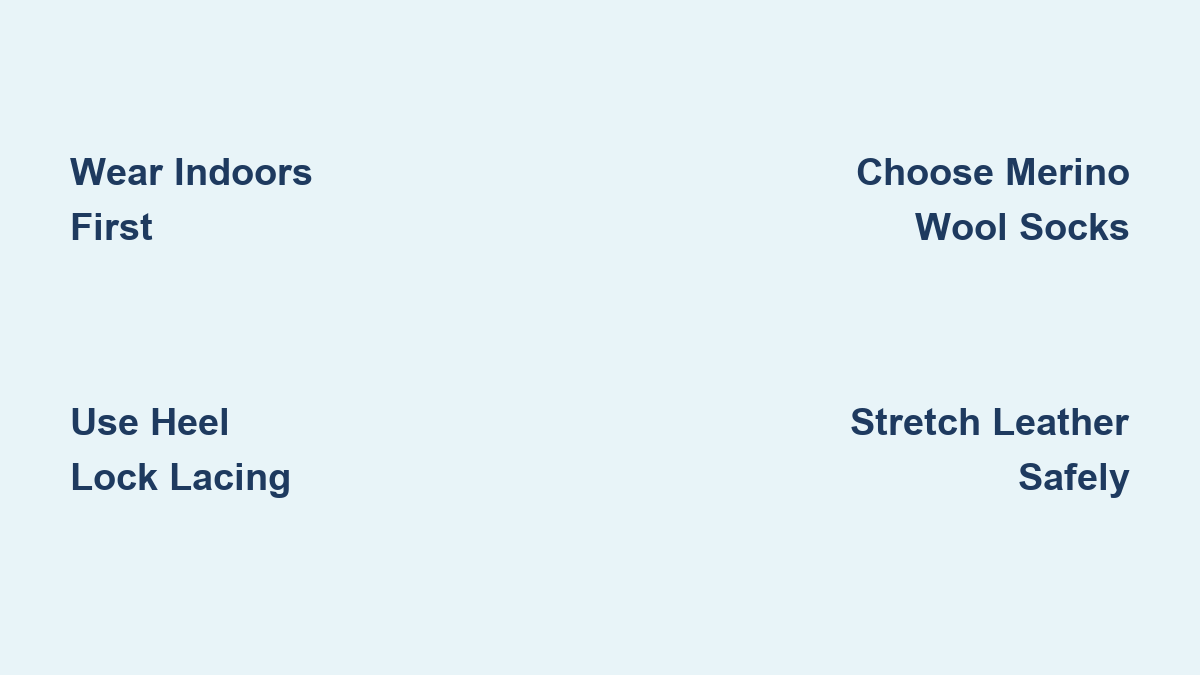
Phase 1: Wear Indoors (Days 1–3)
Start at home for 2–3 hours daily.
- Wear hiking socks (merino wool or synthetic blend)
- Insert your insoles or orthotics
- Walk, climb stairs, stand—simulate real motion
- Watch for:
- Pressure on the Achilles
- Tightness over ankle bones
- Heel slippage
This reveals major fit flaws early. If pain persists, consider exchanging.
Phase 2: Short Outdoor Walks (Days 4–10)
Move to low-intensity walks:
– Dog walks
– Errands
– Park paths
Gradually increase from 15 minutes to 1–2 hours.
- Mix surfaces: pavement, grass, gravel
- Add a light backpack (10–15 lbs)
- Monitor for chafing, hot spots, lacing issues
Stop if discomfort arises. Adjust socks or lacing before continuing.
Phase 3: Trail Testing (Week 2–4)
Only hit trails once urban walking feels comfortable.
- Begin with easy day hikes (2–3 miles, 1.5–2 hours)
- Include mild elevation changes
- Wear full gear: pack, poles, hydration
- Carry blister treatment: moleskin, tape
Let roots, rocks, and moisture help the boot flex. This is when leather truly begins to conform.
Fix Ankle Pressure With Smart Lacing

Use Heel Lock Lacing (Runner’s Loop)
Prevents heel lift and reduces friction at the back of the ankle.
How to tie:
1. Lace normally to second-to-last eyelet.
2. Create loops on each side.
3. Thread lace through opposite loop.
4. Pull tight and tie.
Result: A locked heel, even on steep descents.
Try Skip Eyelet Lacing
Relieves pressure over the ankle ridge by skipping tight lacing points.
Apply Surgeon’s Knot
Keeps laces from loosening mid-hike, maintaining consistent support.
Key Benefit: Proper lacing redistributes pressure—no tools needed.
Choose Socks That Protect Your Ankles
Merino Wool: Best All-Around Choice
Brands like Darn Tough and Smartwool offer moisture-wicking, temperature-regulating socks. Users report: “Get better socks—Darn Tough is probably the best.”
- Medium to thick cushioning ideal for ankle padding
- Naturally antimicrobial
- Retains warmth when wet
Liner Socks + Outer Sock Combo
Wear a thin synthetic liner under your hiking sock to eliminate skin-on-boot contact.
- Reduces blister risk by 40–60%
- Adds extra cushioning at the collar
- Keeps feet drier
Avoid Cotton Socks
Cotton absorbs moisture, swells when wet, and increases friction. It’s a blister magnet—especially during break-in.
Prevent Chafing and Blisters
Apply Anti-Chafing Balm
Use Body Glide or Trail Toes on:
– Achilles tendon
– Lateral ankle bone
– Any rubbing spot
Creates a slippery barrier that stops hot spots.
Use Tape or Blister Patches
Pre-apply kinesiology tape or hydrocolloid patches to high-friction zones.
- Lasts 2–4 hours, even with sweat
- Reduces irritation significantly
Keep Feet Dry
Moisture softens skin, making it more vulnerable.
- Change socks mid-hike if needed
- Air out boots between uses
- Use foot powder
Expert Tip: “The secret to creating helpful calluses is to wear your boots long enough to feel hot spots—but take them off before blisters form.” — Rachel Cavanaugh
Stretch Boots Safely (Leather Only)
Use Boot Stretchers
Insert wooden or plastic stretchers overnight.
- Focus on tight zones
- Combine with stretching spray
- Avoid forcing expansion
Try Damp Towel Method
Stuff boots with damp towels or thick socks overnight.
- Moisture helps leather relax
- Wear with thick socks next day
- Repeat 2–3 times if needed
Use Low-Heat Hair Dryer
Wear boots with thick socks while applying low-heat air to stiff areas.
- Flex ankle repeatedly
- Never overheat—can damage adhesives
❌ Never:
– Soak boots in water
– Freeze them
– Put them in the dryer
These methods often ruin Gore-Tex or warp the sole.
Know When to Replace Your Boots
Red Flags of Poor Ankle Fit
Stop break-in if you experience:
– Persistent pain or bruising
– Redness or swelling
– Can’t fix fit with lacing or socks
– Boot shaft too tall for calf
“If they’re already hurting you… get better boots.” — [deleted user]
Synthetic Boots Won’t Improve
Synthetics don’t stretch—only compress. If it pinches now, it won’t get better.
One user returned Skechers Trego Pacifico boots after ankle cuts. Verdict: “You got cheap boots and are paying the price.”
Invest in Quality Brands
| Tier | Recommended Brands |
|---|---|
| Economy | Merrell, Columbia, Northside |
| Mid-Range | Keen, Salomon, Danner, La Sportiva |
| Premium | Lowa, Asolo, Scarpa, Vasque, Raichle |
Top picks:
– Salomon X Ultra Pioneer ($150): Great support and comfort
– Lowa Renegade ($240): Legendary ankle molding
– Scarpa Zodiac Plus GTX ($349): Premium fit for technical terrain
Maintain Ankle Comfort Over Time
Clean After Every Hike
Remove dirt with a damp cloth—grime stiffens the collar.
Air Dry Naturally
Never use radiators. Remove insoles, loosen laces, and dry at room temp.
Reapply Waterproofing
Every 3–5 hikes, use a waterproofing spray to keep materials supple.
Store Properly
Keep in a cool, dry place with airflow—no plastic bags.
Check Padding Over Time
If ankle foam feels flat or loose:
– Replace insoles
– Or retire the boots
“On average, a well-maintained hiking boot lasts about 500 miles.” — Krissi P, Backcountry Gearhead
Final Checklist: Break-In Success
✅ No pinching or hot spots after 2+ hours
✅ Ankle collar feels soft and molded
✅ Heel stays locked during descents
✅ Boots flex naturally on uneven ground
✅ You can hike with full gear comfortably
Do:
- Buy boots that fit well from the start
- Wear merino wool socks
- Break in gradually—start indoors
- Use heel lock lacing
- Invest in leather or hybrid materials
- Return boots if pain persists
Don’t:
- Wear new boots on long hikes untested
- Use water, ice, or high heat to speed break-in
- Ignore persistent ankle pain
- Rely on cotton socks
- Assume all boots will “eventually” feel good
Golden Rule: “The best trick to break in your hiking boots is time.” — Rachel Cavanaugh
With patience and the right techniques, your ankle will stop screaming and start supporting you, mile after mile.