How to Make Hiking Boots Waterproof: Quick Steps
You’re halfway through a trail when the first drops of rain start to fall. Within minutes, damp grass gives way to muddy patches, and soon you feel it—your socks are getting wet. It’s not sweat. It’s water seeping through boots you thought were waterproof. The truth? Most hiking boots lose their water resistance over time. Dirt, wear, and improper care degrade the outer DWR (durable water repellency) layer, leaving your feet vulnerable.
But here’s the good news: you can make hiking boots waterproof again—and even improve their performance. With the right cleaning, drying, and treatment process, you can restore your boots’ ability to shed water, extend their lifespan, and keep your feet dry mile after mile. This guide walks you through every step, from selecting the correct product for your boot material to long-term maintenance that ensures lasting protection.
Clean Boots Before Waterproofing
Remove Laces and Insoles
Before any treatment, take out the laces and insoles. This exposes hidden areas where moisture and grime accumulate—like the collar, tongue, and heel lining. Cleaning these zones ensures full coverage and prevents trapped dampness. Snap a quick photo of your lacing pattern so rethreading later is effortless.
Brush Off Surface Debris
Use a soft brush or microfiber cloth to remove dried mud, grass, and grit. Focus on high-risk areas: seams, eyelets, and the toe box. These spots collect dirt that blocks waterproofing agents from bonding to the material. A clean surface is essential—treatment applied over grime won’t last.
Wash With Mild Cleaner
Mix warm (not hot) water with a small amount of mild soap or, better yet, a specialized cleaner like Nikwax Footwear Cleaning Gel. Gently scrub the entire upper with a soft-bristled brush, using circular motions. Avoid soaking the boots—excess water can compromise breathable membranes like Gore-Tex.
Rinse lightly if needed, but never submerge. Never use regular laundry detergent—it strips natural oils and damages materials. Stick to footwear-specific cleaners for safe, effective results.
Dry Boots Properly
Stuff With Newspaper or Towels
After cleaning, stuff boots with crumpled newspaper or rolled towels. This pulls moisture from the interior and helps maintain shape. Replace the stuffing every few hours. Most boots take 12 to 24 hours to dry completely, depending on humidity and material thickness.
Air Dry at Room Temperature
Always air dry in a well-ventilated area, away from direct heat. Radiators, fireplaces, and hairdryers can warp adhesives, crack leather, and ruin waterproof membranes.
Warning: Machine drying or high heat voids warranties and shortens boot life.
Choose the Right Waterproofing Method
Match Treatment to Boot Material
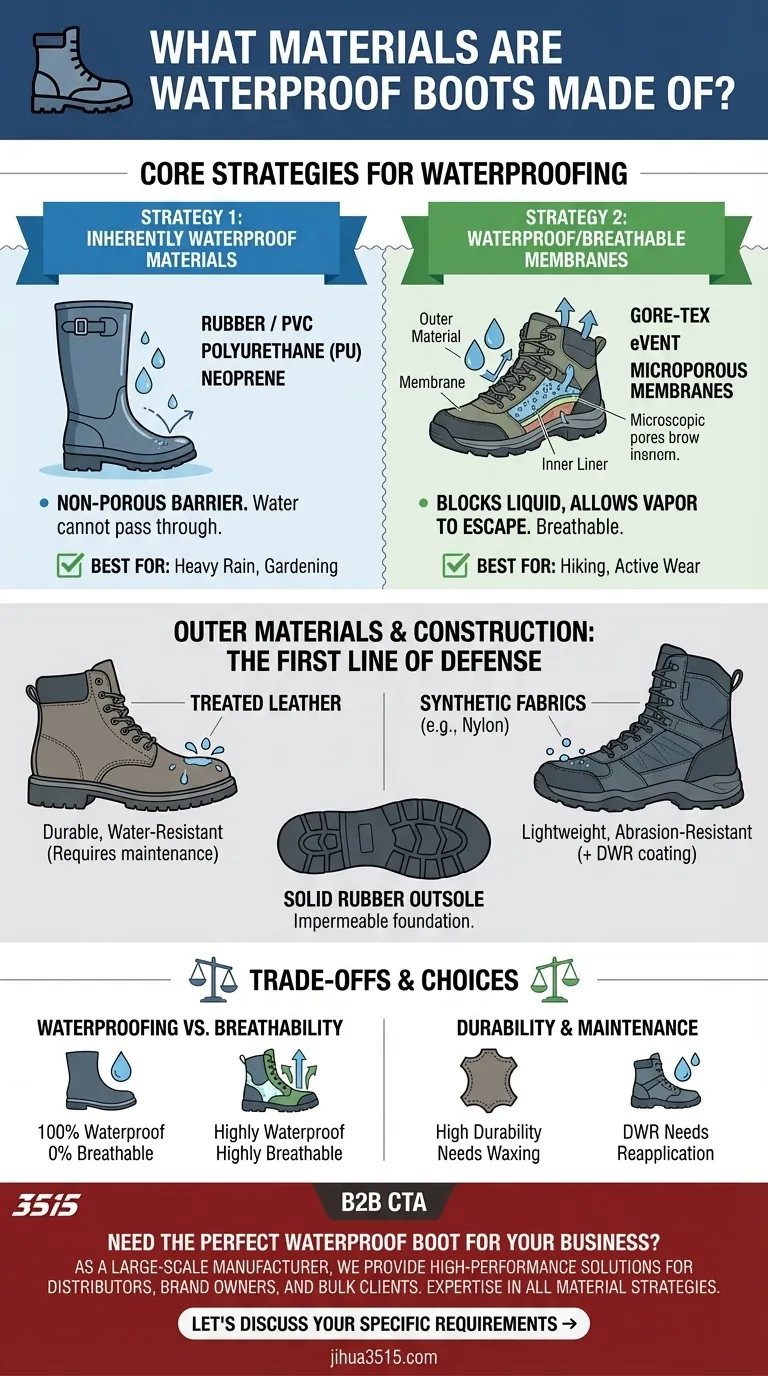
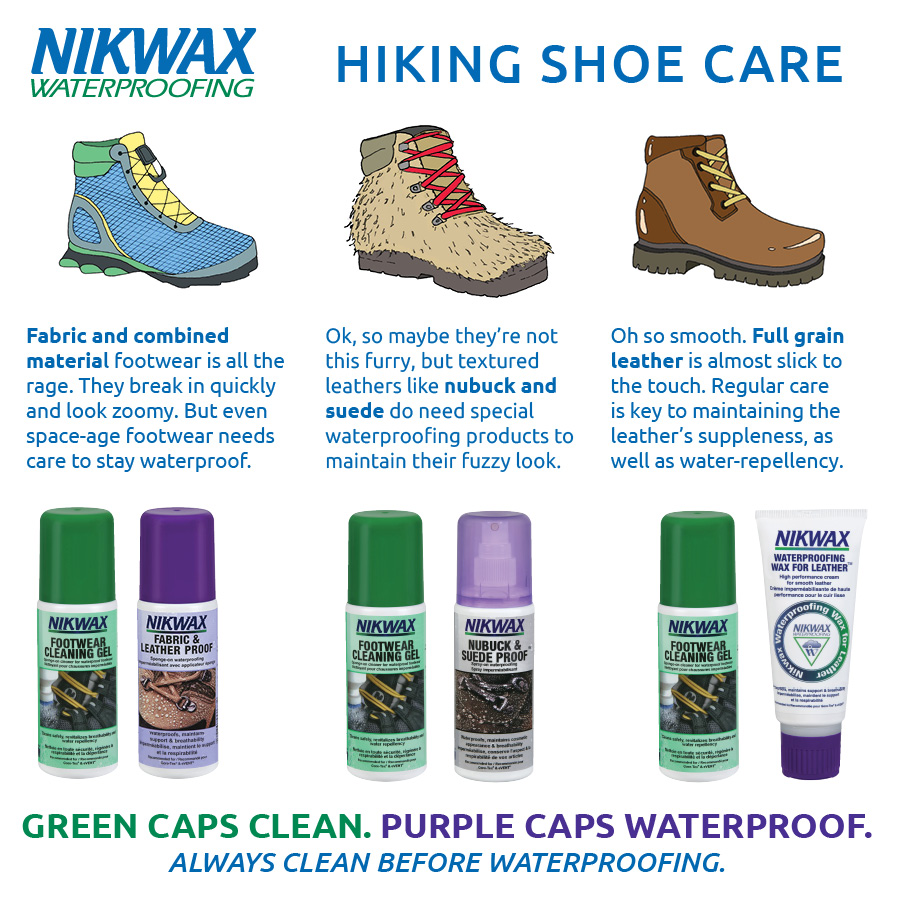
Using the wrong product can damage your boots or reduce breathability. Here’s how to pick the right one:
| Boot Material | Best Waterproofing Method |
|---|---|
| Full-grain leather | Wax-based treatments (e.g., Sno-Seal, dubbin) |
| Nubuck / Suede | Spray-on proofers (e.g., Nikwax Nubuck & Suede Proof) |
| Synthetic fabric | Spray treatments (e.g., Nikwax TX.Direct) |
| Leather + fabric hybrids | Dual-purpose sprays (e.g., Nikwax Fabric and Leather Proof) |
Avoid waxes on nubuck or synthetics—they can clog pores and discolor the surface.
Apply Waterproofing Sprays
Shake and Spray Evenly
Shake the can well. Hold 6–8 inches (15–20 cm) from the boot and spray in smooth, overlapping passes. Cover the entire upper, including stitching, seams, and lace loops. Pay special attention to the tongue and heel collar.
Use light, even coats instead of one heavy layer to prevent pooling and ensure uniform protection.
Focus on High-Wear Zones
The toe box, ankle area, and around eyelets endure the most abrasion and water exposure. These zones lose DWR fastest—give them extra attention during application.
Let Dry and Reapply
Allow the first coat to dry completely—typically 1–4 hours. Then apply a second coat for stronger, longer-lasting protection, especially if hiking in wet or muddy conditions.
Pro tip: For Gore-Tex boots, use Nikwax TX.Direct Spray-On to restore breathability and outer water beading.
Use Waxes for Leather Boots
Warm Leather Slightly
Before applying wax, warm the leather with a hairdryer on low heat for 30–60 seconds. This opens pores and helps the wax penetrate deeply. Never melt the wax directly—apply at room temperature.
Rub Wax Into the Surface
Using fingers or a soft cloth, work Sno-Seal, dubbin, or Nikwax Waterproofing Wax into the leather in circular motions. Push it into seams, welts, and crevices where water sneaks in.
Let the boots sit for at least 30 minutes to absorb the wax. Do not speed up drying with heat.
Buff for a Smooth Finish
After drying, lightly buff the surface with a clean cloth. This removes excess wax, restores shine, and prevents cracking from buildup.
Expert note: Wax adds excellent water resistance but slightly reduces breathability—ideal for cold, wet hikes, not summer treks.
Treat Special Boot Types

Waterproof Gore-Tex Boots
Gore-Tex only works when the outer fabric repels water. If the upper soaks through (“wet out”), the membrane can’t breathe, making feet damp from sweat.
Fix it by:
1. Deep cleaning with Nikwax Cleaning Gel
2. Applying a membrane-safe spray like Nikwax TX.Direct
3. Reapplying every 2–6 months or when water stops beading
Fact: The Gore-Tex layer itself doesn’t wear out—but the outer DWR does.
Care for Nubuck and Suede
These delicate finishes need gentle handling.
- Brush with a nubuck/suede brush to lift the nap.
- Spray with Nikwax Nubuck & Suede Proof from 5 cm away.
- Apply two light coats, drying fully between.
- Lightly brush again after drying to restore texture.
Never use wax or oil—they darken and stiffen the material.
Handle Hybrid and Fabric Uppers
Many modern boots combine leather with nylon or Cordura. Use Nikwax Fabric and Leather Proof, which works on both materials without clogging breathable zones.
Avoid silicone sprays or WD-40—they may block pores and degrade adhesives over time.
Try Emergency Waterproofing Fixes
Use Gaiters in Wet Conditions
Gaiters seal the gap between pants and boots, blocking water from rain, snow, or tall wet grass. They’re essential for:
– Pacific Northwest trails
– Snowshoeing
– Stream crossings
Even if boots aren’t fully waterproof, gaiters add critical defense.
Wear Waterproof Socks as Backup
Brands like SealSkinz offer socks with built-in membranes that block external water. While useful in extreme wetness, they trap sweat—making feet clammy over time.
Best for: Short-term use in downpours or flooded trails—not daily wear.
Avoid Plastic Bags and WD-40
Some suggest plastic bags between sock layers or spraying WD-40 on boots. These are temporary hacks with big downsides:
– Plastic bags cause sweating and blisters
– WD-40 darkens leather and damages synthetics
Use only in emergencies—and re-treat properly as soon as possible.
Optimize Your Hiking Sock System
Wear Merino Wool Socks
Material matters. Cotton socks absorb moisture and stay wet, increasing blister risk. Instead, choose:
– Merino wool: Wicks sweat, regulates temperature, resists odor
– Liner + mid-weight combo: Manages moisture and reduces friction
User insight: “Even if my boots get damp, good merino socks keep me comfortable for miles.”
Layer for Moisture Control
Wear a thin synthetic or merino liner sock under a thicker hiking sock. This system pulls moisture away from skin and prevents hot spots that lead to blisters.
Maintain Waterproofing Long-Term
Reapply Based on Usage
Waterproofing wears off. Follow this schedule:
| Hiking Frequency | Re-treatment Interval |
|---|---|
| Occasional (once a month) | Every 6 months |
| Weekly hikes | Every 3–4 months |
| Daily or in wet climates | Every 1–2 months |
Signs it’s time: Water no longer beads—it soaks into the upper.
Store Boots Correctly
Keep boots in a cool, dry, dark place. Avoid plastic bags, which trap moisture and encourage mold. Use breathable mesh bags or shoe trees to maintain shape and airflow.
Rotate Between Two Pairs
If you hike often, rotate boots. This gives each pair time to fully dry out and recover between uses, extending their life and performance.
Test Waterproofing Success
Perform the Water Bead Test
After treatment and drying, pour a few drops of water on the upper. If it:
– Beads and rolls off → Success
– Soaks in slowly → Reapply treatment
Test multiple areas, especially high-wear zones. Dark fabrics may not show beading clearly—look for surface tension instead.
Follow Safety and Eco Guidelines
Avoid Harmful Products
Some treatments damage boots or the environment:
– Obenauf’s Heavy Duty LP: May cause delamination
– Mink oil: Over-softens leather, weakens support
– Silicone sprays: Can degrade adhesives
Stick to pH-balanced, non-toxic options like Nikwax or Grangers.
Choose Sustainable Options
Nikwax and Mountain Warehouse offer:
– Water-based formulas
– Recyclable packaging
– Carbon-balanced production
Extending boot life reduces waste—making maintenance an eco-friendly choice.
Final Checklist: Waterproof Your Boots
- Remove laces and insoles
- Clean with mild soap or Nikwax Cleaner
- Dry completely—no heat
- Select correct product by material
- Apply evenly—focus on seams
- Allow full drying (overnight if needed)
- Apply second coat for heavy use
- Test with water bead test
- Re-lace and hit the trail
Final Note: No hiking boot stays waterproof forever. But with regular cleaning, proper treatment, and smart gear choices, you can keep your feet dry for years. The key is consistency—waterproofing isn’t a one-time fix, but a habit. Treat your boots right, pair them with merino socks and gaiters when needed, and they’ll carry you through every season, mile after mile.