Best Hiking Boots for Snake Bite Protection (2026 Guide)
Every year, around 7,000 to 8,000 people in the U.S. are bitten by venomous snakes—yet fewer than five die. While the odds are in your favor, most bites happen on the feet and lower legs, typically when a hiker accidentally steps on a hidden rattlesnake, copperhead, or cottonmouth. That’s why your choice of hiking boots to prevent snake bites is one of the most critical safety decisions you can make. The right footwear won’t just boost your confidence—it could prevent a life-threatening emergency in remote terrain.
Not all hiking boots protect against fangs. Standard mesh or lightweight synthetic uppers may be breathable, but they offer little resistance to a strike. True protection comes from materials that block fang penetration: thick full-grain leather, industrial rubber, or Kevlar-reinforced layers. From $16 hardware store rubber boots to $400 specialty snake boots, effective options exist for every budget and hiking style. This guide cuts through myths and marketing to show you exactly which boots work, how they protect you, and how to build a complete defense system—without sacrificing comfort or mobility.
Choose Footwear That Blocks Fangs
The first line of defense against snake bites isn’t luck—it’s your boots. Venomous snakes like rattlesnakes have fangs over an inch long and strike with enough force to inject venom deep into tissue. Thin materials won’t stop them. To stay safe, you need footwear engineered to resist punctures.
What Materials Actually Stop Snake Bites?
Snake fangs are hypodermic needles made of keratin—sharp, strong, and designed to pierce skin. But they can’t penetrate everything. The best protective materials create a physical barrier too dense for fangs to breach.
- Thick full-grain leather (3–4mm): Dense enough to resist many strikes, especially when layered or paired with tight weaves.
- Industrial-grade rubber (Dunlop-style): Proven to resist nails, glass, and snake fangs. No documented cases of pit vipers biting through high-density rubber boots.
- Kevlar or ballistic fiber inserts: Used in snake-specific boots, these lightweight, puncture-resistant layers stop fangs while maintaining flexibility.
- Avoid thin neoprene or soft rubber: Common in muck or garden boots, these offer little to no protection.
✅ Key Insight: Rubber and reinforced leather stop bites not through magic, but through material density—factors snakes can’t overcome under normal strike conditions.
Why Cowboy and Muck Boots Won’t Protect You
Despite their tough look, cowboy boots are not snake-proof. Most end below the calf, leaving the vulnerable lower leg exposed. Their leather is often too thin to resist fang penetration. Similarly, garden muck boots made from soft rubber or neoprene are designed for mud and water—not puncture resistance.
- Cowboy boots: Stylish but risky—short shafts and weak materials make them poor choices in snake country.
- Muck boots: Great for wet fields but easily penetrated by fangs. Not suitable for high-risk areas.
❌ Never rely on fashion or casual work boots when hiking in rattlesnake, copperhead, or cottonmouth territory.
Use Snake-Specific Boots in High-Risk Zones
If you’re hiking, hunting, or working in areas with high snake density—like the Southwest, Appalachians, or tropical regions—snake-specific boots offer maximum protection. These aren’t just tall hiking boots; they’re engineered with puncture-resistant materials and rugged construction.
Top Snake-Proof Boot Models (2024)

| Model | Height | Key Features |
|---|---|---|
| LaCrosse 4XAlphas | 16” | Rubber construction, Snake Guard insert, waterproof |
| Dryshod ViperStop | 17” | 5mm insulated bootie, breathable airmesh, scent control |
| Danner San Angelo | 17” | Full-grain leather, slip-on design, molds to foot |
| Frogg Toggs Winchester Vennom | 16” | Budget option, waterproof membrane, Omnigrip sole |
| Irish Setter Mudtrek | 17” | Side zipper, wide calf fit, RPM outsole |
These boots are built to stop fangs, resist abrasion from brush, and support you on rough terrain—all while keeping your feet dry.
When You Really Need Snake Boots
- Hunting in thick brush (hogs, turkeys, deer)
- Working in forests or swamps (biologists, foresters)
- Backpacking in rattlesnake country (Arizona, Texas, Georgia)
- Traveling in tropical zones (Costa Rica, Southeast Asia)
✅ Best for: Remote or high-risk areas where medical help may be hours away.
Comfort vs. Protection: What to Expect
Many snake boots sacrifice breathability and comfort for safety:
- Danner snake boots: Known for calf chafing and overheating.
- Russell Snake Boots ($750): Custom-fit and supportive but expensive and hard to lace.
- Vasque models: Lightweight and breathable—ideal for long hikes.
Pro Tip: Always break in snake boots before long trips. Pair them with moisture-wicking socks to reduce blisters and sweat.
Try $16 Rubber Boots for Budget-Friendly Protection
You don’t need to spend hundreds to stay safe. Industrial rubber work boots—available at Home Depot or Tractor Supply—are a proven, low-cost alternative.
Why Cheap Rubber Boots Work

- Puncture-resistant rubber: Same material rated to resist nails and glass.
- Height: 16” models cover the calf and lower leg.
- Thermal shielding: Rubber blocks body heat, making you less detectable to heat-sensing pit vipers.
- Waterproof and durable: Perfect for wet, muddy trails.
✅ Field-Tested: Used by Peace Corps volunteers in Africa and locals in Costa Rica—no reported failures.
How to Pick the Right Rubber Boot
Not all rubber boots are equal. Choose 16-inch Dunlop-style work boots with thick, solid soles and no fabric panels. Avoid:
- Thin gardening boots
- Lightweight rain boots
- Boots with mesh or cloth sections
✅ Recommended: Standard black or brown industrial rubber boots (~$16).
Real-World Proof: Maryland Copperhead Study (2023)
In a controlled field test with 69 wild copperheads:
– Only 2 snakes struck when presented with rubber-booted stimuli
– Zero fang penetration occurred
This confirms that rubber boots are highly effective—even against direct strikes.
Add Snake Gaiters for Lightweight Leg Protection
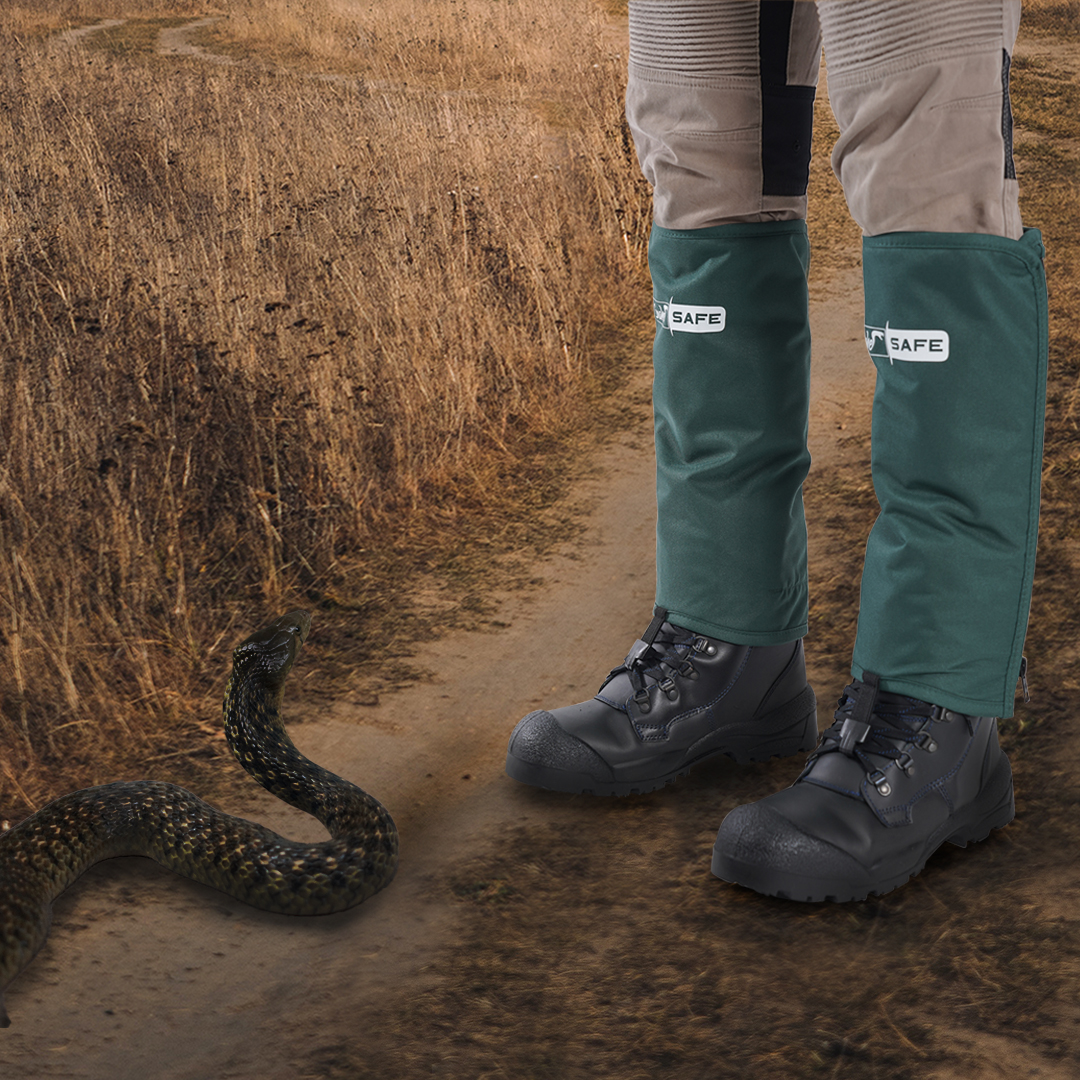
If you already own solid hiking boots, snake gaiters are a smart, lightweight upgrade. They add protection without replacing your footwear.
Best Gaiter Models
| Model | Price | Features |
|---|---|---|
| Turtleskin Snakearmor Reversible | $80 ($20 on sale) | 16”, 0.75 lbs, ballistic fiber, packs small |
| Klondike Snake Gaiters | $60–$90 | Heavy-duty, adjustable |
| Cabela’s Snake Bite Gaiters | $70–$100 | Reinforced, durable |
| TrekStor Snake Gaiters | $80+ | Breathable, lightweight |
Turtleskin gaiters are the top choice among professionals for their durability, low weight, and flexibility.
How to Wear Gaiters Correctly
- Size properly: Should extend from ankle to mid-calf.
- Secure under the boot: Use a bungee strap to prevent slipping.
- Tuck pants in: Seal the gap between pants and boots.
- Wear tall socks: Prevent chafing and improve comfort.
❗ Limitation: Gaiters protect only the lower leg—not the toes or heels.
Upgrade to Snake Chaps for Full-Leg Defense
In extreme brush or high-density snake zones, pair gaiters with Turtleskin chaps that extend protection to the thighs.
- Best for: Hog hunting, forestry, or trekking through dense undergrowth.
- Adds weight but significantly increases safety.
✅ Layered defense: Gaiters + chaps + sturdy boots = maximum protection.
Build Your Best Snake Bite Protection System
No single gear item guarantees 100% safety. The most effective strategy combines footwear, leg protection, and smart behavior.
Best Overall Setup (Balance of Protection and Comfort)
- Footwear: High-quality full-grain leather hiking boots (e.g., Salomon, Danner)
- Leg Protection: Turtleskin Snakearmor gaiters
- Socks: Moisture-wicking wool or synthetic
- Pants: Durable canvas or synthetic, tucked in
✅ Breathable, comfortable, removable, and effective
✅ Ideal for backpacking, day hikes, moderate-risk areas
Budget-Friendly Setup
- Footwear: 16” industrial rubber work boots (~$16)
- No additional gear needed
- Waterproof and heat-shielding
✅ Same protection as $300 boots at a fraction of the cost
✅ Perfect for hunting, occasional hikes, or wet terrain
High-Performance Setup
- Footwear: Snake-specific boots (LaCrosse, Dryshod, Chippewa)
- Features: Integrated snake guards, waterproofing, insulation
- Optional: Snake chaps for thigh protection
✅ Maximum defense in rugged, high-risk environments
❌ Heavier and less breathable—best for short durations or professionals
Match Your Gear to the Environment
Your terrain and climate should guide your gear—not fear.
- Wet or muddy terrain: Rubber boots (LaCrosse, Dryshod, or industrial)
- Hot weather: Breathable gaiters + non-insulated boots
- Steep or rocky trails: Lace-up boots with ankle support (Vasque, Irish Setter Vaprtrek)
- Thick brush: Leather boots + gaiters (Danner San Angelo)
- Long daily mileage: Lightweight options (Frogg Toggs, Turtleskin gaiters)
Practice Smart Hiking Habits
Even the best boots won’t help if you’re not paying attention. Most bites happen when a snake is stepped on or startled.
- Use a trekking pole: Tap ahead in leaf litter or tall grass—snakes often retreat from vibrations.
- Watch your step: Avoid logs, rocks, and crevices. Step on logs, not over them.
- Listen for rattles—but don’t rely on them. Many snakes strike silently.
- Never reach into unseen areas.
❗ Remember: Snakes don’t chase people. They strike defensively and retreat.
Know What to Do If Bitten
Despite precautions, bites can happen.
Immediate Actions:
- Stay calm – Panic spreads venom faster.
- Call for help – Use phone or satellite messenger.
- Immobilize the limb – Keep it below heart level.
- Remove tight clothing or jewelry – Swelling can cut off circulation.
What NOT to Do:
- ❌ Don’t cut the wound or suck out venom
- ❌ Don’t use ice or tourniquets
- ❌ Don’t drink alcohol or caffeine
- ❌ Don’t try to catch the snake
✅ Best move: Get to a hospital. Antivenom works.
Final Note: The best hiking boots to prevent snake bites aren’t always the most expensive—they’re the ones that match your environment, activity, and risk level. Whether you choose $16 rubber boots or $400 snake-proof models, knowledge, vigilance, and the right gear are your true defenses. Stay safe, stay aware, and keep hiking.