How Long Do Hiking Boots Last: Durability Guide
You’ve laced up your hiking boots for another trail adventure—feet supported, ankles secure, ready to conquer the wild. But have you ever wondered how many more miles they can truly handle? Knowing how long hiking boots last isn’t just about getting your money’s worth—it’s about safety, comfort, and protecting your body on every hike. On average, most quality hiking boots last 500 to 1,000 miles, but that number varies dramatically depending on the boot type, terrain, load, and how well you care for them. Weekend hikers might stretch a pair over 3 to 5 years, while thru-hikers could wear out the same model in just a few months. The real danger? Boots don’t always fail with a bang—they degrade quietly, losing support and grip long before they look worn out. In this guide, you’ll learn exactly what determines hiking boot lifespan, how to spot the warning signs, and proven strategies to make your boots last hundreds of extra miles.
How Long Hiking Boots Last by Type

Not all hiking boots are built the same—and their durability reflects that. From nimble trail runners to rugged mountaineering models, lifespan varies significantly by design and materials.
Trail Runners & Lightweight Hiking Shoes: 350–500 Miles
Designed for speed and breathability, these shoes sacrifice longevity for agility. Models like the Altra Lone Peak often fail as early as 150 miles due to rapid midsole compression and upper blowouts. The thin EVA foam breaks down quickly, and mesh uppers tear under rough use. While great for smooth trails, they’re ill-suited for rocky terrain or heavy packs.
Mid-Weight Hiking Shoes: ~500 Miles
A popular choice for day hikes and moderate backpacking, boots like the Merrell Moab 3 balance comfort and durability. Reinforced toe caps, full rubber outsoles, and thicker uppers help them endure moderate abuse. However, by the 500-mile mark, most users notice midsole fatigue and reduced cushioning.
Stiff, Full-Coverage Hiking Boots: 500–1,000+ Miles
Built for rugged trails and loaded backpacks, boots such as the Salomon X Ultra Mid and La Sportiva Nucleo feature stiffer soles, better ankle support, and durable materials. Many are resoleable and, with proper care, can exceed 1,000 miles and last 5+ years.
Heavy-Duty & Mountaineering Boots: 1,000–2,000 Miles
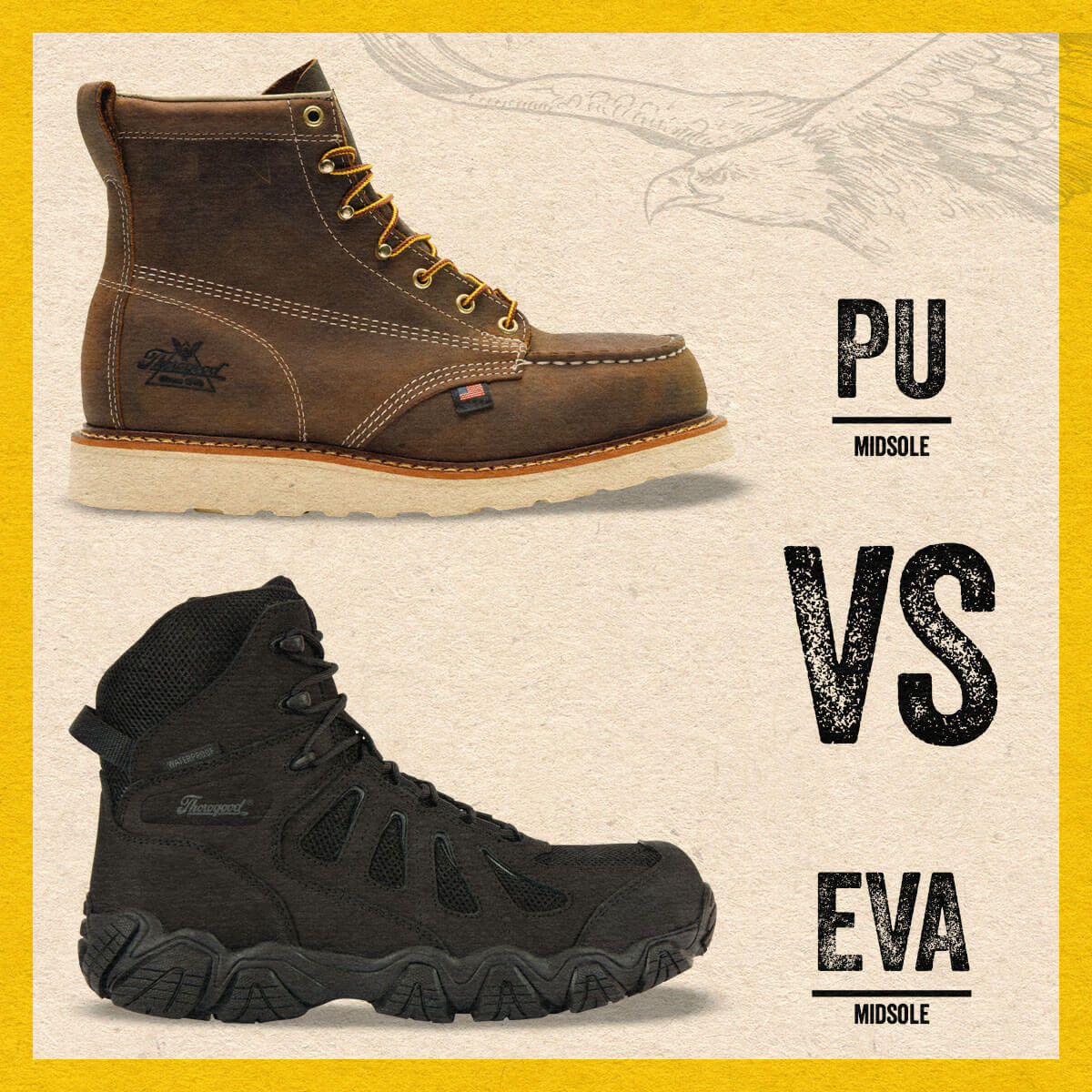
These elite models use polyurethane (PU) midsoles, which resist compression far longer than EVA foam. Combined with full-grain leather uppers and Vibram soles, they’re engineered for extreme conditions. Boots like the Danner Mountain Light II are legendary for lasting thousands of miles—especially when resoled.
What Really Determines Boot Longevity?
Your hiking boots don’t wear out in a vacuum. Multiple factors—some within your control—dictate how fast they degrade.
Midsole Material: The Hidden Weak Spot
The midsole is the heart of your boot’s support, but it fails invisibly. EVA foam lasts 300–500 miles before compressing, while PU midsoles can go 1,000–2,000 miles. You’ll feel the loss before you see it—aching knees, tired feet, and trails that suddenly feel harder are signs your midsole is done.
Boot Construction & Materials Matter
- Full-grain leather: Most durable, resoleable, and moldable to your foot—but requires conditioning.
- Synthetic uppers (nylon, mesh): Lighter but prone to tears, especially in high-stress zones.
- Vibram outsoles: Industry standard for grip and wear resistance.
- Welted construction (Goodyear, Norwegian): Allows resoling. Cemented boots cannot be repaired.
Double stitching and reinforced toe caps add years to boots used on rocky trails.
Terrain Accelerates Wear
- Rocky, jagged trails: Destroy outsoles and damage uppers fast.
- Wet, muddy conditions: Stress waterproof membranes and adhesives.
- Snow and ice: Stiffen leather and degrade rubber if not dried properly.
- Smooth dirt paths: Cause minimal wear—ideal for extending boot life.
500 miles on boulder fields does more damage than 800 miles on forest trails.
Usage Frequency & Load
- Daily or thru-hiking use: Constant stress wears out materials faster.
- Heavy backpacks: Increase pressure on midsoles and soles—cutting lifespan by hundreds of miles.
- Infrequent use: Can lead to dried-out leather and failed adhesives if stored improperly.
7 Signs It’s Time to Replace Your Hiking Boots
Even if your boots look fine, internal damage can compromise safety. Watch for these red flags.
1. Midsole Collapse
Symptoms: Feet feel the ground, joints ache, boots feel flat.
Test: Bend the boot toe-to-heel. Cracks in the midsole mean it’s done.
Risk: Knee pain, ankle instability, long-term joint damage.
EVA midsoles lose 20–30% of cushioning by 300 miles—most hikers don’t notice until it’s too late.
2. Worn-Out Tread
Lugs wear down from 3.5–5.5 mm to nearly flat.
Loss of traction increases slip risk on wet rocks or gravel.
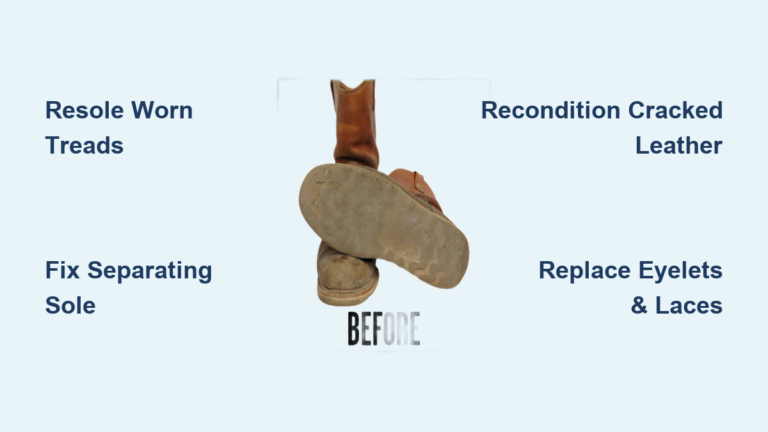
Flapping soles indicate delamination—adhesives are failing.
Compare tread to a new boot. If lugs are flush, replace.
3. Loss of Support
Soft ankle collars no longer stabilize.
Compressed insoles fail to support arches.
Foot slippage causes blisters and inefficiency.
Leads to plantar fasciitis, shin splints, and fatigue.
4. Upper Damage
Holes or tears let in water and debris.
Cracked leather reduces flexibility.
Peeling toe caps often precede outsole separation.
Small holes can be patched, but widespread damage means retirement.
5. Waterproofing Failure
Gore-Tex membranes degrade after 3–5 years.
Symptoms: Feet get wet even in dry weather.
Test: Pour water on the upper. If the inside dampens, the membrane is gone.
Reproofing helps, but can’t restore dead membranes.
6. Lacing System Failure
Loose or torn eyelets make it hard to secure the boot.
Frayed laces signal prolonged stress.
Consequence: Poor ankle support = higher injury risk.
Replace laces often. Persistent failure means the upper is failing.
7. Persistent Pain or Discomfort
New foot, ankle, or knee pain after years of use.
Blisters or numbness not fixed by lacing.
Psychological attachment shouldn’t override physical signals.
Rule: If your boots hurt more than the hike, it’s time to retire them.
How to Make Your Hiking Boots Last Longer
Extend your boot’s life by hundreds of miles with smart care habits.
Clean After Every Hike
Remove laces and insoles. Use a soft brush and mild soap. Never soak leather—clean surface dirt only. For synthetics, scrub and rinse.
Pro tip: Clean boots dry faster and resist odor and mold.
Dry Boots Properly
Never use heat—it cracks leather and melts glue.
Stuff with newspaper to absorb moisture.
Air dry at room temperature, away from sunlight.
Allow 24–48 hours for full drying.
Damp boots stored overnight weaken adhesives and breed bacteria.
Reapply Waterproofing
- Leather boots: Condition every 3–6 months. Reapply waterproofing spray after wet hikes.
- Synthetics: Reapply monthly in damp climates.
- Use boot-specific products—generic sprays can damage materials.
Waterproofing isn’t permanent. It wears off with use.
Store Boots Correctly
Keep in a cool, dry place—not garages or basements.
Store upright with boot trees or newspaper.
Avoid direct sunlight.
Never leave boots scrunched in a backpack or car trunk.
Replace Worn Components
- Insoles: Replace every 300–500 miles.
- Laces: Swap when frayed. Waxed laces last longer.
- Heel guards: Replaceable on some models.
Fresh insoles restore comfort—delaying full replacement.
Rotate Between Pairs
Ideal for frequent hikers. Lets each pair dry fully and materials recover.
Rotate every 2–3 hikes for maximum longevity.
Use Gaiters
Protect uppers from mud, gravel, and abrasion. Reduce cleaning frequency and extend life—especially in snow or rocky terrain.
Resole When Possible
Resoleable boots (e.g., Danner, Lowa) use welted construction.
Cost: $80–$150—often cheaper than new boots.
Extends life by 500–1,000+ miles.
Resole when tread is gone but upper and midsole are intact.
Boot Longevity by Brand & Model
| Boot Model | Lifespan | Key Notes |
|---|---|---|
| Lowa Renegade | 500–700 miles | Resoleable, but some report sole separation after 2 years. |
| Danner Mountain Light II | 1,000+ miles | Full-grain leather, Goodyear welt, legendary durability. |
| Red Wing (work boots) | 1,300–1,500 miles | Used in rugged forest trails—leather holds up well. |
| Merrell Chameleon III | 800+ miles | Still serviceable after desert, mountain, and forest use. |
| Keen hiking boots | 1 year (15 mi/wk) | Outlasted New Balance trail runners that failed in 2 months. |
| Altra Lone Peak | As low as 150 miles | Rapid midsole and upper failure—popular but not durable. |
| Salomon X Ultra Mid | 500–700+ miles | Reinforced upper, minimal degradation. |
| La Sportiva Nucleo | “Last through the next ice age” | Extremely stiff, built for brutal terrain. |
| Merrell Moab 3 | ~500 miles | Thick materials, full rubber outsole, great value. |
Sustainable Disposal & Reuse
Don’t landfill worn-out boots. Try these eco-friendly options:
- Recycle: Nike Reuse-A-Shoe, ASICS Give Back Box, Ridwell.
- Donate: Goodwill, Salvation Army, Gear Forward (if no mold or holes).
- Repurpose: Use for gardening, muddy events, or camp shoes.
Final Note: Hiking boots are an investment in your safety and comfort. While most last 500–1,000 miles, smart choices and consistent care can stretch that to 1,500+ miles. Clean, dry, condition, and rotate your boots. Replace insoles, use gaiters, and resole when possible. When they’re truly done, recycle or repurpose—don’t trash them. With the right habits, your boots will carry you through years of adventure, mile after reliable mile.