How to Stretch Leather Boot Calves
You slipped on a gorgeous pair of leather boots, took a few steps, and felt that unmistakable pinch around your calf. Before you toss them in the closet forever, there is good news: stretching the calf of a leather boot is often possible right at home. Depending on the leather type, you can gain anywhere from a quarter inch to a full inch of room. The secret lies in patience, the right tools, and matching your method to your specific boot style.
This guide walks you through every proven technique, from professional cobbler services to clever DIY hacks. You will learn how to expand the shaft safely, protect the leather from cracking or warping, and finally walk in total comfort.
Visit a Professional Cobbler for High-Value Boots

When your boots cost a small fortune or feature delicate stitching, a cobbler is your safest first move. They bring expert assessment and heavy-duty tools to the table.
Why a Cobbler Is Worth the Money
Cobblers rely on cast aluminum stretchers that expand the leather evenly. They often pair these tools with heat and stretching sprays for maximum effect. A skilled cobbler can stretch both the calf and the instep, which matters if you have high arches or wide calves. Even better, they know exactly when not to stretch, protecting fragile embellishments or complex seams.
What the Process Looks Like
- Cost: $20 to $40 per boot
- Timeframe: 1 to 3 days with gradual stretching
- Best for: Expensive leather, intricate designs, or first-time DIY doubters
Most cobblers can resolve calf tightness in a single visit, making this a smart investment for boots you plan to wear for years.
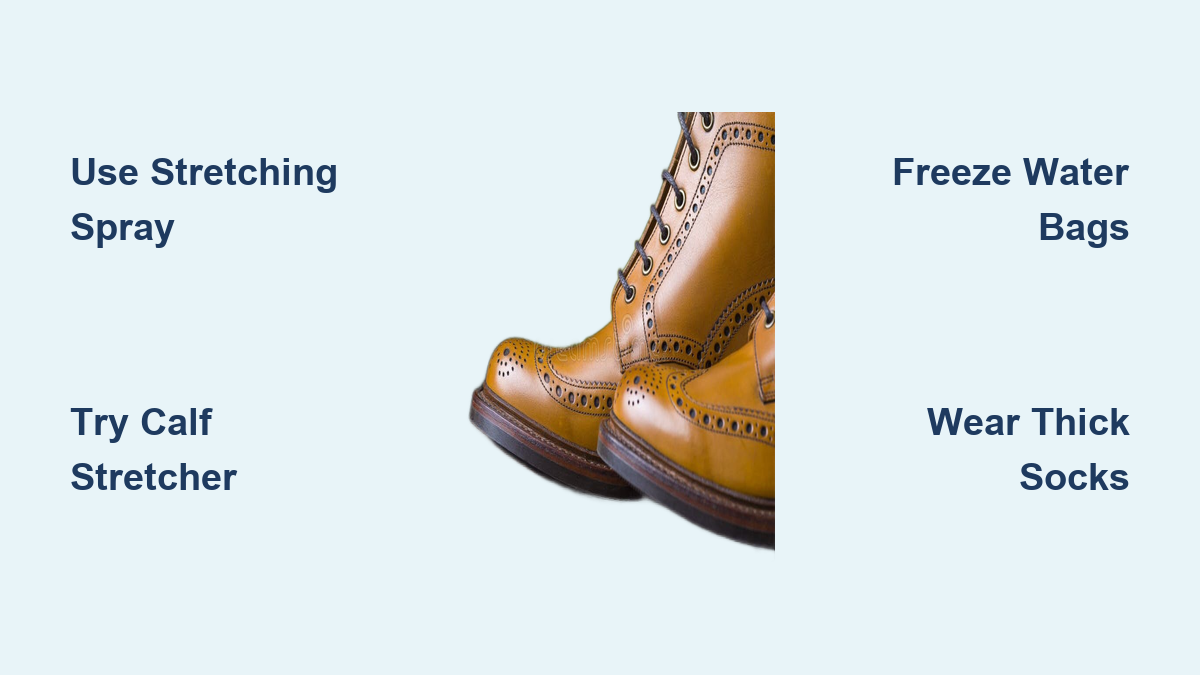
Soften Leather with a Stretching Spray
Chemical sprays relax leather fibers, allowing them to expand more easily under pressure and body heat.
Pick the Right Product
Fiebing’s Shoe Stretching Spray is a popular choice. It contains water, alcohol, and surfactants that penetrate leather fast. These ingredients loosen the fibers without soaking the material through.
Apply It the Right Way
- Spray the inside of the tight calf area only. Avoid the exterior to prevent stripping protective waxes.
- Wait 15 to 20 minutes for full absorption.
- Slip on the boots with thick socks right away.
- Walk for at least 30 minutes to mold the leather.
- Repeat daily for 3 to 5 days for lasting results.
Pro Tip: Always test the spray on a hidden patch first. Some formulas can darken or discolor certain leather finishes.
Make Your Own Stretching Solution
Mix 1 part rubbing alcohol with 1 part water in a spray bottle. For delicate leather, dilute it to 1 part alcohol and 3 parts water. The alcohol speeds up evaporation, which lowers the risk of the leather shrinking back as it dries.
Use a Mechanical Calf Stretcher for DIY Precision
A boot calf stretcher mimics what a cobbler does, giving you controlled, even expansion at home.
Choose a Quality Stretcher
Look for cast aluminum models from brands like FootFitter or Mallory’s. These tools stretch both the calf shaft and the instep. Avoid simple boot shapers, which only maintain shape and cannot expand leather.
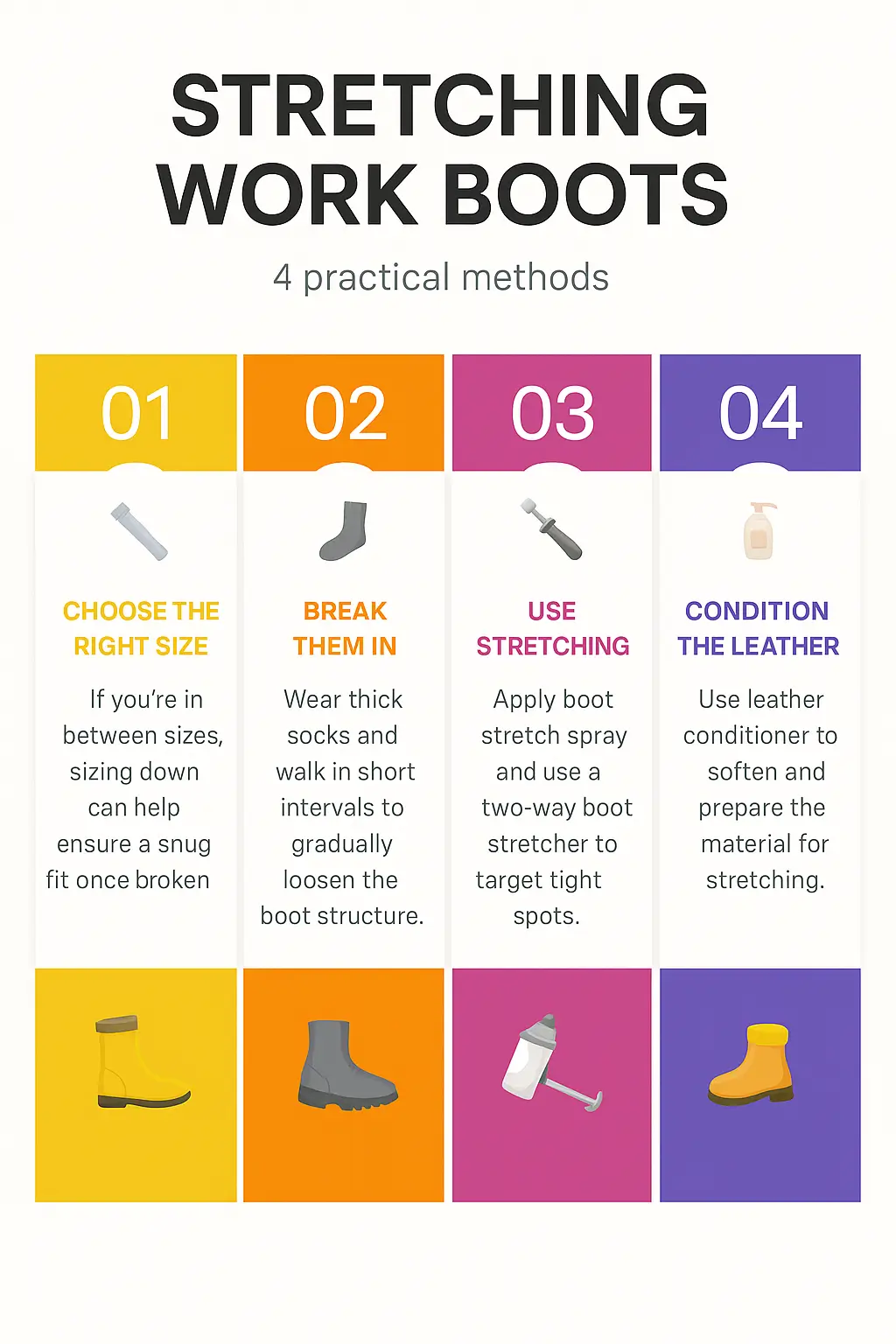
Follow This Stretching Routine
- Prep: Spray or condition the tight calf area.
- Insert: Slide the stretcher into the boot shaft.
- Expand: Turn the crank slowly. Never force it.
- Wait: Leave it in overnight.
- Repeat: Add slight tension each day for 4 to 5 days.
This method works beautifully for wide calves and tall knee-high boots.
Weigh the Cost
Prices range from $30 to $225. If you own several tight pairs, the tool quickly pays for itself. For a one-time fix, consider renting or trying cheaper methods first.
Try the Freezing Method for a Hands-Off Stretch
This clever hack uses the natural expansion of ice to push leather outward from the inside.
Prep the Water Bags
Fill gallon-sized zip-top bags about one-third full with water. Squeeze out the air and seal them tightly. Leaks can permanently damage your boots.
Freeze and Thaw Carefully
- Place the bag inside the boot, pressing it against the tight calf area.
- Stuff crumpled newspaper into the toe to push the bag upward.
- Freeze for 8 to 12 hours (overnight is ideal).
- Let the ice thaw fully before pulling the bag out.
As water freezes, it expands by roughly 9 percent, gently stretching the leather.
Skip This Method If You Have:
- Suede or synthetic boots (ice destroys these materials)
- Lined boots (moisture can damage inner layers)
- Poorly sealed bags (risk of water stains)
The freezing method works best on genuine leather with mild to moderate tightness.
Soak and Wear for Aggressive Stretching
This high-risk method saturates the leather to force maximum pliability.
Submerge the Boot Properly
- Fill a basin with lukewarm water.
- Soak the entire boot for 5 to 10 minutes.
- Shake off excess water.
Immersing the whole boot prevents blotchy discoloration.
Wear the Boots While Wet
- Put on wet, thick socks.
- Slide the wet boots on immediately.
- Walk for 30 minutes to several hours until dry.
- Massage in leather conditioner as they dry.
Your movement forces the leather to conform to your leg shape.
Know the Risks Before You Start
- Shrinkage: Boots can tighten again if they dry without tension.
- Discoloration: Uneven soaking causes patchy color.
- Discomfort: Wearing soaked leather is no fun.
Only use this method on low-cost, sturdy leather boots. Never try it on delicate or expensive pairs.
Apply Heat with a Hairdryer for Quick Fixes
Heat makes leather flexible, which is perfect for minor tweaks.
Warm the Leather Safely
- Wear thick wool socks and put on the boots.
- Set a hairdryer to low heat.
- Warm the tight calf area for 20 to 60 seconds, keeping the dryer moving.
- Flex your ankle and walk while the leather stays warm.
- Keep the boots on until they cool completely.
The leather locks into its new shape as it cools.
Avoid Overheating
Never aim the dryer at one spot for too long. High heat can dry out, crack, or scorch the leather. This technique works best for speeding up break-in time rather than major stretching.
Wear Thick Socks for a Gentle Daily Stretch
The simplest approach uses your own body heat and movement over time.
Build a Consistent Routine
- Wear two pairs of thick socks.
- Put on the boots and walk for 15 to 30 minutes.
- Repeat daily for 1 to 2 weeks.
Body heat softens the leather while movement applies steady, gentle pressure.
Speed Up the Results
Combine this method with stretching spray or conditioner for faster gains. It is ideal for minor snugness and ongoing maintenance.
Match Your Method to Your Boot Style
Different boot designs respond better to specific techniques.
Knee-High and Cowboy Boots
These often feature curved calf shafts. A calf stretcher or the freezing method targets the widest part of the shaft. Cowboy boots especially benefit from stretchers that reach high into the boot.
Chelsea and Ankle Boots
Chelsea boots rely on elastic side panels, so avoid overstretching them. Use conditioner and gentle hand-stretching instead. Ankle boots respond well to a shoe stretcher with side bungs for instep relief.
Chunky or Platform Boots
Stretch slowly and evenly. Aggressive methods can distort the sole or weaken adhesives. Skip high heat, which may break down glue bonds.
Prevent Damage and Lock in Your Results
Stretching puts stress on leather, so proper care keeps your boots in top shape.
Condition Before and After
Apply Cobbler’s Choice or Venetian Shoe Cream before stretching to soften fibers. Recondition afterward to replace lost oils and prevent cracking.
Avoid Risky Combinations
Never soak leather and apply high heat at the same time. This combination can shrink, warp, or destroy the material. Also steer clear of untested chemical mixes that may stain or degrade the finish.
Store Boots the Right Way
Use boot shapers (not stretchers) during storage. Shapers maintain shape and prevent creasing without over-expanding the leather.
Compare Your Options at a Glance
| Method | Cost | Time | Risk | Best For |
|---|---|---|---|---|
| Professional Cobbler | $20–$40 | 1–3 days | Low | Expensive or delicate boots |
| Calf Stretcher Tool | $30–$225 | 4–5 days | Low-Med | Multiple pairs, wide calves |
| Freezing Method | Under $5 | 8–12 hrs | Medium | Genuine leather, moderate tightness |
| Wet Soak & Wear | Under $5 | 1 day | High | Stubborn, low-cost boots |
| Hairdryer Heat | $0 | 30 mins | Med-High | Minor adjustments |
| Thick Socks Only | $0 | 1–2 weeks | Low | Light break-in, maintenance |
Know When Stretching Will Not Work
Some boots simply cannot be saved by stretching:
- Inches too small: Leather only stretches a quarter inch to one inch.
- Synthetic or suede materials: These do not respond to standard methods.
- Heavily structured designs: Aggressive stretching can pop seams.
If your boots are drastically undersized, resell or exchange them instead.
Frequently Asked Questions About Stretching Leather Boot Calves
Can all leather boots be stretched in the calf?
No. Genuine leather responds best to stretching. Synthetic materials, suede, and heavily structured boots may not stretch safely. Always check the material before attempting any method.
How much can a leather boot calf actually stretch?
Thick leather typically yields about a quarter inch of stretch. More pliable leathers can stretch up to one inch or slightly more. Boots that are inches too small will not stretch enough to fit comfortably.
Is the freezing method safe for all leather boots?
The freezing method only works on genuine leather. Avoid it for suede, synthetic materials, or lined boots. Always seal water bags tightly to prevent leaks and water damage.
How long does it take to stretch boot calves at home?
Most DIY methods require 4 to 5 days of gradual stretching for lasting results. The freezing method works overnight, while thick sock routines may take 1 to 2 weeks for noticeable changes.
Will stretching void my boot warranty?
Often, yes. DIY methods like soaking or freezing typically void return policies and warranties. If your boots are new and under warranty, consider visiting a professional cobbler or contacting the manufacturer first.
Can I combine multiple stretching methods?
You can layer gentle methods like stretching spray with thick socks. However, never combine soaking with high heat, as this can ruin the leather. Always condition the leather between methods to prevent drying and cracking.
Final Thoughts on Stretching the Calf of a Leather Boot
Tight calf boots do not have to stay in your closet. With the right technique, you can expand the shaft by up to an inch and enjoy a custom fit. Start with the gentlest approach, like thick socks and stretching spray, and escalate only if needed. Always condition the leather before and after to keep it supple and crack-free.
Your next step: identify your boot material, choose a method that matches your budget and timeline, and give your boots the patience they deserve. With a little effort, those pinching boots can become your new favorite pair.