
How to Repair Wolverine Boots: Quick Steps
Your Wolverine 1000 Mile boots are built to outlast trends, but even the toughest leather needs help after years of wear. The good news? Wolverine boot repair is not only possible, it’s smart economics. Thanks to their 270-degree Goodyear welt construction, these boots can be resoled, rebuilt, and refreshed multiple times, often lasting 15 to 20 years or longer with proper care.
This guide covers everything you need to keep your boots in top shape. You’ll learn how to choose the right cobbler, compare sole materials, avoid costly DIY mistakes, and even tap into Wolverine’s hidden warranty support. Whether you wear your boots daily or on weekends, the right repair strategy saves hundreds over buying new.
Find the Best Wolverine Boot Repair Service
Picking the right repair provider is the most important decision you’ll make. Not all cobblers understand Goodyear welt construction, and a poor resole can permanently damage your boots. Here are the top options, from mail-in specialists to trusted local shops.
Use NuShoe for Fast, Affordable Rubber Resoles
NuShoe in San Diego is a leading choice for resoling Wolverine rubber-soled boots like the Big Horn or Hunter series. They’ve restored over 4 million pairs since 1994 and specialize in outdoor and work footwear.
Their Outdoorsman NuCraft service runs $95 and includes a new rubber sole and heel selected for durability, weight, and style match. Turnaround takes 3 to 4 weeks including shipping both ways, and you’re only charged once work begins. One verified customer reported their discontinued Wolverine Big Horn boots came back “just like new” after the resole.
Pro Tip: Add cedar boot trees ($30) when ordering. They absorb moisture and help boots hold their shape between wears.
Choose McFarland for Premium Leather Recrafting
If your Wolverine 1000 Mile boots have leather soles and you want factory-grade results, McFarland Shoe Repair is the go-to specialist. They focus exclusively on the 1000 Mile line and use high-end JR Leather components throughout.
The full recraft costs $195 and takes 6 to 8 weeks. It includes JR Leather Soles, JR Combo Heels, and your choice of sole protector (Black Lug, Brown Lug, Black Textured, or Brown Textured). Shipping insurance is available up to $2,000, though they ship within the U.S. only.
Expert Note: Pair JR leather soles with a rubber sole protector for the best of both worlds. You keep the classic leather look while doubling or tripling sole life.
Trust Local Cobblers Who Listen
A skilled local cobbler can outperform mail-in services if you find the right one. The key isn’t brand name. It’s willingness to listen and proven experience with welted boots.
Boot Corral (Milwaukee, WI)
This shop earned a reputation as “worth their weight in gold” after saving a $75 eBay-purchased Wolverine pair with a $100 resole and new arch support insert. The young, tool-equipped cobbler welcomed customer input and delivered boots that felt “very comfortable” for years afterward.
The Town Cobbler (Vermont)
This shop handled a full leather-to-Vibram mini-lug half sole conversion at a price between NuShoe and B. Nelson. Face-to-face communication led to better quality control and a custom sole build tailored to the customer’s needs.
Red Flag: If a cobbler says your boots “can’t be resoled,” find someone else. Goodyear welted boots like the 1000 Mile are specifically designed for multiple rebuilds.
Pick the Right Sole for Your Lifestyle

Your sole choice affects comfort, durability, and traction. Wolverine 1000 Mile boots ship with leather soles originally, but many owners switch during the first resole. Here’s how to decide.
Leather Soles: Classic Look, Shorter Life
Leather soles offer exceptional comfort and mold to your foot over time. They also develop a rich patina that leather lovers prize. The downside? They wear out fast, often in under one year with daily use.
JR Leather soles (used by McFarland) are marketed as the longest-lasting leather option, but even they degrade faster than rubber in wet or abrasive conditions. Expect to pay $100 to $195 for replacement depending on the cobbler.
User Reality: Many owners report “disappointing” sole life, especially in winter. One user noted original soles wore through in just 8 months of city walking.
Rubber Soles: Built to Last
Vibram Mini-Lug
Often applied as a half sole over leather or as a full replacement, Vibram Mini-Lug delivers excellent traction on wet or uneven terrain. One user got 3 years of wear on Whites boots before needing a resole. The trade-off is initial stiffness.
Dainite Soles
These extremely long-lasting rubber soles cost around $180 via B. Nelson and offer a classic British aesthetic with a low profile. They’re ideal for daily urban wear.
Vibram Christy (Wedge Sole)
Multiple users report that wedge soles “feel much more comfortable” than lugs thanks to full ground contact that reduces fatigue. Wolverine now offers factory wedge sole versions of the 1000 Mile, making this an easy upgrade during your first resole.
Trend Alert: Many owners start with lugs for grip but convert to wedge soles for daily wear. Comfort often wins over rugged looks.
Add Sole Protectors for Extra Life
If you love leather soles but want them to last, sole protectors offer a smart compromise. These thin rubber patches glue to high-wear areas like the toe, heel, and ball of the foot.
Available in Black/Brown Lug (aggressive tread) or Black/Brown Textured (low profile, quiet), protectors usually come included in a recraft or as a $20 add-on. They can double or triple leather sole lifespan.
Warning: Don’t wait until the leather is worn to the welt. Replace or protect soles at the first signs of wear.
Avoid DIY “Hacks” That Risk Ruining Boots
DIY resoling might seem tempting, but Wolverine boot repair on Goodyear welted boots requires professional tools, training, and precision. Here’s what goes wrong when amateurs try to cut corners.
Why DIY Resoles Fail
- Improper cementing leads to sole detachment within weeks
- Incorrect stitching tension can pull apart the welt
- Sole shaving “hacks” (sanding down worn areas and gluing rubber) are temporary and unprofessional
- Risk of permanent damage to the upper or welt
One user attempted a “tire plug” style fix by gluing rubber to worn leather. It worked short-term but compromised the boot’s integrity and required professional repair shortly after.
Bottom Line: Save DIY for cleaning and conditioning. Leave resoling to pros.
Maintain Boots to Maximize Lifespan
Proper care prevents premature wear and keeps your boots looking sharp. Follow these daily and monthly routines to add years to your footwear.
Clean Boots After Every Wear
Remove laces before cleaning so you can reach every surface. Wipe down the upper and outsole with a damp cloth, paying special attention to stitching where dirt accumulates and abrades threads. If boots get wet, let them air dry thoroughly. Never use radiators or hair dryers, as heat cracks leather and weakens glue.
Condition Leather Monthly
Start by brushing with a stiff brush to lift dirt and open the pores. Clean with saddle soap and rinse with a damp cloth. Then apply mink oil, lotion, or Neatsfoot oil (recommended for Chromexcel leather). Avoid products containing silicon or alcohol, as they dry out leather. Finish with a Carnauba-based wax polish for water resistance.
Pro Move: Apply polish after oiling. It creates a protective barrier against rain, spills, and stains.
Use Cedar Shoe Trees Daily
Cedar shoe trees absorb moisture, prevent odor, and maintain shape. They cost around $30 (NuShoe sells them as an add-on) and should be inserted after every wear. Let boots rest at least one full day between wears.
Rule of Thumb: Rotate between two pairs. One wears, one rests.
Repair Common Failure Points Early
Don’t wait for total breakdown. Address these common issues before they become unfixable.
Worn Soles or Heels
Watch for smooth spots, visible welt stitching, and uneven wear. Resole immediately at the first signs. Once the welt is exposed, moisture seeps in and weakens stitching, potentially rendering the boot unrepairable.
Broken Pull Straps
Stitching on pull straps can fail on older models like the Montgomery. Any competent cobbler can re-stitch them, but here’s the surprise: one user had Wolverine pay a third-party cobbler to fix a 20-year-old pair. Wolverine sent a check after the user submitted the repair receipt.
Smart Move: Contact Wolverine customer service before paying for structural repairs on older boots. They may cover the cost.
Degraded Insoles
Loss of arch support and discomfort signal worn insoles. Ask your cobbler to add a balance insert during the resole (Boot Corral did this for $100 total). Custom orthotics can also be added if needed.
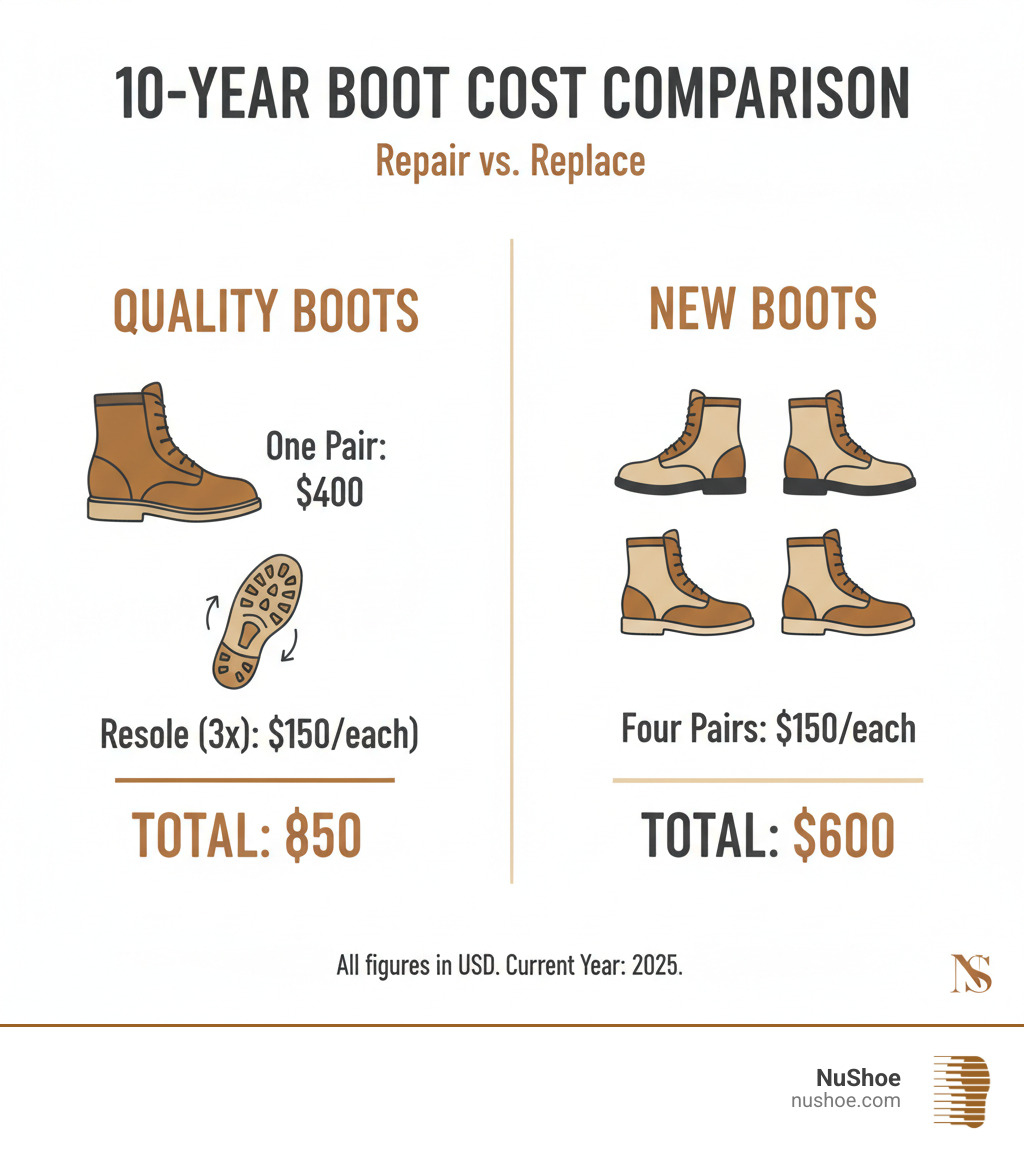
Compare Repair Costs vs. Replacement
Resoling saves you hundreds and often beats buying new.
| Service | Cost | Boot Condition After |
|---|---|---|
| NuShoe Rubber Resole | $95 | Like new, durable for years |
| McFarland Recraft | $195 | Premium leather, “better than new” |
| Local Cobbler | $100 to $120 | High quality, customizable |
| New 1000 Mile Boots | $300+ | Factory fresh, but no broken-in comfort |
Value Win: A $75 used pair plus a $100 resole equals $175 total. That’s over 40% savings versus retail, and you get a broken-in fit from day one.
Many users report boots lasting nearly 20 years with intermittent repairs. That works out to less than $10 per year in long-term cost.
Frequently Asked Questions About Wolverine Boot Repair
Can Wolverine 1000 Mile boots be resoled?
Yes. The 270-degree Goodyear welt construction allows multiple resoles without damaging the upper. Any cobbler experienced with welted boots can replace the sole, and many owners report 15 to 20 years of life through regular resoling.
How much does it cost to resole Wolverine boots?
Rubber resole services like NuShoe’s Outdoorsman NuCraft run $95. Premium leather recrafts through specialists like McFarland cost $195. Local cobblers typically charge $100 to $120 for a quality resole, sometimes less with additional work like arch support inserts.
Does Wolverine offer a recrafting program?
No. Wolverine does not currently operate a direct recrafting program like Red Wing or Allen Edmonds. Restoration relies on third-party cobblers and mail-in services. However, Wolverine has covered repair costs for structural failures on older boots through customer service, even on pairs 20 years old.
What is the best sole for Wolverine 1000 Mile boots?
It depends on your priorities. Leather soles offer classic aesthetics and comfort but wear quickly. Vibram Christy wedge soles provide maximum comfort for daily wear. Vibram Mini-Lug and Dainite offer superior traction and durability. Many owners convert to rubber or wedge soles during their first resole.
How long do Wolverine 1000 Mile boots last?
With proper care and timely resoling, Wolverine 1000 Mile boots can last 15 to 20 years or longer. Users report boots approaching two decades of life through routine maintenance, sole replacements, and occasional structural repairs.
Can I resole Wolverine boots myself?
DIY resoling is technically possible but risky. Goodyear welt construction requires professional tools, precise stitching tension, and proper cementing. Poor execution can permanently damage the welt or upper. DIY is best reserved for cleaning, conditioning, and cosmetic upkeep.
Final Thoughts on Wolverine Boot Repair
Wolverine 1000 Mile boots are an investment worth protecting. With the right repair strategy, they’ll serve you for decades, outlasting cheaper pairs many times over.
Start by choosing a cobbler who understands Goodyear welt construction and listens to your needs. NuShoe delivers fast, affordable rubber resoles for under $100. McFarland offers premium leather recrafting for purists. A trusted local shop can match either quality with the bonus of face-to-face communication.
Resole early at the first signs of wear, condition leather monthly, and use cedar shoe trees daily. If structural issues arise on older boots, contact Wolverine customer service before paying out of pocket. They may cover the cost even on boots decades old.
Your next step: inspect your boots today. Check the soles for smooth spots, the welt for exposed stitching, and the leather for dryness. Addressing small issues now prevents expensive problems later and keeps your Wolverines walking strong for years to come.